


Low-Maintenance Backyard Upgrades that Save Water
Water conservation is a critical concern for eco-conscious homeowners these days. The United Nations University’s Institute for Environment, Water and Health says that the world is being pushed into a “global water bankruptcy” era. Worsening groundwater depletion, excessive water use, land and soil degradation, deforestation, pollution, and global warming are the reasons.
You may desire a yard that thrives without requiring extensive water usage.
In this case, you should focus on simple design choices, such as artificial grass, that work with your climate instead of against it. You may be wondering how long artificial grass can last. The answer is 15-20 years, making it a useful option for a low-maintenance outdoor space.
Additionally, swapping in durable surfaces, drought-friendly plants, and efficient watering systems can save time, money, and water. This article suggests some cost-saving and environmentally friendly backyard upgrades that will conserve water and create an inviting backyard atmosphere.
Add More Hardscaping Elements
Hardscaping is one of the simplest methods to lower yard maintenance. This is because it replaces thirsty planting areas with long-lasting materials. Homes & Gardens says hardscaping is an important part of garden design because it complements softer features like plants and lawns.
Essentially, it refers to the non-living parts of a yard that serve a practical purpose. Patios, gravel paths, stepping stones, and permeable pavers give your backyard structure. This reduces the amount of grass and the need for water for the irrigation you need.
Permeable materials are especially beneficial because they let water soak into the ground instead of running off. The good thing about hardscaping is the functionality it offers. For example, a small seating area or rock border can make the space feel finished with less maintenance.
Replace Grass with Drought-Tolerant Landscaping
Lawns are often the most water-consuming part of a backyard. So, replacing even a part of them can make a huge difference. Consider drought-tolerant ground covers, gravel beds, native grasses, or low-water landscape zones that need far less mowing and irrigation. Popular drought-resilient options include buffalograss, zoysia, fescues, creeping thyme, and sedum.
Furthermore, adding artificial grass is a game-changer. According to Indy Artificial Turf, artificial turf is a long-term investment. When well-installed and well-maintained, high-quality turf usually lasts for decades, or even longer. Factors like the material quality, usage intensity, installation, and maintenance discipline determine its lifespan.
You may start in dry or sunny sections first, then expand as budget and time allow. Moreover, mixing textures and heights can make the space look more designed while keeping upkeep low. Over time, this kind of landscaping can keep your yard attractive through hot, dry weather with minimal effort.
Opt for Native Plants
According to Mass.gov, native plants help conserve water because they are adapted to the local climate and rainfall. Therefore, they usually require less supplemental watering once established. They also tend to require less upkeep, making them an easier alternative for gardeners.
Additionally, native plants support watershed health by holding soil in place. This improves water absorption and helps soil quality in the long run. You must research the right choices based on your area.
Grouping plants with similar water needs also makes upkeep easier and helps you avoid overwatering some areas while underwatering others. You can also add mulch around native plants to help the soil hold moisture and reduce evaporation. This makes the landscape even easier to maintain.
Consider Rainwater Harvesting
Rainwater harvesting is an efficient method to make a backyard both easier to maintain and more effective in terms of water savings. You can collect runoff from your roof in a rain barrel or cistern. This can save water for later use on garden beds, shrubs, trees, and containers.
Rainwater harvesting reduces your need to depend on tap water. It can be especially helpful during dry spells or summer heat when outdoor watering costs tend to rise. It also keeps stormwater from going to waste.
For the best rainwater harvesting setup, opt for a container with a secure lid, an overflow outlet, and a hose or spigot for easy watering. With this solution, you can direct stored water exactly where it is needed most. This will help your landscape stay healthy even with the least effort.
Invest in Drip Irrigation
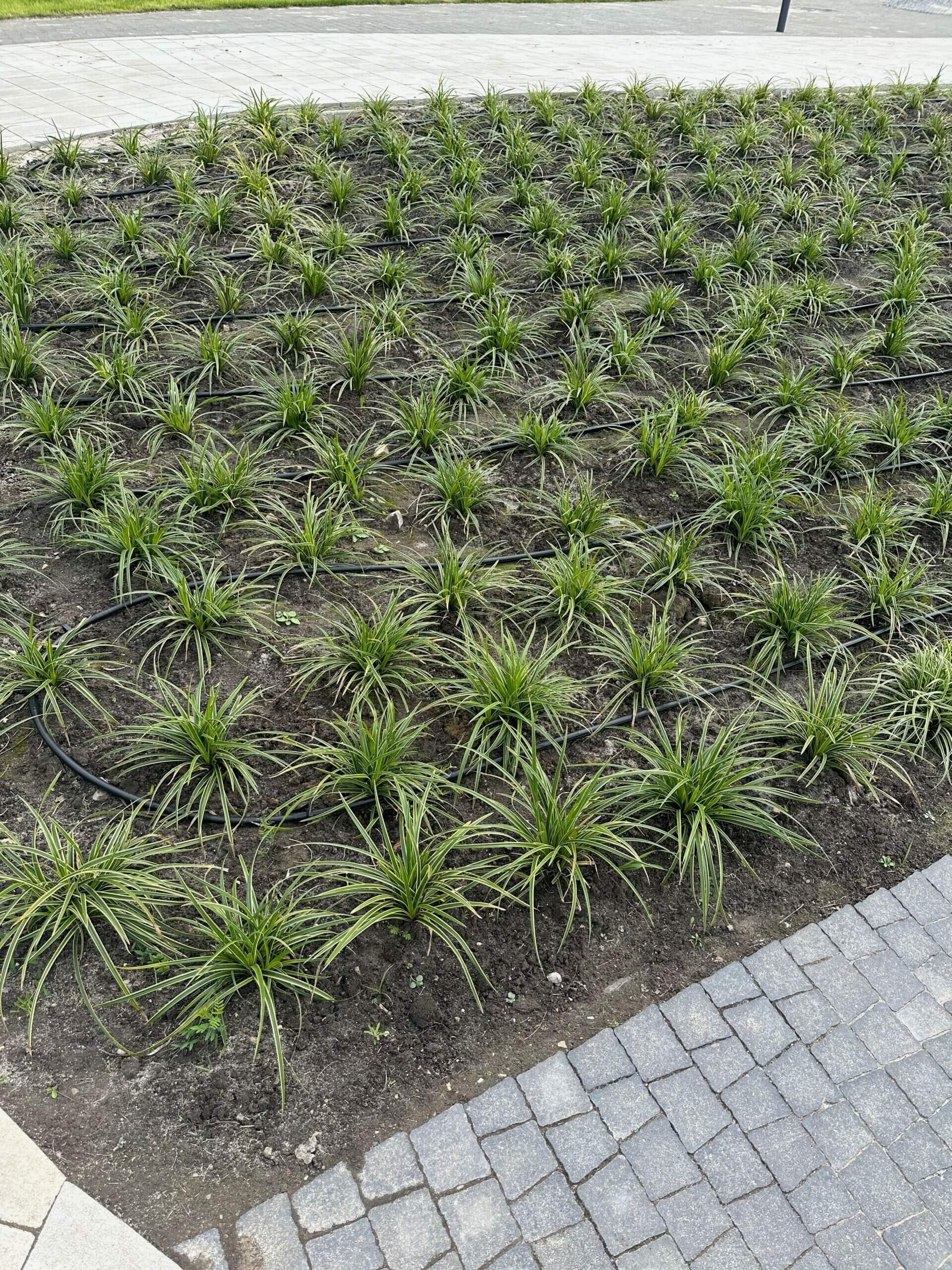
Drip irrigation is one of the most suitable upgrades for saving water because it delivers moisture directly to plant roots. According to The Spruce, drip irrigation is a more advanced way to water plants that saves both time and energy. Instead of using a handheld hose, sprinkler system, irrigation trenches, or watering can, it delivers water more efficiently.
Drip irrigation comprises a mechanical system that disperses water slowly and evenly, and can be arranged throughout your garden. In comparison to overhead sprinklers, drip irrigation reduces evaporation and helps you water more precisely. It also works well in garden beds, around shrubs, and even for containers when set up appropriately.
If you want a backyard that stays long-lasting without constant attention, drip lines or soaker hoses are a strong long-term asset. Set them on a timer for even better consistency and good results.
FAQs
How to make a backyard low-maintenance?
The fastest way is to cut back on the lawn and use mulch or hardscaping. You may also choose plants that match your climatic conditions. Add drip irrigation so watering is targeted, not wasteful. Keep design simple, with fewer small beds and fewer high-care features.
What are the cheapest backyard makeover ideas?
Some of the most money-savvy updates include gravel paths, mulch beds, dividing a larger lawn into smaller zones, and planting drought-tolerant ground covers instead of full turf. You can also refresh the space with potted native plants and a simple seating area. These adjustments improve the look of the yard without a major build-out.
What can I use to absorb water in my yard?
If your yard gets soggy, utilize materials and plants that help water soak in rather than sit on the surface. Compost-amended soil, mulch, rain gardens, native grasses, and permeable pavers can all improve drainage. In problematic spots, shallow swales or gravel-filled areas can also help move excess water away more naturally.
A low-maintenance, water-saving backyard is all about making better choices upfront. Hardscaping reduces mowing and watering, native and drought-tolerant plants cut care time, rainwater harvesting captures free water, and drip irrigation makes every gallon count.
Together, these adaptations create a yard that looks intentional without demanding constant effort. For many U.S. homeowners, that balance is the real win, a backyard that feels relaxed, practical, and built for everyday life.