


The Neighborhood Fix: Restoring Social Cohesion To Defend Against Urban Crises
Cities worldwide are facing multiple crises that exceed communities’ capacity to cope. Economic instability, climate disasters, soaring fuel prices, and infrastructure failures, among others, are driving inequality, weakening social cohesion, and exacerbating mental health problems, creating long-lasting issues for social development.
Some cities, particularly those in Nordic countries, exhibit strong social cohesion, but many urban areas are struggling to come together to face these simultaneous challenges.
According to political scientists Matthew Gray and Nicholas Biddle, social cohesion is “not simply the absence of conflict, but the presence of social bonds and shared norms that enable cooperation within a nation or some other community.”
Governments may improve social solidarity by implementing inclusive policies and managing the fair distribution of resources. However, leaving the improvement of social cohesion to politicians may not be the best solution since urban neighborhoods thrive when people voluntarily participate and contribute to enhance community life. To defend against urban crises, here are ways to restore social cohesion in your neighborhood.
Foster Inclusivity and Belonging
Most individuals feel disconnected, excluded, or like they don’t belong in their local communities, and it’s taking a toll on their mental health. According to a recent poll by the American Psychological Association, the majority of adult respondents said that societal division was a significant source of stress, and 61 percent reported feeling isolated due to social stratification.
Wealth gaps, racial segregation, and political polarization can make it harder to establish deep connections in a community, and anxiety caused by these factors may lead to mental health problems in children and adults.
People often feel like outsiders when they cannot relate to the interests and conversations in their local area, so creating a sense of belonging is essential to strengthen social ties in your neighborhood. To foster inclusion, urge leaders to make public spaces in urban areas accessible to all, including people with disabilities.
Ideally, there should be wheelchair-friendly routes, sensory-friendly environments, and non-verbal signage. To help immigrants feel included, inform them of their rights and local services, and provide opportunities for civic engagement.
Encouraging intergenerational interactions can also help to break down social barriers. Social app developers know the importance of providing safe digital spaces where people of all ages can have judgment-free conversations.
In fact, one New York tech founder designed an app that lets users support each other through anonymous letters, which can help people feel heard and included. In the real world, residents can create opportunities for positive interactions by establishing programs that connect young people with older residents.
Consider forming skill-sharing clubs in which young participants can teach older members how to use smartphones and the Internet, while seniors instruct younger people in crafts like knitting or quilting.
Also, think about having monthly events like game nights where everyone can play board or card games, or form a walking or tai-chi group so that neighbors of all ages can exercise together. These activities can increase happiness, improve quality of life, and enhance overall well-being in your community.
Initiatives to Encourage Neighbor Cooperation
Many urban communities worldwide struggle with food insecurity and waste management. While these issues can be resolved with the right infrastructure, systems, and government financial aid, there are many things that community members can do to make life a little easier for everyone in the neighborhood.
For instance, you can create initiatives that will encourage people to work together. These activities won’t only help to reduce the impact of societal issues, but they can also foster trust and build social connections.
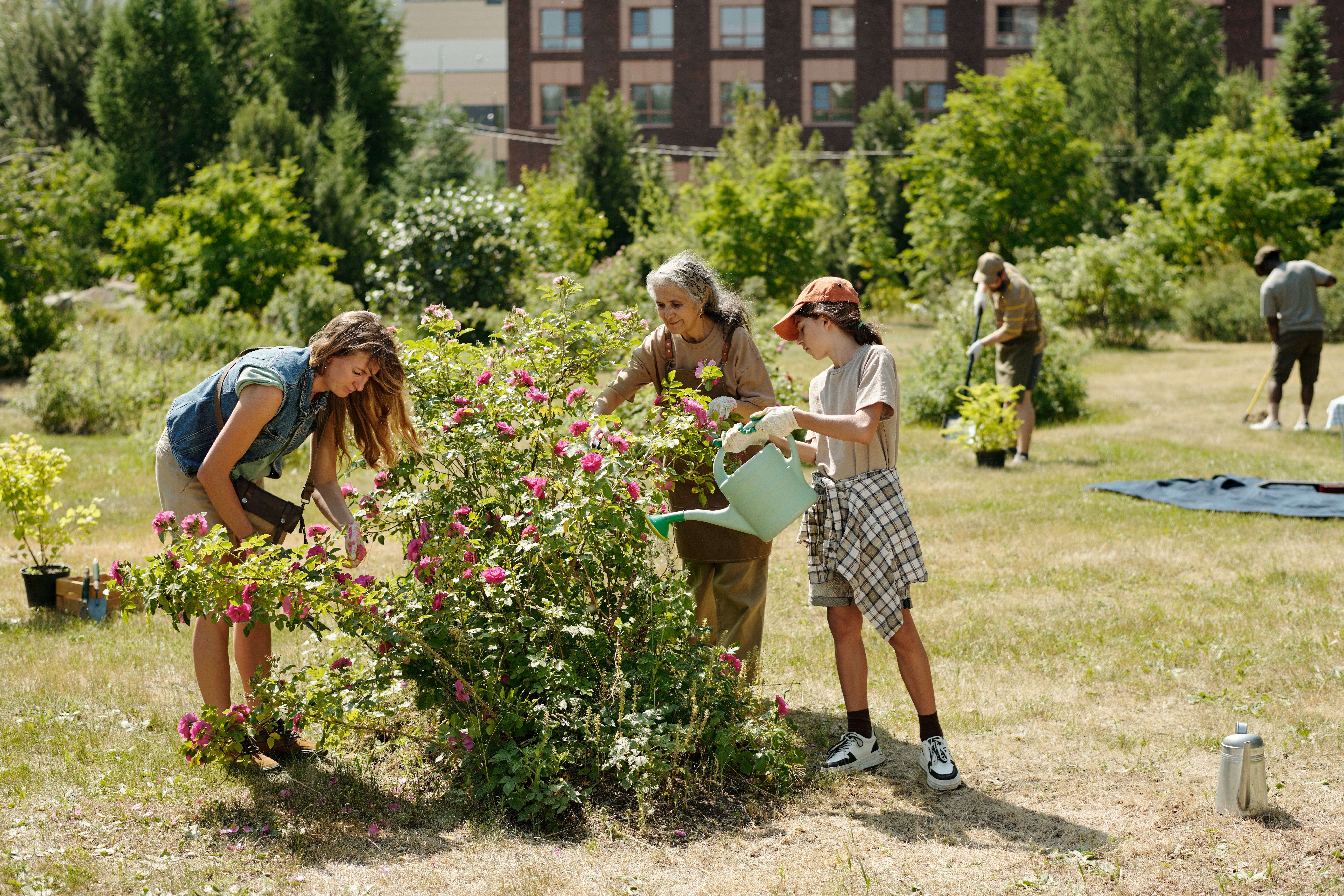
Think about starting a community garden to provide healthy food to those in need, or organizing monthly neighborhood clean-ups to remove litter and manage weeds in public spaces and vacant lots. You can also work together on sustainability efforts to reduce your community’s carbon footprint.
Try seed-bombing empty lots or roadsides for urban greening, or organize exchange programs so neighbors can swap clothing, toys, kitchen items, tools, and books to reduce waste and encourage collaboration.
Safety and Support Networks
Crimes and emergencies can happen on any given day in the city, so find ways to work together to keep everyone safe. Partner with local law enforcement to set up a neighborhood watch to encourage communication while improving safety in your area.
If your city is prone to storms, hurricanes, or extreme snowfall, create an emergency response plan with your neighbors, and ensure that everyone, including the elderly, disabled, and those who live alone, can be safe during extreme weather conditions.
You can also organize teams to assist senior and disabled neighbors with tasks like mowing the lawn and painting fences, and arrange carpooling so that vulnerable individuals can get around your neighborhood.
Enhancing collaboration and communication can help urban communities to withstand crises. Restore social cohesion to build trust and relationships, and see how this helps to make your neighborhood healthier, happier, and more resilient.