

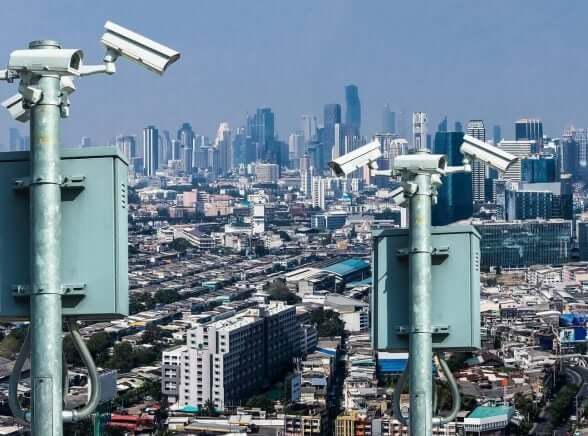
How to Build Greener Surveillance Networks for Smart Cities
Cities are adding cameras, sensors, and connected traffic signals steadily. These tools help keep streets safer, shorten emergency response times, and give planners better data about how people move.
They also carry a carbon footprint that rarely shows up in a climate plan. Every camera needs power, every sensor needs a data path, and every roadside cabinet holds electronics that will one day need replacing.
The good news is that a security network does not have to work against a city’s environmental goals. Choices about cabling, power delivery, and equipment lifespan determine how much energy and material a system consumes over its life.
This guide looks at the practical design decisions that let cities and campuses expand video surveillance while keeping energy use, construction impact, and electronic waste as low as possible.
Why the Network Layer Deserves More Attention
Most conversations about green security focus on the devices people can see, such as cameras and lighting. The equipment behind them gets far less scrutiny.
Switches, media converters, power supplies, and cabling run around the clock, and they often sit in outdoor enclosures that need their own heating or cooling. In a large deployment with hundreds of field cabinets, that hidden layer can account for a meaningful share of the total energy bill.
Network design also determines how much physical construction a project requires. A poorly planned system may call for new trenches, new conduit, and separate electrical service at every pole. A well-planned one reuses what is already in the ground and carries power and data together.
This is where product selection starts to matter. Transmission equipment built for field conditions, like the hardened Ethernet switches and media converters listed at comnet.net, is designed to run in unconditioned cabinets across wide temperature ranges.
That removes the need for an air conditioner or heater in every enclosure. When planners evaluate options, they should ask about operating temperature, power draw per port, and expected service life, since those three figures say more about long-term impact than the purchase price does.
Power over Ethernet: One Cable Instead of Two
Power over Ethernet, or PoE, sends electricity and data through the same network cable. For a camera on a pole or a sensor on a building facade, this means there is no need to run a separate electrical circuit.
Less copper is used, fewer conduits are installed, and crews spend less time on site. The material savings add up quickly across a citywide rollout.
PoE also makes power easier to manage. Because the switch supplies the electricity, operators can see how much each device draws and remotely shut down or restart a port.
A camera heater that only needs to run in winter, or an infrared illuminator that only needs to run at night, can be scheduled accordingly. Remote resets also cut down on truck rolls, which saves fuel and technician time whenever a device freezes.
Current PoE standards deliver enough wattage to run pan-tilt-zoom cameras, wireless access points, and LED lighting from a single port. Planners should still size the power budget carefully. Oversized power supplies waste energy at low loads, while undersized ones lead to early failures and replacement.
Fiber Optics and the Value of Existing Cable
Standard copper Ethernet reaches about 100 meters before the signal needs a boost. City networks cover much longer distances, which is why fiber optic cable forms the backbone of most modern deployments.
Fiber carries data for kilometers without powered equipment along the route, so it needs fewer intermediate cabinets. It is also immune to electrical interference and tends to stay in service for decades, with capacity upgrades handled by changing the electronics at each end.
Not every site needs new cable, however. Many cities, transit agencies, and campuses still have coaxial or twisted-pair copper buried from older analog camera systems. Digging it up is expensive and disruptive. Trenching means heavy machinery, broken pavement, traffic delays, and a pile of discarded material.
Media converters and Ethernet extenders offer a lower impact route. These devices allow modern IP cameras to send data, and in some cases receive power, over legacy cable. A city can upgrade image quality and analytics without excavating a single street. From a sustainability perspective, the greenest cable is often the one already installed.
Equipment That Lasts Longer Creates Less Waste
Electronic waste is one of the fastest-growing waste streams in the world, and security hardware contributes its share. Outdoor electronics face heat, cold, moisture, vibration, and power surges.
Commercial-grade devices placed in those conditions tend to fail early, and each failure means a replacement unit, a service visit, and another item headed for recycling or landfill.
Industrially hardened equipment costs more upfront but usually stays in service much longer. Features worth looking for include wide operating temperature ratings, fanless designs with no moving parts, surge protection, and conformal coating on circuit boards. Long warranties signal that a manufacturer expects its products to last.
Lifespan is only one part of a circular approach. Buyers can favor modular designs that let them swap a failed power supply or optical module without discarding the whole unit.
They can also set up take-back and certified recycling arrangements before installing the first device. These ideas echo the wider principles of sustainable business security, where protecting property and protecting the environment are treated as one goal.
Solar Power and Off-Grid Sites
Some of the most useful camera locations are the hardest to power. Park trails, remote intersections, construction zones, and parking lots at the edge of town may sit far from the nearest electrical service. Extending the grid to each one is costly and carbon-intensive.
Solar panels paired with battery storage are now a practical alternative for these sites. The approach works best when every component in the cabinet is chosen for low consumption. A switch that draws a few watts less, or a camera that drops to a low-power mode when nothing is moving, can shrink the panel and battery needed to keep the site running through cloudy weeks.
Wireless Ethernet links can complete the picture by eliminating the need for a data trench. A solar-powered pole with a wireless backhaul can be installed in a day and relocated later if needs change, which makes it a good fit for temporary events and pilot projects.
One Network, Many City Services
The strongest sustainability case for a well-built surveillance network is that it rarely serves security alone. The same fiber and switches that carry video can support traffic signal coordination, air quality sensors, smart street lighting, and public transit information.
Sharing infrastructure avoids the waste of building parallel networks for each department. It also unlocks environmental benefits. Traffic cameras and detection sensors feed adaptive signal systems that reduce stop-and-go driving, which lowers fuel use and tailpipe emissions at busy intersections. Connected streetlights can dim when streets are empty.
To enable sharing, planners should leave headroom in fiber counts, switch ports, and bandwidth from the start. A modest amount of spare capacity today prevents a second round of construction a few years from now.
Building Security That Supports Climate Goals
Safer streets and lower emissions are compatible aims. The difference comes down to decisions that are easy to overlook, such as how devices are powered, which cables are reused, and how long each piece of equipment is expected to last.
Cities that reuse existing cable, combine power and data, choose hardware built to survive outdoors, and share one network across departments end up with systems that cost less to run, disturb less ground, and produce less waste.