

Green Infrastructure Solutions That Reduce Storm Damage in Urban Areas
When a heavy storm rolls through, rain sheets off your roof and parking lot, storm drains back up, and water starts pooling at your foundation. In paved urban areas, rain has nowhere to soak in, so it turns into fast-moving runoff.
For property managers, that runoff can mean flooded basements, emergency cleanup, repair bills, frustrated tenants, and insurance headaches.
Green infrastructure uses plants, soil, and permeable surfaces to manage rain where it falls instead of sending it straight into overloaded drains. It protects your building while supporting broader climate resilience goals. Discover four solutions and a simple three-step plan for putting them to work on your property before the next downpour.
Green Roofs Reduce Rainfall Runoff From Your Building
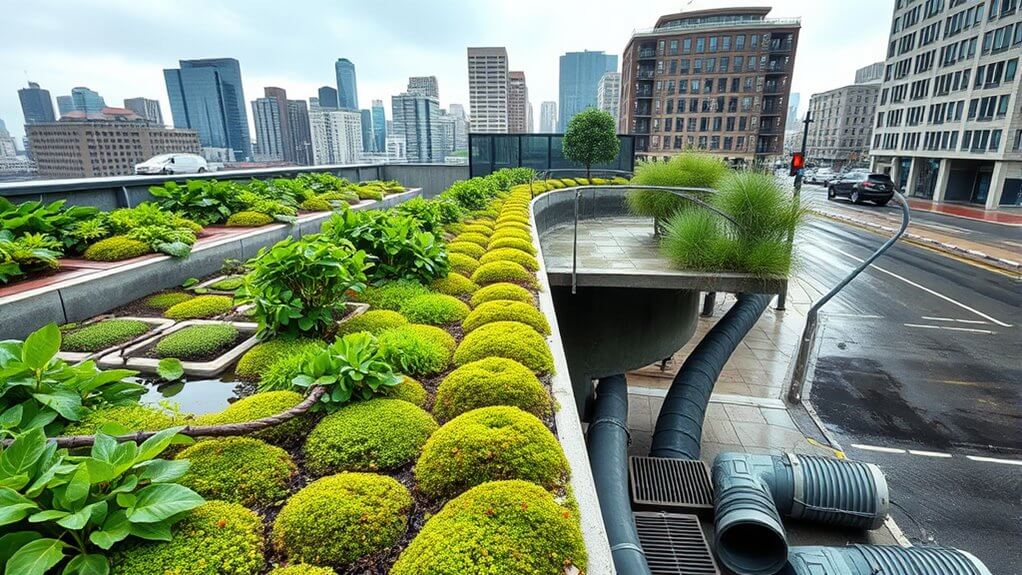
A green roof is a layer of vegetation and soil installed over a waterproof membrane on your building’s rooftop. Instead of letting rain pour into gutters and storm drains, the plants and soil absorb the water and release it slowly through evaporation. That dramatically reduces the runoff your building produces during a storm.
You can choose between two main types. Extensive green roofs use a thin soil layer, weigh less, cost less to install, and need minimal maintenance. Intensive green roofs have deeper soil and support a wider variety of plants, but they need more structural support and upkeep. According to the EPA, intensive systems can hold back up to 100% of runoff, while extensive systems typically reduce it by about 60%.
Green roofs also offer a bonus benefit. The vegetation shields your roof membrane from harsh UV rays and temperature fluctuations, helping it last longer.
Rain Gardens Capture and Filter Stormwater On-Site
A rain garden is a shallow planted area that collects runoff from roofs, walkways, and paved surfaces. When stormwater flows in, it pools briefly and then soaks into the soil, where plant roots and microorganisms filter out pollutants. The water eventually recharges groundwater instead of overwhelming storm drains.
You can place rain gardens near downspouts, along walkways or at the edges of parking lots where water naturally flows. In one U.S. Geological Survey study, a rain garden at Gary City Hall in Indiana reduced the stormwater it sent to the sewer by more than 80%, demonstrating how effective a single installation can be.
Rain gardens are among the most affordable and low-maintenance options. Once the plants take root, they need only occasional weeding and mulching to keep working.
Permeable Pavement Lets Water Soak Into the Ground
Traditional asphalt and concrete shed water, forcing rain to run off toward drains and buildings. Permeable pavement works differently. Water filters through the surface into a gravel base below, where it gradually soaks into the soil.
Common types include porous asphalt, pervious concrete, and interlocking pavers with gaps that allow water to pass through. In parking lots, walkways, and driveways, permeable pavement reduces ponding, lowers slip hazards, and keeps stormwater from flowing toward your structures.
Results depend on your design and site conditions. The EPA reports that permeable pavements can cut stormwater discharges by between 25% and 100%, depending on how they’re built and maintained. Regular vacuuming is key, since it keeps dirt and debris from clogging the surface over time.
Bioswales Channel and Slow Heavy Rainfall
A bioswale is a gently sloped, planted channel that guides runoff through vegetation instead of letting it rush across pavement. As water moves through, it slows down, giving plants and soil time to absorb some of the flow and filter out pollutants. The remaining water continues at a controlled pace toward storm drains or natural waterways.
Bioswales work well along parking lot edges, between pavement and sidewalks, in streetscapes and on larger properties with room for landscaped channels. They’re especially useful during heavy storms, when you need to move large volumes of water safely.
Seattle’s SEA Streets project shows what they can do. According to the EPA, the project’s bioswales helped reduce street runoff by 99% and retained nearly all the rain on-site rather than sending it into the sewer system.
How to Prepare Your Property With a Green Infrastructure Plan
Green infrastructure reduces your storm damage risk, but it works best as part of a broader preparedness strategy. These three steps help you assess your needs, choose the right solutions and plan for severe weather.
Assess Your Property’s Storm and Flood Risks
Start by noting where water pools during storms, where downspouts empty onto pavement, and whether your basement or ground floor has flooded before. Estimate how much of your site is covered by roofs and pavement, since those surfaces generate the most runoff. Also check your property’s flood zone status.
Acting before damage occurs makes financial sense. Federal research found that every $1 invested in disaster mitigation saves $6 in future disaster costs, and that proactive riverine flood mitigation saves $7 for every $1 invested. Assessing your risks now helps you put your budget where it’ll deliver the most protection.
Choose the Right Green Infrastructure for Your Site
Matching solutions to your property type helps you get the best results. Consider these options:
- Large flat roofs: Green roofs capture rainfall at the source.
- Downspouts and lawn areas: Rain gardens collect and filter runoff in these spots.
- Parking lots and walkways: Permeable pavement reduces ponding and lets water soak in on-site.
- Long paved edges and larger sites: Bioswales handle high volumes and channel water effectively.
Combining solutions often works better than relying on just one. For example, you might install a green roof and then add rain gardens to handle runoff from your parking areas. Also check with your local municipality about incentives or stormwater fee credits.
Green infrastructure can even work in cold climates when designed with seasonal conditions, snowmelt and cold-hardy plantings in mind.
Real-world examples show green infrastructure working at every scale. EPA’s office in Lenexa, Kansas, treats and infiltrates 100% of its stormwater on-site. At the city level, Philadelphia’s Green City, Clean Waters program has created more than 3,850 greened acres that manage over 4 billion gallons of stormwater each year.
Build a Documentation and Response Plan
Even well-designed green infrastructure can be overwhelmed by a severe storm, so a response plan is the final piece of your preparation.
According to property restoration experts, Rhode Island Restoration, property managers can prepare for storm damage by planning to use certified professionals, since insurance companies rarely reimburse DIY mitigation efforts. Property owners and managers aren’t licensed or certified restoration providers, so self-performed cleanup often goes uncovered.
Rhode Island Restoration also notes that a restoration professional can assess whether the work may qualify for no-cost service coverage through insurance. When a job is covered, certified professionals perform it to Institute of Inspection, Cleaning and Restoration Certification standards. That helps ensure the root cause and all affected areas are properly mitigated and restored.
Your insurance coverage matters just as much. Review it well before storm season, since standard property policies typically exclude flooding, and new flood policies usually take about 30 days to take effect. Photograph your property’s current condition and keep important documents in waterproof storage or as digital copies so you can access them after a storm.
Frequently Asked Questions About Green Infrastructure for Storm Protection
If you’re still weighing whether green infrastructure makes sense for your property, these answers to common questions can help you decide.
How much does green infrastructure cost?
Costs vary widely depending on the solution and your property’s size. Rain gardens are typically the most affordable starting point, while green roofs and permeable pavement require a larger up-front investment. Many properties see long-term value through reduced flood damage and lower stormwater fees.
Does green infrastructure work in cold climates?
Yes. Green infrastructure works year-round, though performance can vary by season. Snow and ice melt gradually into these systems, and many cold-hardy plant species thrive in rain gardens and bioswales.
Can small properties benefit from green infrastructure?
Absolutely. Even a single rain garden or a small section of permeable pavement can reduce runoff and help protect your building from storm damage.
Building a More Resilient, Sustainable Property Starts Today
Green infrastructure protects your property from storm damage while supporting broader climate resilience and sustainability goals. These solutions keep water where it falls, ease the strain on aging stormwater systems, and create healthier urban environments.
Even one well-placed solution can change how your property handles heavy rain. Investing now builds resilience that serves your property and community for years to come.