

Can Better Packaging Design Reduce Emissions Before a Product Is Even Used?
Packaging decisions are usually driven by cost, appearance, and product protection, while their environmental consequences receive less attention. Assessing packaging across a product’s life cycle helps manufacturers identify changes that deliver measurable benefits rather than relying on materials or designs that simply appear sustainable.
Packaging accounts for approximately 5% of the energy used during a food product’s life cycle. Reducing energy demand during packaging production can therefore lower greenhouse gas emissions, manufacturing costs, and pressure on energy resources. At large production volumes, small per-package efficiency gains add up fast.
Rethinking Shape, Size, and Material Use
Packaging dimensions and material choices need to suit the goods being shipped. Reducing a box’s size too aggressively to pursue sustainable packaging can leave products vulnerable to damage, increasing food waste and the emissions from replacing spoiled goods. The aim is to remove unnecessary material without compromising protection.
For non-fragile items, lightweight recycled mailers can replace heavier boxes, while cornstarch- or bamboo-based bio-compostable packaging can replace conventional plastic bottles and cardboard cartons. Materials that retain their strength at lower thicknesses can also reduce bulk without sacrificing durability.
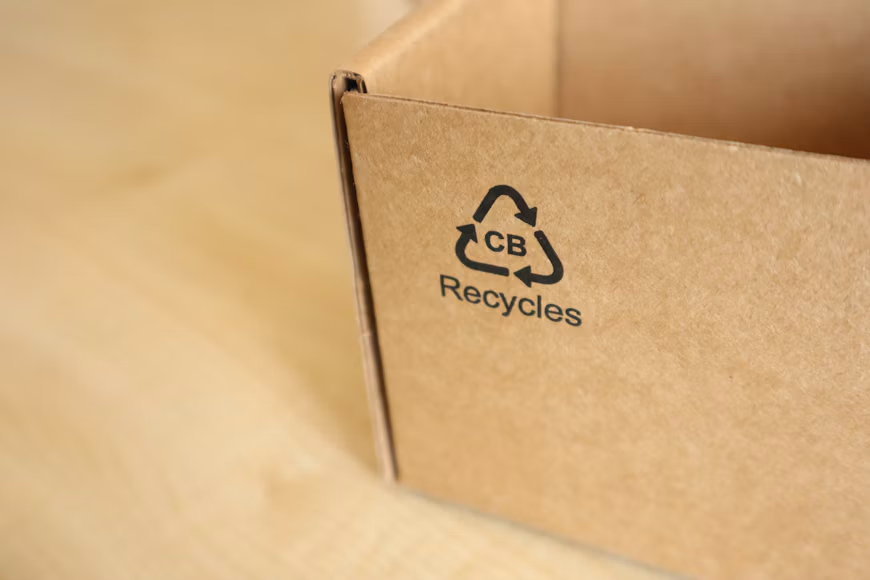
Recycled shipping boxes provide another option, keeping paper and cardboard within established recycling streams.
Cutting Energy Consumption During Production
Packaging manufacturers can reduce energy demand by improving how their machinery operates. Recovering waste heat for other processes and adjusting machine speeds to match production needs can cut unnecessary energy use. Better process controls can also help equipment run more efficiently.
Reducing production errors brings further benefits. Fewer defective packages mean less material is wasted, and fewer items need to be manufactured again. This also avoids the extra energy required to repeat production steps, helping manufacturers lower emissions and operating costs at the same time.
Maximizing Cargo Space in Transit
Packaging design affects how efficiently goods fit into freight containers and trailers. The shape and dimensions of secondary cartons determine how products can be arranged on pallets, while weight limits and stacking strength constrain how much space can be filled.
A 2026 study found differences of over 30% in CO₂ emissions per unit across 12 packaging configurations under identical transport conditions. Counterintuitively, cartons holding 18 items achieved a 96.7% pallet area efficiency, compared with just 72.8% for cartons holding 24. This is because the 18-item configuration accommodated 98 cartons per pallet, while the 24-item option held only 56.
Beyond package dimensions, transport planning also affects emissions. Manufacturers can reduce freight emissions by optimizing delivery routes and coordinating shipments. Consolidating orders headed to the same destination helps use vehicle capacity better and reduces unnecessary journeys.
Better Design for a More Sustainable Future
Beyond reducing waste and improving environmental performance, better packaging design is increasingly a financially sound decision for businesses. As regulations tighten and resource costs rise, packaging decisions will play an increasingly important role in business planning.
Companies that consider environmental impact in design can prepare for changing requirements while making more informed production and distribution decisions.