

How Effective Drainage Systems Reduce NYC Sidewalk Flooding and Protect the Environment
Sidewalks should be safe, dry, and easy to navigate. But anyone who has stepped into a puddle after a heavy rain knows how quickly standing water becomes a problem. Poor drainage damages concrete and creates slip hazards. It also feeds a much larger issue: stormwater runoff that carries pollutants into local waterways and strains the city’s sewer system.
Keeping NYC walkways flood-free takes smart design, regular maintenance, and a combination of traditional “grey” infrastructure and nature-based “green” solutions. When these systems work together, they reduce flooding, support healthier waterways, and make neighborhoods more resilient.
Why Sidewalk Drainage Matters
About 60% of New York City is served by a combined sewer system, in which a single pipe carries both stormwater runoff and sewage from buildings. During heavy rain, that pipe can exceed its capacity, and a mix of stormwater and untreated sewage is discharged directly into the city’s waterways. These events are known as combined sewer overflows, or CSOs.
Every gallon of rain that stays out of the sewer system helps reduce that pressure. That is why the way water moves off a sidewalk, whether it is shed toward the street, absorbed by soil, or captured by a planted bed, has consequences for harbor water quality. The NYC Department of Environmental Protection (DEP) has set a goal of cutting CSO volume by 1.67 billion gallons per year by 2030 through its Green Infrastructure Program, and well-drained sidewalks are part of that picture.
Key Components of an Effective Drainage System
A sidewalk that drains properly is a coordinated system that channels water safely into the sewer or soil while protecting the concrete itself. New York City relies on proven grey infrastructure alongside innovative green approaches, and the two work best together.
Proper Grading
It starts with how the sidewalk is shaped. Concrete does not drain itself; it depends on correct slopes and angles so that water flows away from buildings and pedestrian areas instead of pooling in low spots.
Sidewalks are typically built with a gentle cross slope toward the street or gutter, commonly about 2% (roughly 1/4 inch per foot), which drains water effectively while staying comfortable and accessible for pedestrians. The NYC Street Design Manual’s sidewalk guidelines set out the city’s requirements for sidewalk construction, including slopes. Even a small error can lead to “ponding,” where shallow pools form, make surfaces slippery, and speed up concrete deterioration.
Grading also has an environmental payoff. When water leaves a sidewalk in a controlled path rather than sheeting across it, there is less erosion of the soil beneath the slabs and less sediment and debris washed into storm drains.
NYC’s sidewalk grading requirements make proper installation important for both accessibility and drainage. When existing concrete develops low spots or uneven surfaces, professional sidewalk installation and repair can help restore proper drainage and bring the walkway into compliance with applicable DOT standards.
Well-graded walkways handle heavy rain better, hold up longer, and help keep stormwater out of the places it causes harm. Everything else in a drainage system builds on that starting point.
Integral Curb and Gutter Systems
In flat or low-lying areas, slope alone is not always enough. An integral curb-and-gutter system channels water directly to the nearest catch basin, where it can enter the sewer network in a controlled way. This matters in neighborhoods such as Downtown Brooklyn, Long Island City, and the Staten Island lowlands, where water tends to collect after heavy rain.
Without curbs and gutters, water can linger, wash out soil under the concrete, and eventually cause cracks or uneven slabs. Directing it to catch basins also keeps floatable debris and litter in one place, where it can be captured instead of being carried across the street.
Robust Piping and Catch Basins
Grey infrastructure remains the backbone of the system. One of the DEP reports highlights that the city’s roughly 7,500 miles of sewers and approximately 150,000 catch basins carry stormwater away from streets and sidewalks, and the agency continues to upgrade the network to handle heavier storms.
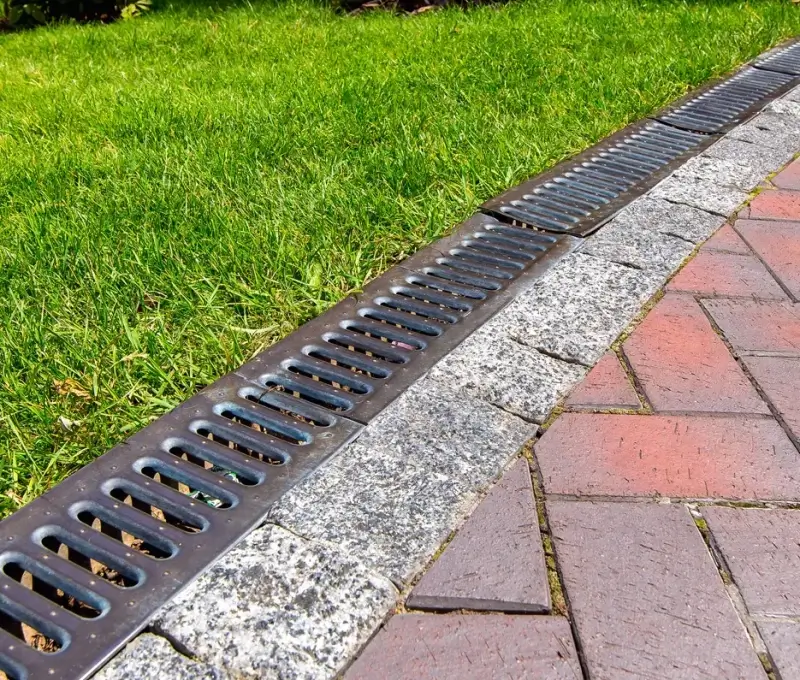
Property owners play a role as well. Downspouts and private drainage systems should direct water away from sidewalks and into approved storm drains. Roof runoff that spills across a walkway raises the risk of ponding and slippery surfaces. Trench drains can also capture roof runoff and guide it toward storm drains or nearby green infrastructure before it reaches the sidewalk.
Green Infrastructure
New York City has been a leader in green infrastructure, which lets natural processes handle part of the stormwater load. By slowing down and absorbing rain where it falls, these systems reduce the volume that enters sewers and help limit polluted runoff reaching rivers, harbors, and coastal ecosystems. DEP reports that its program has built more than 16,000 green infrastructure installations across the city.
Common solutions include:
- Right-of-way rain gardens and bioswales: Planted areas along curbs that capture and temporarily hold stormwater. The soil and plants absorb and filter the water, then release it slowly, reducing stress on sewers.
- Porous pavement: Unlike standard concrete, porous pavement lets water pass through the surface into stone and drainage layers below, where it is stored and gradually infiltrates into the ground. It is especially useful where conventional drainage is difficult.
- Bluebelts: Originally implemented on Staten Island, the Bluebelt program preserves and enhances natural drainage corridors, including streams, ponds, and wetlands, to convey, store, and filter stormwater. The city has been evaluating sites for the approach in all five boroughs.
By combining grey and green systems, the city keeps sidewalks functional during heavy storms while easing the load on its sewers. Property owners can take part too: DEP has launched a funding program for green infrastructure on private properties aimed at larger sites with significant paved area.
How Property Owners Can Help Reduce Runoff
While the city manages streets and public infrastructure, property owners are legally responsible for maintaining the sidewalk next to their buildings. NYC Administrative Code Section 19-152 lists improper slope among the conditions that can result in a violation, including sidewalk flags that do not drain toward the curb and retain water.
Here is what property owners can do to stay compliant and help reduce runoff:
- Get a professional assessment: Have a qualified concrete pro check that the slope, elevations, and surrounding drainage patterns meet city requirements. Catching a grading problem early is far cheaper than repairing the damage standing water causes later.
- Manage downspouts: Ideally, extend downspouts at least 5 to 10 feet away from the property or connect them to an approved drainage system so roof runoff does not pool along the sidewalk.
- Keep drainage pathways clear: Maintain private gutters, downspouts, and drainage pipes. Remove loose debris from areas you are responsible for maintaining, and report blocked public catch basins to the appropriate city agency.
Looking Ahead
New York is expecting more intense rainfall in the years to come, which makes the small details of drainage more important, not less. A well-graded sidewalk, a clear catch basin, and a downspout pointed the right way are modest measures, but multiplied across thousands of properties, they add up to less flooding, less combined sewer overflow, and cleaner waterways.
Effective drainage combines grey infrastructure, such as grading, curbs, gutters, piping, and catch basins, with green infrastructure, such as rain gardens, bioswales, porous pavement, and natural drainage corridors. When property owners keep water moving away from buildings and into approved systems, concrete lasts longer, pedestrians stay safe and dry, and the city’s waterways benefit.