

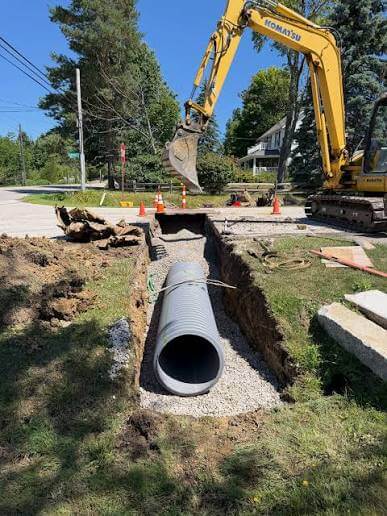
5 Ways Culvert Replacement Helps Reduce Erosion and Protect Waterways
After a hard rain in the Kansas City area, take a walk along a rural road or driveway and look at the ditch. If the water runs clear and the banks hold, the culvert underneath is probably doing its job.
If it runs brown and the edges are collapsing, soil is headed to the nearest creek. A culvert looks like a small piece of buried pipe, but it shapes where stormwater goes, how much soil it carries, and what happens downstream.
Replacing a failing or undersized one can protect your property and the waterways that receive its runoff. Here are five ways culvert replacement helps reduce erosion, plus what to know before you start.
1. Handling Storm Flow Without Overtopping
A culvert that is too small or partly blocked forces water to back up and spill across the surface. That fast sheet of runoff is a major driver of erosion.
A well-sized replacement helps by:
- Matching the pipe to the flow it is expected to carry
- Keeping water inside the pipe during ordinary storms
- Reducing the scouring that happens when water runs over the driveway
Sizing is a design decision, so it is worth asking how the contractor determines it.
2. Stopping Washouts at the Driveway and Edges
When water cannot get through the pipe, it digs around it. Exposed pipe ends, eroded shoulders, and gravel carried downstream are common signs.
Replacement lets you rebuild the soil around the pipe properly. Done well, it helps by:
- Setting the correct slope and alignment
- Bedding the pipe and backfilling in compacted layers
- Rebuilding a stable driveway base over the top
Solid support around the pipe is what keeps soil in place when the next storm hits.
3. Protecting the Inlet and Outlet
The two ends of a culvert are where erosion often starts. Water speeds up as it enters and leaves, and it can carve holes in unprotected soil.
Good replacement projects address the ends. Typical protection includes:
- Stone or riprap at the outlet to slow the flow
- Stabilized banks around the inlet
- Grading that guides water into and away from the pipe
- Vegetation on exposed soil once the work is done
Protecting the ends is the difference between a pipe that works and a pipe that works without damaging what is downstream.
4. Reducing Sediment That Reaches Streams
Sediment runoff can affect more than a stream’s appearance. It reduces water clarity, covers aquatic habitats, and can carry pollutants into nearby waterways. A damaged or poorly installed culvert may contribute by allowing soil to wash into drainage channels during heavy rainfall.
When considering culvert replacement, include proper installation and erosion control in the plan. ICON Grading highlights important factors such as choosing the correct pipe size, maintaining proper slope and alignment, compacting backfill in layers, and protecting the inlet and outlet. Before hiring a contractor, ask how they will prevent soil from washing into nearby waterways during and after construction.
Preventing erosion at its source helps protect surrounding land, keep waterways cleaner, and support healthier aquatic habitats.
5. Supporting Fish and Wildlife Movement
Culverts can act as barriers when they are perched, too small, or too fast. Streams that are cut off from the rest of the network make it harder for fish and other animals to find food and shelter.
The U.S. Fish and Wildlife Service says its National Fish Passage Program has removed or bypassed more than 3,500 barriers since 1999, reopening more than 64,000 miles of upstream habitat. That figure covers dams, culverts, and other barriers across the country, so it does not describe any single culvert or region. It does show how much habitat can depend on how crossings are built.
A driveway culvert on a small ditch may not carry fish at all, but if yours crosses a flowing stream, ask whether the design lets animals pass.
What to Know Before You Replace a Culvert
Planning prevents surprises. Before work begins:
- Ask who handles permits, since driveways connecting to public roads usually sit in public right-of-way
- Check whether a stream crossing triggers extra environmental rules
- Plan for erosion control during construction, such as silt fence and quick revegetation
- Get the scope, schedule, and cleanup plan in writing
Rules vary by city, county, and state, so confirm requirements with your local authority.
Keep the Benefits Going
A new culvert needs regular maintenance to keep water flowing smoothly and prevent future damage. Clear leaves, branches, and other debris from the inlet and outlet, and check for signs of soil erosion after heavy storms.
Maintaining healthy vegetation along the banks also helps hold the soil in place and reduce washouts. Inspect the culvert regularly for blockages, cracks, or other damage, and address small problems early to avoid expensive repairs or replacement.
Conclusion
Culvert replacement helps reduce erosion and protect waterways by sizing the pipe for flow, stabilizing the soil around it, protecting both ends, reducing sediment escape, and, where it matters, making room for fish and wildlife to move.
Ask clear questions, confirm permits, and plan for erosion control from day one. Treat the culvert as part of your property’s stormwater system, and it will keep your driveway sound and the water downstream cleaner for years.