

The Crucial Role of Advanced Materials in Sustainable Vehicle Ownership
As the global shift toward electric mobility accelerates, reducing the manufacturing footprint becomes paramount. Extending an EV’s operational lifespan is arguably the most effective strategy to minimize its overall carbon footprint. By preventing premature degradation of the vehicle’s exterior, owners can significantly delay the energy-intensive recycling or replacement phases.
How High-Performance TPU Extends Vehicle Life
Advanced materials like thermoplastic polyurethane (TPU) are revolutionizing how we preserve automotive exteriors. These resilient polymers create an invisible shield that protects the underlying paint from severe UV degradation, chemical etching, and physical abrasions. This durability ensures the vehicle remains functional and aesthetically viable for years beyond standard expectations.
To minimize automotive waste and prevent early surface degradation, modern material science has introduced highly durable aliphatic polyurethane solutions. For instance, innovations from a leading Clearpro demonstrate how using optical TPU can drastically extend the lifespan of an electric vehicle’s exterior. By preventing UV degradation and physical abrasions, these advanced films reduce the need for toxic repainting processes and support a circular automotive lifecycle.
The Hidden Environmental Cost of Automotive Degradation
The Toxic Reality of Auto Body Repairs and Repainting
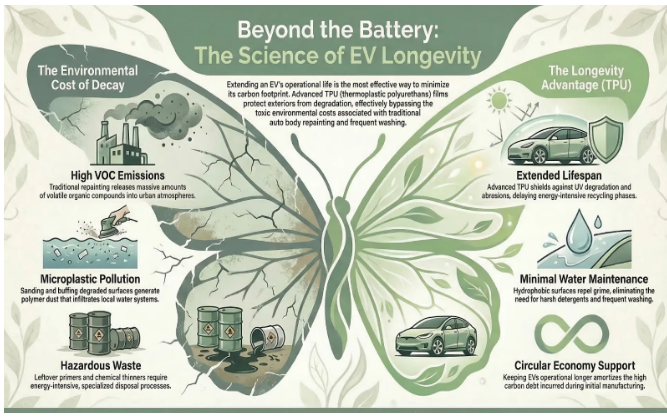
When an EV’s exterior degrades, traditional restorative processes introduce severe environmental hazards into the local ecosystem. Auto body shops rely heavily on harsh solvents and chemical-laden paints that actively undermine green city initiatives. These practices release massive amounts of volatile organic compounds (VOCs) directly into the urban atmosphere.
The environmental impact of traditional auto body repair includes:
- VOC Emissions: Solvent-based paints release greenhouse gases and toxic fumes that severely degrade urban air quality.
- Microplastic Shedding: Sanding and buffing generate microscopic polymer dust that infiltrates local water treatment systems.
- Hazardous Waste: Leftover clear coats, primers, and chemical thinners require energy-intensive, specialized disposal.
- High Energy Consumption: Industrial paint booths and thermal curing ovens draw massive amounts of electrical grid power.
Minimizing Water and Chemical Usage in Daily Maintenance
Urban sustainability isn’t just about reducing emissions; it also heavily involves municipal water conservation. Traditional car washing requires hundreds of gallons of fresh water and relies on highly toxic degreasers. These runoff chemicals often bypass standard treatment facilities and poison local aquatic ecosystems.
However, advanced hydrophobic surface technologies drastically alter this maintenance paradigm. Because these protective layers actively repel water, dirt, and road grime, vehicles require significantly less frequent washing. When washing is necessary, the non-stick surface allows owners to use minimal water and eliminate the need for harsh chemical detergents entirely.
How Vehicle Longevity Supports the Circular Economy
The core philosophy of a circular economy centers on maximizing the lifecycle of manufactured goods before they are recycled or discarded. In the automotive sector, keeping existing EVs on the road longer drastically reduces the industrial demand for new vehicle production.
Every year a vehicle remains operational, the initial carbon debt incurred during its battery and chassis manufacturing is amortized further. By utilizing protective materials to prevent physical degradation, we reduce the demand for replacement parts and body panels. For more insights on macro-level waste reduction, explore our comprehensive guide on Sustainable Waste Management and the Circular Economy.
Key Takeaways
| Area | Key Takeaway | Impact/Data |
| EV Longevity | Apply optical TPU | Drops carbon debt |
| Body Repairs | Skip toxic repaints | Cuts VOC emissions |
| Maintenance | Adopt hydrophobic | Halts water waste |
| Supply Chain | Extend vehicle life | Cuts new EV demand |
The Future of Eco-Friendly Urban Transit and Net-Zero Goals
Achieving sustainable urban transit requires a holistic approach that looks beyond simply replacing internal combustion engines. Governments and city planners must incentivize practices that preserve the structural and aesthetic integrity of our current EV fleets. Individual owners who invest in longevity technologies directly contribute to broader municipal climate action plans.
Transitioning to sustainable transit isn’t just about adopting battery technology; it’s about optimizing the entire vehicle lifecycle. According to the International Energy Agency (IEA), extending the operational life of consumer EVs and reducing overall manufacturing demand play a critical role in achieving global net-zero emissions targets by 2050.
As material science continues to evolve alongside green infrastructure, the gap between consumer vehicle ownership and environmental stewardship will close entirely. Discover more about the evolution of urban mobility in our latest breakdown of Next-Generation Electric Vehicles (EVs).