

Common Electrical Maintenance Gaps Found in Older Properties
There’s a certain charm to older homes that just doesn’t seem replicable with newer construction. The thing is, behind the beautiful old facades of many such houses, electrical systems just haven’t kept pace with modern safety standards or power demands.
But knowing where these gaps exist can help you better protect your investment and make it safe for all who dwell there. So, what are these gaps? Read on to find out.
Outdated Wiring That Can’t Handle Modern Loads
If you were to walk through any house built prior to the year 1970, there’s a good chance you’re looking at wiring that was never designed for modern homes. Back then, you were lucky if you had three or four lights and maybe a radio and a television set.
Now you’re talking about plugging in laptops, charging stations, space heaters, and an air conditioner all at once. Aluminum wire and the use of the knob-and-tube system were perfectly functional for their time. The problem is, these are still here decades later, still trying to do jobs they were never meant to do.
That is why many people have chosen to let experts deal with their electrical installations when upgrading their home. Your home being dated doesn’t mean the wiring has to be as well. They have the tendency to overheat when heavily used, and this is where the danger occurs.
Missing or Inadequate Grounding Systems
Two prongs have become quite common, especially in older homes. They provide a dead giveaway that the home does not have proper grounding. This means that there is no proper path for electricity to travel whenever something goes awry in the process. The third prong found in most contemporary plugs contains a grounding wire for protection against shock in case something malfunctions.
There are people who purchase adapters to ensure that their three-prong plugs can be inserted into two-prong outlets. However, this will not create grounding where none was originally present. You will still be exposed to the same dangers, just on the false belief of having solved the issue.
The grounding issue goes deeper than outlets. Many older electrical panels weren’t built with grounding systems either, so even if you wanted to upgrade the outlets, you’d need to address the whole setup.
Overloaded Electrical Panels
An older home’s electrical system often has a 60 or 100-amp electrical panel. New homes require at least 200 amps. This large gap between the two systems makes the breakers trip when the microwave and toaster are in use at the same time. Outlets won’t work very well, and adding one more device feels like playing electrical roulette.
Many get creative with the things that their current panels cannot support. They use extension cords as workarounds for their panels. Sometimes, people add circuits without upgrading their panels.
Workarounds may work for a short while, but there isn’t room to efficiently distribute the electricity where it needs to go. Equipment needs electrical power distribution, and an undersized electrical panel is a bottleneck.
Absence of Modern Safety Devices
Arc-fault and ground-fault circuit interrupters are standard in newer construction because they catch dangerous conditions before anyone gets hurt. Older properties were built before these devices existed, which means they’re operating without a whole layer of protection that we now consider essential.
The same goes for surge protection. Lightning strikes happen. Utility fluctuations happen. Without whole-house surge protection, you’re relying on luck to protect thousands of dollars’ worth of electronics and appliances.
Deteriorated Electrical Components
The insulation around old wires gets brittle over time. It cracks and falls away, leaving bare wire exposed. Connections that were tight forty years ago have loosened from thermal cycling year after year.
You might look at a light fixture that’s been working since 1965 and think that it must be fine. But what you can’t see is how degraded the internal components have become. The switch might feel a little loose. The connection might be held together more by corrosion than by actual contact.
Regular electrical maintenance would catch this deterioration before it becomes dangerous. But plenty of older properties have gone decades without a real inspection. Just because something hasn’t failed yet doesn’t mean it’s safe.
Inadequate Circuit Protection
Old homes have the major appliances wired on the same circuit. This means your refrigerator, microwave, and dishwasher might all be drawing electricity from a circuit originally designed to handle a handful of lights, possibly a fan.
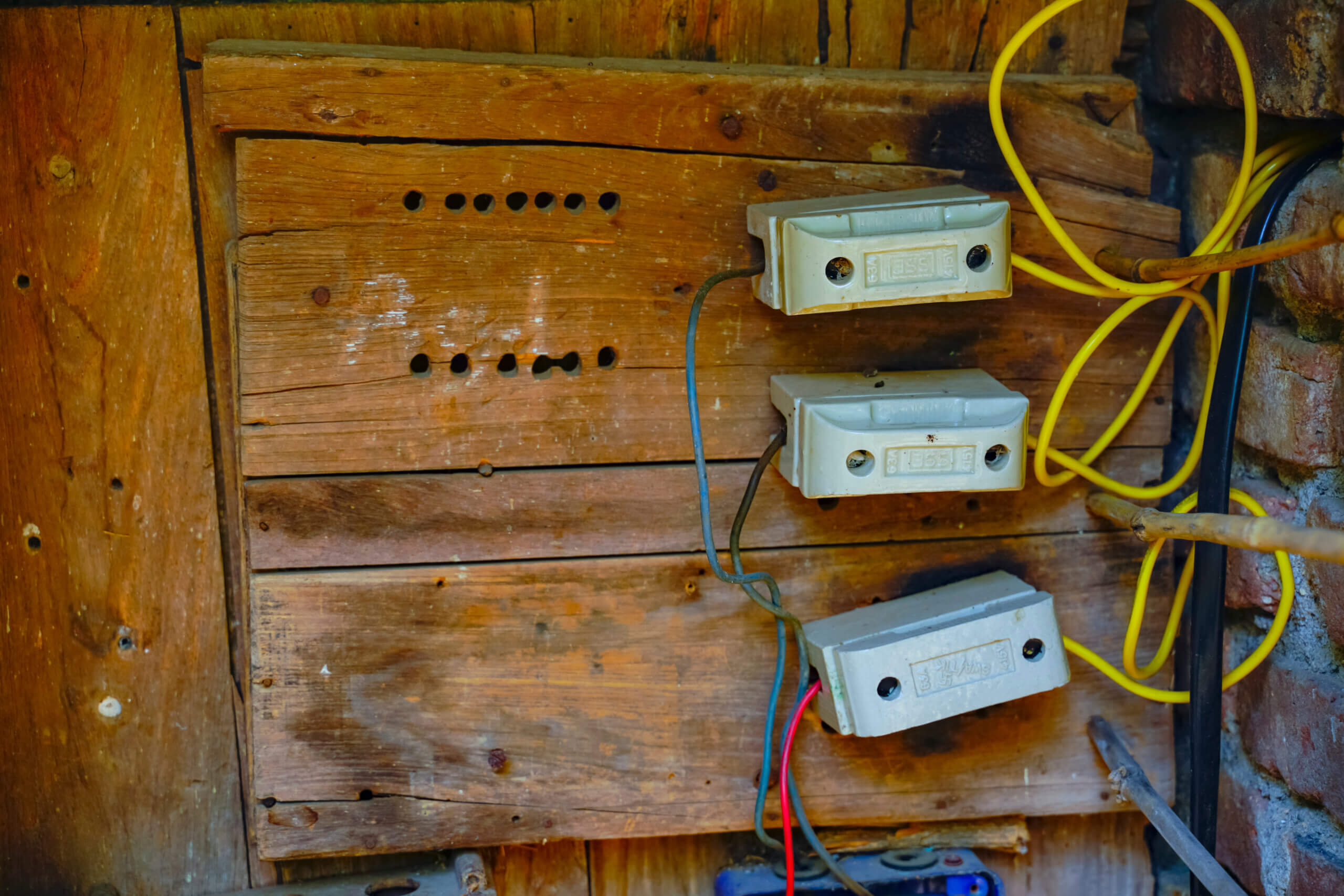
Then there’s the problem of outdated protection. Quite possibly, an older building will have old fuse protection rather than circuit breakers. And perhaps somebody decided that blown fuses were such an annoyance that they’d replace them with a higher amperage fuse to stop the problem. That takes away any protection that the fuse would have provided.
You’ll also find properties where the electrical panel is just a mess of additions and changes made over the years, where every alteration has caused slightly more problems. No one ever intended to create problems. They were just reacting to the problems of the moment without having any long-term view.
Final Thoughts
If you’re in an older property, these gaps in the electrical systems aren’t going to fix themselves. It does take some investment of both time and money, but it’s doable. And then you can enjoy the sense of having the old character while still being able to go to bed at night with peace of mind.