

How Flexible Living Reduces Carbon Footprints for Remote Professionals
By Edrian Blasquino
Can your job help fight climate change? For remote professionals, the answer is moving toward yes.
Leaving the traditional office behind does more than change your work address. It opens a door to a lifestyle that naturally uses fewer resources. This approach, a flexible way of living and working, turns daily choices into meaningful environmental action.
Eliminating the Daily Commute
The routine of traveling to a centralized office creates a consistent stream of emissions. Personal vehicles and public transit systems both consume energy and release greenhouse gases. Remote work stops this daily cycle.
A personal vehicle used for a long daily trip produces several tons of carbon dioxide annually. When remote work allows that vehicle to remain unused, those emissions are prevented. While public transit is a shared resource, reduced ridership eases the overall energy demand on the system.
The professional’s travel becomes a movement within their home. This direct reduction in fuel consumption and vehicle use has broader effects. It reduces traffic congestion and wear on transportation infrastructure.
The time once spent commuting often allows for more structured personal routines, such as more efficient home energy use. Eliminating the daily commute is the most significant way remote work reduces carbon emissions.
Smarter Home Energy Use
A traditional office consumes energy continuously. Lights, climate control, and machines operate for a large staff across a big space, whether every desk is filled or not.
Working from home changes this dynamic. Energy management becomes a direct personal responsibility, which often leads to more careful and efficient use.
- The scale of a home office enables immediate, effective conservation measures.
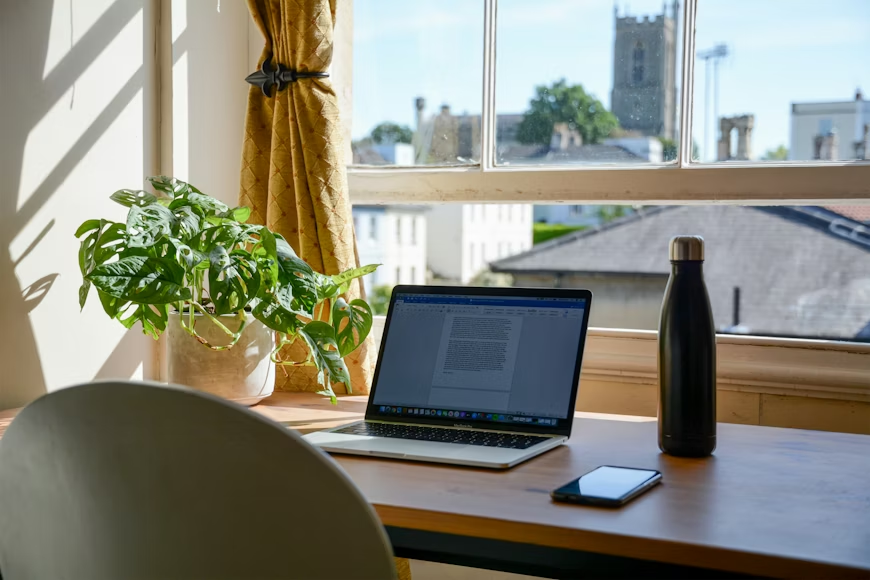
- Daylight from windows provides illumination without switching on lights.
- Climate control targets the specific area where work happens.
- Choosing an energy-efficient laptop and LED bulbs reduces power consumption for the same tasks.
- Automated devices, such as programmable thermostats, maintain comfort while reducing excess use.
This direct control over your environment prevents the substantial waste generated by heating, cooling, and powering a large commercial building for eight hours a day, in addition to your home.
Conscious Location and Consumption Choices
The freedom to choose where you live represents a major sustainability benefit of this career path. Without a fixed office location, professionals can make decisions that directly lower their environmental impact. This principle is central to flexible living for remote professionals.
Several practical choices are available to support this goal.
- Opt for a smaller home that uses less energy.
- Live where stores and services are within walking distance.
- Select a location with access to renewable energy.
- Prepare meals at home to reduce packaging waste.
- Purchase durable, long-lasting items for your home office.
This control over your environment promotes mindful consumption. The outcome is a smaller physical footprint and fewer daily trips. This combination results in much lower carbon emissions than the old model of a separate household and a long commute to a centralized office.
Rethinking Travel and Mobility
Remote work alters standard travel patterns, leading to a clear decrease in related emissions. The need for a daily commute and regular business travel is removed.
This flexibility supports a different approach to personal travel. Longer visits to one destination become practical. This pattern replaces multiple short trips, which require more frequent, higher-emission travel. The total number of long-distance journeys each year falls as a result.
The main changes are:
- No daily commute emissions.
- Fewer flights for routine business meetings.
- More ability to choose longer, less frequent personal trips.
- A natural reduction in total miles traveled.
Actionable Strategies for Remote Professionals
A flexible routine offers a direct path to lower environmental impact. The decisions you make for your home office and daily life translate into measurable resource conservation.
Consider these approaches:
- Select energy-smart office tools. Use a laptop, not a desktop. Connect devices to a power strip for a complete nightly shutdown. Install LED bulbs.
- Favor neighborhoods designed for walking. Living close to stores and services reduces the number of short vehicle trips.
- Match your home to your lifestyle. A properly sized home uses less energy. Ask your energy supplier about renewable source options.
- Change how you travel. Replace several brief trips with one longer stay. Choose rail or bus travel over flying when you can.
- Recommend supportive company policies. Propose allowances for efficient office equipment. Ask about carbon balance programs for work travel.
- Manage digital resources. Store active files on your device to limit constant data streaming. Unsubscribe and delete unused digital files.
- Adjust daily consumption. Reduce food waste through weekly meal planning. Include more plant-based foods in your diet.
Final Thoughts
The narrative of remote work is often told in terms of personal freedom and productivity. Its quieter subplot is environmental. By designing our days around flexibility and intention, we build a lower-carbon existence by default.
This synergy between a well-executed job and a reduced footprint is the modern standard to meet. The result is a professional life that doesn’t just take place in the world, but actively cares for it.
EDRIAN BLASQUINO
Edrian is a college instructor turned wordsmith, with a passion for both teaching and writing. With years of experience in higher education, he brings a unique perspective to his writing, crafting engaging and informative content on a variety of topics. Now, he’s excited to explore his creative side and pursue content writing as a hobby.
LinkedIn I Facebook I Portfolio