

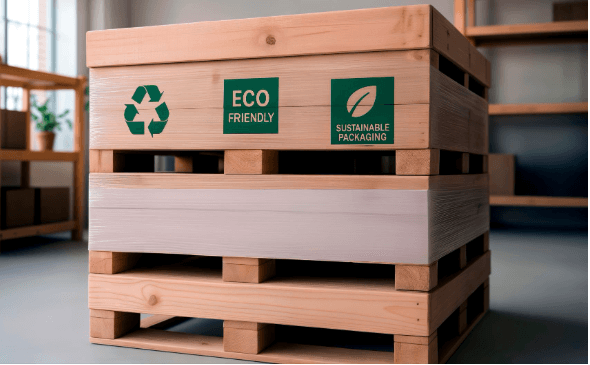
Pallet Packing for a Circular Economy: Reducing Waste in Logistics
| Key Takeaways
|
The logistics industry is, hands down, one of the most resource-intensive and has one of the highest carbon footprints. It relies on fossil fuels for transportation, and the production of packaging materials causes greenhouse gas emissions.
As the world shifts to more sustainable practices, many companies are striving to earn their place in the circular economy, where materials are repaired and recycled to minimize waste. If you’re managing a warehouse or overseeing the supply chain, begin by reconsidering how you use your pallets.
That’s because these lowly platforms are the backbone of global trade. Every box of goods in the warehouse and every shipment stacked in trucks relies on these lowly platforms. Find out how they fit into the circular economy, and how you can make doable and worthwhile shifts to cut costs and waste.
What Does Pallet Packing Mean?
In its simplest form, pallet packing or palletizing involves placing goods or containers properly and securely to create a unit load. Hence, pallets are the foundation of domestic and global logistics processes, as it significantly influences how you can transport goods efficiently. If palletized products are packed poorly, they can collapse inside the warehouse and get rejected by a retailer. Questionable load stability can likewise cause a shipping container to tip.
Effective pallet shipping takes more than just stacking boxes correctly, though. For proper material handling, you need pallets that support goods and facilitate easy pallet jack or forklift access. The packers also use corrugated cardboard or plastic sheets placed between layers of boxes for better weight distribution and stability. Last but not least, you need containment packaging materials, such as stretch wraps or plastic films, strapping bands, and industrial adhesives.
The weight of goods being shipped, the load types, transportation modes, and the shipping freight destination are the most influential elements that dictate pallet requirements and packing techniques. For example, many use standardized GMA pallets, which have since been renamed CBA pallets (Consumer Brand Association), to ensure widespread compatibility and streamline logistics processes within the retail and warehouse sectors.
Plastic, Metal, or Wood?
Pallets come in different shapes, sizes, and materials. Shippers can choose between plastic, metal, and wood pallets. Most prefer the latter for its cost-effectiveness and lower carbon footprint during the production process. Metal and plastics require higher upfront costs and are less versatile compared to their timber counterparts. While durable, they’re less likely to be repairable and reusable if they break or reach the end of their lifespan.
That said, international shipping requires heat treated pallets and crates for biosecurity. Most countries follow ISPM 15 (International Standards for Phytosanitary Measures), which mandates that wood packaging materials be treated before they move between countries. Doing so prevents the spread of invasive insects and fungi. Heat treatment replaces methyl bromide application, which can leave toxic residues and damage the ozone layer.
What the Circular Economy Means for Logistics
Traditional logistics followed a linear process: you bought a pallet, used it until it splintered, and tossed it into a landfill. This activity is incredibly expensive and environmentally damaging. A circular economy does the opposite, keeping resources in use for as long as possible. This mindset shift requires stakeholders to design packaging and transport assets to be repairable and recyclable. The goal is to extract the maximum value from them and recover or regenerate the products at the end of their service life.
Applying this concept to pallet packing means considering pallets as long-term assets rather than disposable resources. But you also need to look at every disposable element in your packing process. Apart from wood pallets, you must consider the plastic film, the strapping band, and the load protectors. The goal is to reduce raw material consumption even in the smallest ways.
Even some outdated practices can erode your profit margins. Ensuring that boxes don’t hang over the edge of the pallet, for example, minimizes the risk of flawed merchandise. Automatic stretch wrappers can reduce usage compared to manual wrapping. Using as much of the pallet’s volume as possible likewise helps you skip paying to ship air.
Simply put, better packing materials and techniques mean using reasonable amounts of plastic wraps and storage or shipping pallets. Doing so slashes both expenses and environmental impact.
Smarter Pallet Packing Strategies
There are greater sustainability challenges in the supply chain, but pallets are so ubiquitous that rethinking how you use them can make a massive impact. About five billion pallets are being used worldwide, at least 90% of which are made of wood. This year, its market size is expected to reach USD$ 105.2 billion, which reflects a five billion increase from 2025 estimates.
Small improvements can scale up quickly, so focusing on better pallet use can create a massive impact on your business.
Choose Reusable Pallets
Modern plastic pallets, many of which are high-density polyethylene, are made from recycled materials and can be used multiple times. At the same time, metal pallets are strong and long-lasting, making them ideal for heavy-duty industries that ship custom machinery.
When the circular economy is concerned, engineered wood pallets take the gold medal over their plastic and metal cousins because they last a long time and can be easily repaired, recycled, and eventually returned to the earth without leaving a toxic footprint. While plastic and metal have their place, wood is the only primary material that’s naturally renewable and carbon-negative from start to finish.
Optimize Load Distribution
Placing heavier items or freight boxes at the bottom maintains a low center of gravity. You can also align boxes in column or pyramid styles to maximize space and vertical strength. Make sure to use layer pads to distribute pressure evenly across the surface.
Finally, utilize load-planning software that doesn’t just serve as a pallet load calculator, but guarantees that the load is a tight interlocking unit that limits movement during transit, without requiring excessive stretch film or wrap use.
Adopt Pallet Pooling
Many large retailers and manufacturers rely on third-party providers rather than purchasing, storing, and repairing their own pallets. The latter companies gather and deliver standardized and high-quality pallets to their clients.
Pallet pooling companies are likewise responsible for collecting these shipping and storage solutions post-use. The pallets are first sent to a service center for quality checks and restorations before re-entering the supply chain. This means you can skip the service and maintenance costs for keeping the pallets in tip-top shape.
Design for Disassembly
In the context of pallet packing, designing for disassembly ensures that a unit load can be broken down quickly and safely so that every component can be reused. A key indicator for this is whether a pallet can be fully dismantled without using tools.
Palettes are often wrapped in layers of tape and film that contaminate recyclables. However, this circular economy concept flips the script by prioritizing clean materials. Sustainable packing and shipping services may use glue instead of tape or swap single-use plastic straps for Velcro wraps and tensioning belts. To further minimize damage, they might use collapsible shipping crates and pallet pack containers that don’t require crowbars to fold down. This reduces waste and extends their lifespan.
Reverse Logistics
Packing for a circular economy doesn’t end when the truck leaves your dock. It also depends on what happens when the truck comes back. Reverse logistics, as it’s called, involves bringing back reusable packaging, pallets, and sometimes, product waste for refurbishment. Some trailers may contain e-commerce returns or items that don’t fit or were not accepted by the recipient for various reasons.
The end goal is efficient recovery, so you might find yourself coordinating backhaul trucking routes and managing the intake of repairable assets.
Track and Trace
Some companies embed QR codes and RFID into pallet stringers to turn these wooden platforms into a traceable asset. Using a cloud-based software, they can monitor pallets from the loading dock to the retail floor. Apart from its current moisture content, the data reveals how many trips a pallet has survived and how many repairs it has gone through. Bulk scanning allows you to pinpoint where lost pallets occur in the journey.
Besides preventing theft, this activity allows you to measure your sustainability metrics and show the figures to potential investors. Monitoring pallets proactively likewise ensures accountability in reuse cycles.
Adopting smarter pallet packing practices requires mindset shifts and technology use. It’s easy to implement as a logistics manager. Even so, you can only succeed with the participation of other business executives, the staff, and consumers.
To put this into perspective, many countries have strong waste management practices, with Germany leading the way. It would not have been possible for this European country to recycle around 65% of its reusable waste products without strong national policies, strict circular economy enforcement, and public support.
Emerging Technologies
Technology has found its way into these humble platforms. It has brought advancements that integrate every company’s sustainability goals.
Smart Pallets
Equipped with Internet of Things (IoT) sensors, smart pallets can be integrated into a Freight Management System and other monitoring networks. With these advanced devices, you could track ambient temperature and sudden impacts, apart from the location. Such a capability allows companies to intervene proactively to prevent a rejected load while simplifying customs documentation procedures.
Robotics Manufacturing
Instead of relying on manual labor, many pallet makers use advanced technologies to address manufacturing challenges and build mixed-use pallets. High-volume factories use robotic palletizers with arms that use vacuum suction or mechanical grippers to stack items at high speed and with consistency.
AI and ML Integration
Advanced platforms, such as artificial intelligence and machine learning, feed the robots to address a company’s automation requirements successfully. ML algorithms analyze historical transit data to predict the breaking point of a load. At the same time, AI calculates the minimum containment force required, slashing film usage while maintaining safety.
More Sustainable Materials
Plastic materials are slowly replaced by sustainable pallet wraps. Bio-based alternatives like mycelium or mushroom inserts are challenging the supremacy of plastic corner beads and foam. There’s an increasing interest in seaweed-based stretch films, too. Moreover, some shipping companies are using recycled cardboard or shredded and honeycomb paper instead of air-filled bubble wraps.
Eco-conscious shippers are tapping FSC- or PEFC-certified virgin kraft paper when packing food and other fragile items. A durable and sustainable packaging material, it’s sourced from responsibly-managed forests and is non-toxic. As such, it’s a great alternative to plastic shrink wraps.
Innovations prove that the path to a circular economy is possible with increased data gathering and by tapping into biology. Combining these seemingly unrelated fields ensures industrial-strength protection without unnecessary waste.
How to Prepare for Circular Pallet Packing
Ready to make the switch? Here’s a practical roadmap so you can start without too much hassle:
Audit Your Current Pallet Use
You can’t improve what you don’t measure, so map out how your pallets flow through your supply chain. Perform inventory tracking and understand how many pallets you buy, how long they last, and how often you discard them. You must also identify weak points and inefficient practices to know where to focus your sustainability efforts.
Start Small
You don’t have to purchase new and costly pallet wrapping solutions immediately. Consider joining a pooling network to reduce the headaches of managing your own inventory. These companies also ensure compatibility across supply chains, so you don’t have to worry about compliance and safety protocols.
In addition, switch to fully reusable materials. They might require upfront costs, but they pay off over time. In doing so, you’re reducing your reliance on labor-intensive resources as you cut down on waste streams.
Train Your Staff on Smarter Packing
Even the most durable pallet won’t last if it’s misused. Uneven loads can warp or crack pallets, while excessive stretch wrap increases plastic waste. Hence, it’s crucial to train your team on proper stacking, weight distribution, and securing methods. Teaching them basic circular economy principles and linking these with their work activities makes a huge difference. It’s essential for integrating eco-friendlier practices into your daily operations.
Once you’ve implemented the changes, track essential metrics, for instance, pallet lifespan, waste reduction, and cost savings. You can include carbon footprint improvements to showcase environmental benefits. Reporting these results internally helps build buy-in across departments. Sharing them externally strengthens your sustainability credentials.
Final Thoughts
Pallets, as unglamorous as they may seem, sit at the heart of the ecological shift. This means that intelligent packing can reshape the future of logistics, one shipment at a time.
If you’ve yet to join the movement, don’t worry. You don’t need to overhaul your entire logistics system overnight. Start by replacing a portion of your pallets with reusable ones. You can also join a pooling network first and track your progress.
By rethinking pallet packing through the lens of the circular economy, you’re not only reducing waste. You’re building resilience, cutting operational costs, and future-proofing your organization. After all, the circular economy thrives in small but impactful steps.