

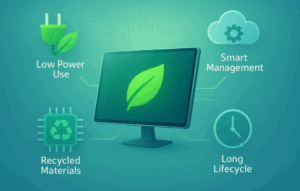
Sustainable Digital Signage: Eco-Friendly Technologies
Sustainable digital signage is a smart way for businesses to cut their environmental impact while keeping strong visual communication. It uses energy-saving and low-impact technologies in digital displays to lower power use, reduce waste, and support greener operations without losing the benefits of digital screens. This shift matters as customers and regulators ask companies to act more responsibly.
Building eco-friendly digital signage means looking at the whole picture: hardware, software, installation, and end-of-life. Each choice should support the planet and deliver clear business value.
For example, you can update key messages in a busy break area without printing a single sheet, using efficient digital screens. This is where solutions like corporate break room signage stand out, showing how sustainability and smooth operations can work together.
What Makes a Digital Signage Solution Eco-Friendly?
A green digital signage setup usually includes:
- Low power use: efficient displays, smart power settings, and options for renewable energy
- Better materials: recycled and recyclable parts, with fewer harmful chemicals
- Lifecycle planning: responsible production, long service life, repair-friendly design, and recycling at end of life
- Smart content: energy-aware layouts, remote control, and centralized management
Content tools also matter. Energy-light graphic choices, remote monitoring, and central control can cut power use and running costs. A well-planned system reduces impact across its whole life.
Environmental Impact of Traditional Versus Digital Signage
For many years, posters, flyers, banners, and billboards were standard. But the environmental cost is high. Moving to digital screens can lower that impact by a wide margin.
Resource Consumption and Waste From Conventional Signage
Paper signs use a lot of wood, adding pressure on forests. Making paper also uses large amounts of water and energy, often from fossil fuels, which leads to greenhouse gases and air pollution. Many signs also use plastics and chemical dyes that can harm water and soil during and after production.
Shipping printed materials adds more emissions. Because print campaigns change often, stores and restaurants may replace signs many times a week, creating constant waste.
How Digital Signage Reduces Material Waste
Digital screens cut out most printing. By moving to digital, companies reduce paper waste, save trees, and send less trash to landfills. They also use far less ink, glue, and chemicals linked to printing. One screen can show many messages that would otherwise need piles of posters and flyers.
Updates happen online, so there is no new printing or shipping. That lowers transport emissions and costs, making operations leaner and greener.
Lifecycle, Durability, and Ease of Updates
Digital displays can update instantly and remotely without creating physical waste. With solutions like Look Digital Signage, one screen can support years of messages, offers, and notices without the need for reprints.
Modern screens are built to last, often 10 years or more, which means fewer replacements and less e-waste. Many makers now design for recycling and easier disassembly. Parts can be reused or recovered, supporting a circular approach that reduces impact compared to mixed-material print signs.
Eco-Friendly Technologies in Sustainable Digital Signage
Eco-friendly technology sits at the core of green digital signage. New displays and smarter controls let businesses communicate clearly while lowering their footprint.
Energy-Efficient Display Technologies: LED, OLED, and E-Paper
Today’s commercial screens favor high-efficiency LEDs, which use far less power than older LCDs with fluorescent backlights-often 50-70% less-while running cooler and lasting longer.
OLED panels bring rich colors and deep blacks, and often use more recyclable materials like metal and glass. For static content and ultra-low power needs, e-paper is a strong fit. It only draws power when content changes, needs no backlight, and can run for weeks on batteries or solar, with yearly energy use in single-digit kilowatt-hours.
| Display Type | Typical Power Use | Best Use Cases | Notes |
| LED | Low (50-70% less than older LCD) | Indoor/outdoor, bright visuals | Long life, lower heat output |
| OLED | Low to medium (content-dependent) | High-contrast visuals, premium spaces | Deep blacks; recyclable metal/glass in many models |
| E-paper | Ultra-low (updates only) | Static/semi-static info, price tags, transit schedules | Works well with solar; easy to read in sunlight |
Smart Power Management and Scheduling Features
Smart controls help cut energy use by keeping screens active only when needed. Useful features include:
- Motion sensors to wake or sleep screens based on presence
- Ambient light sensors to auto-adjust brightness
- Dayparting and full power-off schedules for nights and weekends
Shutting displays off during closed hours can drop power use by 20% or more. In Germany and Spain, storefront screens must be off between 10 p.m. and 6 a.m. Systems that collect usage data can spot waste and guide further savings.
Use of Recycled and Recyclable Materials in Hardware
Many makers now include recycled plastics and metals in enclosures and media players, lowering demand for new raw materials and cutting landfill waste. Low-VOC paints and adhesives also reduce harmful emissions.
Modular, repair-friendly designs extend product life by allowing part swaps instead of full replacements. Look for certifications such as EPEAT Gold that recognize high recycled content and responsible design.
Sustainable Content Management Systems (CMS)
A green CMS supports light-weight graphics, smart scheduling, and power-friendly playback. Strong remote tools let teams adjust settings, push content, and track energy use from one dashboard.
Remote control cuts site visits and the travel emissions that come with them. Centralized tools keep operations simple and help lower energy use across many locations.
Eco-Friendly Installation and Operational Practices
Going green covers more than buying efficient screens and software. How you install and run the system also matters a lot.
Selecting Sustainable Vendors and Supply Chains
The process starts with vendor choice. Partner with suppliers that follow low-impact production, smart resource use, waste reduction, and emissions controls. Choosing local suppliers where possible can cut shipping emissions.
Certified green vendors offer confidence that sourcing and processing align with environmental goals. Buying teams should weigh total lifecycle impact and ESG alignment along with price and features to get a cleaner supply chain from start to finish.
Choosing Locations To Maximize Impact and Minimize Energy Use
Placing screens wisely saves power. Avoid direct sun to reduce brightness needs and heat buildup. This helps screens last longer and limits cooling demand.
Use motion-based lighting and time-based dimming so displays run only when useful. For outdoor or remote areas, solar power can keep screens running without the grid. Power timers can stop standby draw outside business hours.
Responsible End-Of-Life Recycling and Hardware Disposal
All electronics reach the end of their service life. Plan ahead for recycling to reduce e-waste. Many parts-metal frames, glass, and some plastics-can go back into new products.
Work with certified e-waste recyclers to handle materials safely. Some components can be reused in other devices. Designing for recyclability from the start helps close the loop and recover more value.
How Green Digital Signage Contributes to Sustainability Goals
Adopting green digital signage is a real step toward meeting wider sustainability targets and showing clear action.
Lowering Energy Usage and Carbon Footprint
LED and OLED screens paired with smart controls use far less electricity than older systems or lit static signs. Features like motion sensing, auto-brightness, and scheduled power-off directly cut power draw and carbon emissions tied to electricity. E-paper can reduce kilowatt-hours even more for static content.
Reducing Waste Through Long-Lasting Hardware
Moving from paper to pixels removes the need for printing and its related waste. Modern displays last for years, so you replace hardware less often. Content updates do not create physical trash, and growing use of recycled and recyclable parts helps lower e-waste while supporting a circular approach.
Facilitating Real-Time Updates and Reducing Transportation Emissions
Remote updates remove the need to print and ship new materials. No trucks delivering posters to many sites means fewer transport emissions. A central dashboard keeps messages current instantly while cutting fuel use and labor.
Supporting ESG Compliance and Reporting
Green signage helps companies meet ESG goals and share progress clearly. Screens can show live energy use, recycling stats, or clean power shares to build trust with staff and visitors. Displaying certifications like ENERGY STAR or ISO 14001 sends a clear message about your commitment and supports reporting needs while improving brand standing.
Applications of Sustainable Digital Signage Across Industries
Eco-friendly digital signage works well in many fields, improving communication while lowering impact.
Retail and Public Spaces
Retailers can replace printed promos with efficient screens for product info, deals, and aisle ads. E-paper shelf labels support instant price changes without paper waste. Many retail displays dim or sleep when no one is nearby, saving power without hurting the shopping experience.
In public places like malls and community centers, digital wayfinding and notices replace static maps and posters.
Corporate Offices and Campuses
Offices use digital signage in lobbies, hallways, and break areas to share news, KPIs, and recognition without printing. Some screens show building stats like solar output or water use to support certification goals and workplace transparency. They can also promote carpooling, recycling, and energy-saving programs.
Central control means screens can be shut off when buildings are empty to cut energy use.
Transportation and City Infrastructure
Transit hubs are swapping paper timetables for live screens with arrivals and service alerts. This improves the rider experience and ends constant reprinting. Cities now use solar e-paper for bus stops and stations, which run day and night off-grid, stay readable in sunlight, and need little upkeep.
Urban displays in places like Amsterdam and Copenhagen also share air quality and weather data, helping people and city teams act on real-time information.
Business Benefits of Adopting Eco-Friendly Digital Signage
Beyond environmental gains, green digital signage delivers clear business value for organizations that plan ahead.
Cost Savings and Energy Bill Reduction
Energy-saving screens and smart controls can cut electricity costs by a wide margin. LEDs often use 50-70% less power than older gear. Auto-brightness, sleep modes, and presence-based activation prevent waste.
You also remove printing costs-paper, ink, labor, shipping, and install-leading to strong long-term savings. While upfront spend exists, lower ongoing costs speed up payback.
Enhanced Brand Reputation and Market Differentiation
People favor brands that act on sustainability. Eco-friendly signage is a visible proof point that can improve reputation, build loyalty, and attract customers who care about the planet. A clear plan and message around greener screens signals responsibility and can set you apart from competitors.
Regulatory Compliance and Risk Reduction
Environmental rules are tightening. By moving to greener displays now, companies stay aligned with current and future standards in places like California, Germany, and Spain. This lowers risk of fines or negative press and supports ESG targets across the business.
Key Considerations and Best Practices for Sustainable Digital Signage Projects
Starting a green digital signage project calls for careful planning so you meet environmental goals without hurting performance.
Setting Sustainability Needs and Objectives
Before choosing hardware or software, define what you want to achieve: less paper waste, lower energy use, a smaller carbon footprint, or better ESG reporting. Set clear, measurable targets.
Review your current setup-paper use, printing frequency, and display power bills to create a baseline. That baseline helps you track progress and keep the project aligned with company sustainability plans.
Evaluating and Selecting Energy-Efficient Hardware and Software
Pick displays that use LED, OLED, or e-paper, and features like ambient light sensors, auto-dimming, and power-saving modes. Look for ENERGY STAR, EPEAT, or RoHS to confirm lower energy use and safer materials. Favor recycled and recyclable parts, plus modular designs that support easy repairs and upgrades.
Choose a CMS with strong scheduling, remote power control, and low-power content options. A cloud-based platform can reduce on-site servers and their energy draw. Remote monitoring helps manage power across many sites while avoiding unnecessary service trips.
Documenting and Communicating Sustainability Achievements
After rollout, track and share results. Collect data on paper waste avoided, kilowatt-hours saved, and emissions reduced compared to your baseline. Turn these results into simple charts and messages for staff, customers, and partners.
Publish outcomes in CSR reports, marketing updates, internal channels, and even on your screens. Clear proof of progress supports your brand story and encourages others to choose greener paths.
The Future of Sustainable Digital Signage: Trends and Innovations
Green digital signage keeps improving as new tech arrives and more organizations commit to cleaner operations.
Emerging Display and Low-Power Technologies
Expect further gains in LED and OLED efficiency. Micro-LED promises even better brightness-to-power ratios. E-paper will expand with more color options and new uses. Research into displays that sip power or use ambient light will push energy use even lower, making digital screens an even better fit for sustainability goals.
Integration With Smart City and IoT Systems
Digital signs will link with smart city and IoT networks to adjust content and power use based on real-time data. Examples include billboards that react to traffic and air quality, or public screens that show neighborhood energy stats. Sensors for presence, light, and weather will help systems pick the right brightness, content, and on/off times automatically, improving both impact and efficiency.
Role in Corporate ESG and Net Zero Strategies
As ESG and Net Zero commitments grow, green digital signage will become a standard part of company toolkits. It will help cut energy and waste while sharing verified progress across the organization. Buyers will ask for transparency on sourcing, energy use, and recycling plans. Screens will also support staff engagement by showing real-time environmental data and practical steps the team can take to hit Net Zero goals.