


Beyond Greenwashing: The Emerging Science of Truly Eco-Friendly Public Spaces
By Beth Rush
Sustainability has been on municipal leaders’ lips for years. Although putting nature at the center of policymaking should be a win for the environment, many initiatives are just different levels of greenwashing.
Focusing too much on the natural imagery of lush urban parks and recreational bodies of water is superficial at best and deceptive at worst. Genuinely sustainable public spaces are more than just dense vegetation and clean lakes.
What Makes Public Spaces Truly Sustainable?
Environmental conservation is only one of the core tenets of sustainability. Social inclusion and economic viability are just as important when designing parks, plazas, government buildings, streets, civic centers, libraries, and museums to be eco-friendly, equitable, and feasible.
Sustainability’s environmental, social, and economic components are interconnected and inseparable. Otherwise, civic spaces would contribute to more problems than they solve and would not be able to address people’s current needs meaningfully without mortgaging the future.
Signs of Genuinely Sustainable Public Spaces
While no two sustainability-driven public areas are the same, they typically share these common elements.
Abundant, Diverse Native Trees
Urban plants enrich civic spaces. They make the surroundings cooler by providing shade and removing heat from the air, especially vertical gardens that cover hardscape — artificial outdoor features that absorb and retain heat.
Pockets of vegetation reduce air pollution, sequester carbon, sustain wildlife populations, and mitigate flooding. Drought-tolerant trees planted in well-draining soil that can survive rainy and/or snowy months are desirable because they’re low-maintenance and climate-resilient.
Native plants bring more value than invasive species. Trees that have naturally evolved in the region over hundreds or thousands of years are better adapted to local environments and promote biodiversity more effectively.
Walkable and Bikeable Streets
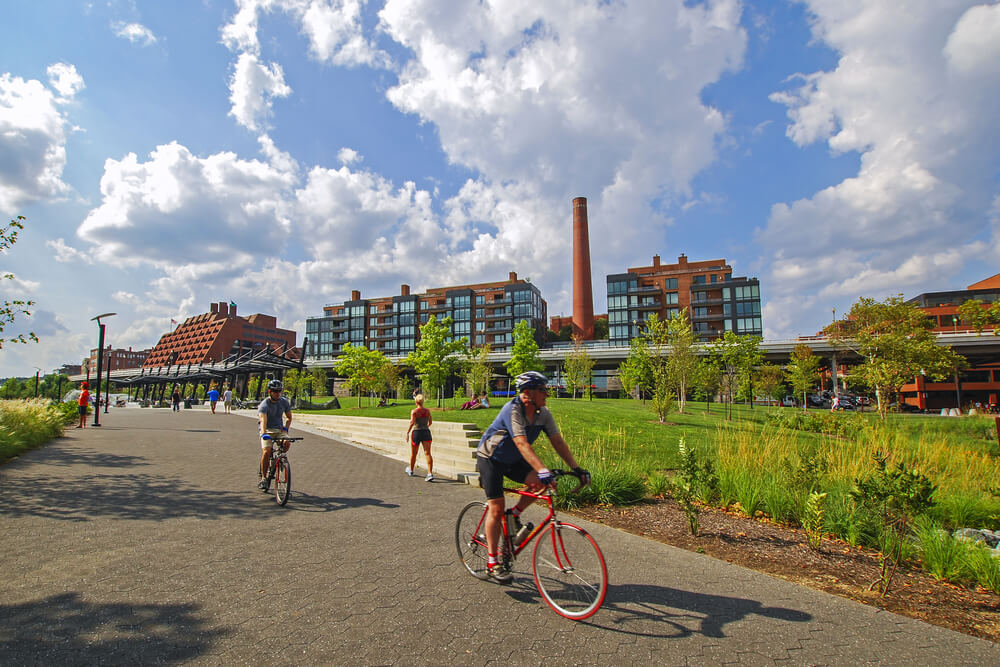
Sustainable public areas aren’t car-dependent and prioritize pedestrians over motorists. Communities that welcome the development of connected, compact, mixed-use neighborhoods with well-marked, continuous sidewalks and frequent crosswalks make it convenient to access daily necessities on foot.
Walkable cities have excellent cycling and skating infrastructure. They have extensive networks of wide paths built on smooth, flat terrain.
Zero-emission public transportation efficiently moves masses of people in and out of urban centers. Automobiles are permissible, although electric vehicles (EVs) are preferable to minimize air and noise pollution.
Durable, Circular Materials
Public places centered on sustainability use durable construction to minimize maintenance and replacement costs over time. They balance longevity with ethical sourcing by prioritizing structures made from heavy-duty materials with renewable or recycled content and by reducing exposure to harmful chemicals.
For instance, sustainable libraries and government offices incorporate hempcrete, recycled steel and glass, cross-laminated timber, and cork into building designs. They outfit the interiors with furniture made from bamboo, rattan, reclaimed lumber, and wood certified by the Forest Stewardship Council.
Eco-friendly playgrounds are another example. They use rubber mulch, synthetic turf, and other surfacing materials with recycled or renewable content to divert waste from landfills and conserve virgin resources.
Permeable Paved Surfaces
Porous paving materials are integral in green infrastructure. They render built environments less susceptible to flooding, help replenish groundwater, and ensure the local water supply meets demand. Pervious concrete, asphalt, and pavers allow stormwater to pass through and soak into the ground, allowing the soil to filter out the contaminants as it seeps into aquifers.
Permeable roads, sidewalks, and parking lots can alleviate pressure on sewer systems during heavy downpours. Light-colored ones reflect sunlight more effectively than traditional hardscaping features, so they contribute less to the urban heat island effect.
Accessibility-Compliant Features
Sustainable public spaces are universally accessible, fostering community engagement. They have features optimized for people of all ages and abilities. These places have wide entrances, smooth and even pathways, ramps, and elevators to help individuals with mobility issues navigate them more easily.
Regarding wayfinding, clear signage is the standard. Navigational aids have large text and braille for the visually impaired. Audio announcements, flashing lights, and tactile pavements are also available.
In the United States, public restrooms must comply with the Americans with Disabilities Act. Their dimensions accommodate mobility devices and enable easy maneuvering. These spaces have at least one unisex restroom and grab bars to promote independence and safety.
Crime-Deterrent Landscaping
Public safety is a top priority for spaces conducive to socialization. Although crime is complex, many landscape architects adopt the core principles of Crime Prevention Through Environmental Design.
These professionals reimagine physical environments to positively shape human behavior, instill a sense of security among residents, and enhance perceptions of a location’s livability. They secure parks, beaches, play areas, squares, and community gardens without making them feel like fortresses.
Landscape architects provide potential perpetrators with fewer opportunities to conceal themselves and their actions. Clear sightlines increase the risk for aggressors to commit harm. Physical barriers and visible signs help control foot traffic, while well-lit, unobstructed pathways encourage people to walk on designated routes.
Regular maintenance does more than increase curb appeal. It sends a message to malicious characters that the authorities are vigilant in every corner of the civic space and that no illegal activity goes undetected.
Public Spaces Are Becoming More Sustainable
Local government officials should lead the way in sustainability. While reshaping public areas to become more eco-friendly, socially equitable, and resource-efficient requires considerable capital, more people view such development projects as practical. So the next time you go out, check how far your town has come — and how far it still has to go — to be genuinely sustainable.
About the author: Beth Rush is the green wellness editor at Body+Mind, where she covers topics like the power of climate consciousness at all stages of education. You can find Beth on Twitter @bodymindmag. Subscribe to Body+Mind for more posts by Beth!