


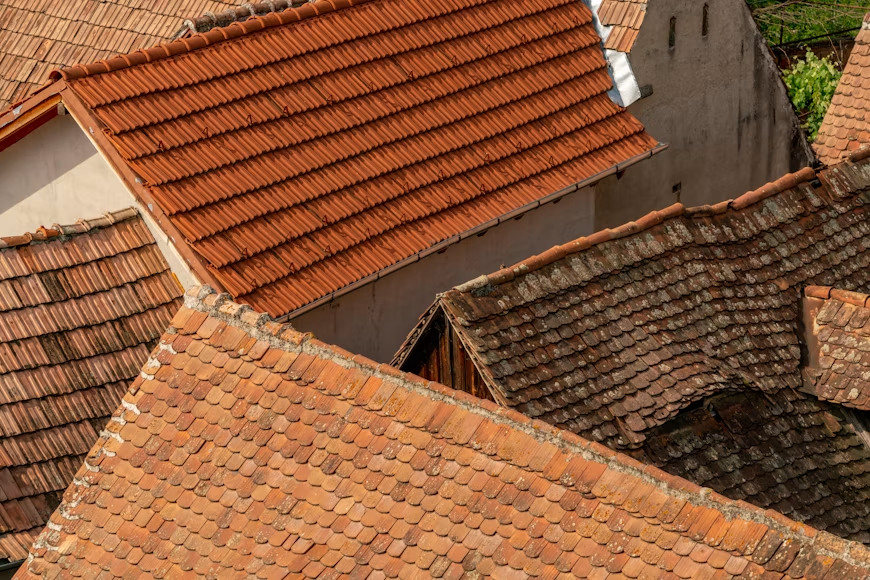
A Cooler, Greener Home: How Natural Roof Tiles Regulate Indoor Temperatures
As the Earth continues to heat up, more people are exploring natural ways to keep their homes cool and comfortable. Natural roof tiles have emerged as a durable and sustainable solution, and these materials are experiencing a surge in adoption in residential and commercial construction worldwide.
According to recent data, clay tiles have become the preferred roofing material of builders and architects in Europe, and the continent accounts for nearly 38 percent of global consumption. Meanwhile, concrete roof tiles are being used on 68 percent of residential pitched roofs in developed regions.
Sustainable roof tiles offer superior durability and reduce environmental waste. They also help reduce electricity bills, as clay and concrete tiles naturally regulate indoor temperatures. Here’s how natural roofing materials can keep your home cooler during the hot months.
Solar Reflectance
When sunlight hits conventional roofing materials like metal or asphalt shingles, the surfaces mostly reflect the sunlight back into the atmosphere. However, some of that solar energy is absorbed as heat, which transfers into the building.
This is why homes in tropical regions often feel unbearably hot during the summer, as countries like Vietnam, Thailand, and the Philippines experience intense sunlight, with temperatures reaching 44°C to 45°C from March to May. Prolonged exposure to hot indoor environments not only causes people to rely more on air conditioners and electric fans, but it also increases the risks of dehydration, respiratory distress, and cognitive impairment.
To reduce heat and stuffiness in homes, builders must use materials that reflect more sunlight back into the sky, so less heat is absorbed by the roof. For an architectural statement that keeps homes cool, consider replacing your old roofing materials with clay or cement roof tiles.
Concrete tiles, especially those treated with solar-reflective glazes or painted in light colors, can reflect sunlight rather than absorb it. This prevents the roof from acting as a heat source, which results in naturally cooler indoor spaces.
Lighter-colored terracotta tiles are also a good choice, as they reflect a significant portion of radiation back into the atmosphere rather than absorbing it.
Thermal Mass
Clay and concrete roof tiles are naturally dense and have thermal mass, which is the ability to absorb, store, and release heat. Both materials absorb heat slowly during the hottest part of the day. At night, when temperatures drop, they release heat slowly, preventing homes from experiencing rapid temperature spikes.
Also, they provide natural ventilation because their curved, overlapping design means they can’t be installed directly on the roof. Instead, they’re mounted on battens, leaving a gap between the tiles and the roof where air can flow freely. Continuous airflow between roofing materials helps dissipate heat before it can transfer to the ceilings.
Choosing dense clay or concrete tiles can save you money on replacements because they’re extremely durable and fade-resistant. Good-quality clay tiles can last between 80 and 100 years, while concrete tiles typically last 40 to 60 years.
Pick clay for a timeless and authentic Mediterranean, Spanish, or tropical look for your home. If you prefer a modern aesthetic, go with concrete tiles, which can be painted and adapted to contemporary architectural styles.
More Sustainable Roofing Options for a Cool Home
If you’re looking for a unique way to enhance your home’s curb appeal while keeping your indoor spaces cool, consider a ‘living roof.’ This involves integrating vegetation directly onto your roof, and it offers multiple benefits for green homeowners.
First, because plants provide natural insulation and reduce heat transfer into your home, this strategy enhances energy efficiency by reducing reliance on cooling appliances. It also reduces the urban heat island effect by absorbing sunlight and, best of all, improves biodiversity by providing habitat for birds and beneficial insects.
Proper planning is essential to prevent water damage and root rot, so you may need to consult a specialized green-roof contractor, a professional roofing company, or a landscape architect for this project. You may also want to have your roof inspected by a structural engineer to ensure it can support the weight of soil, water, and plants.
Using the right roofing materials can help you create a more comfortable indoor environment. Consider sustainable roofing materials like clay or concrete tiles, or have a living roof with actual live plants for a cooler, greener home.