

From Gray to Green Infrastructure: How Decorative Concrete Is Joining the Urban Greening Revolution
For decades, urban sustainability conversations treated pavement as the problem and plants as the solution. That picture is changing. Cities around the world are discovering that thoughtfully designed, beautifully finished concrete can actively support the same goals as trees and rain gardens.
From reflective streets in the American Southwest to greener public spaces in Athens, decorative concrete is earning a place in the urban greening toolkit.
Cities Are Rethinking Pavement
Hard surfaces cover a large share of modern cities, and they shape how urban spaces address two major challenges. The first is heat. Dark pavement absorbs sunlight all day and releases it slowly at night, contributing to the urban heat island effect.
The second is water. Conventional pavement sends rainfall rushing into storm drains rather than allowing it to soak into the ground.
The scale of the opportunity is part of what makes smarter surfaces so promising. The construction industry accounts for 39% of CO2 emissions globally and more than half of all extracted natural resources, so every improved street, plaza, and patio contributes to a much bigger shift.
Decorative Concrete Supports Urban Greening
The same thinking is reshaping how designers view stamped concrete, concrete pavers, and other aesthetic hardscaping. The surfaces people already love for their looks can pull their weight for the environment in four key ways:
- Reflective finishes: Light-colored stamped and stained surfaces reflect sunlight, easing the urban heat island effect.
- Permeable surfaces: Pavers and porous mixes allow rainwater to soak into the ground rather than overwhelm storm drains.
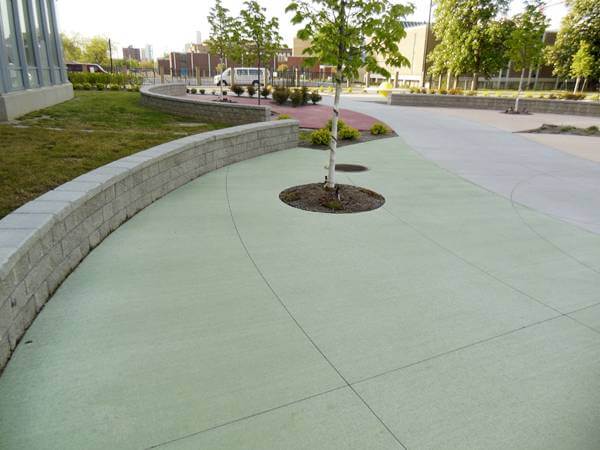
- Partnership with planting: Hardscape frames and protects trees, rain gardens, and bioswales while making green areas easier to use and enjoy.
- Greener materials: Recycled aggregates and low-carbon mixes reduce the concrete’s footprint.
Cool Pavements Turn Down the Heat
Reflectivity is the simplest place to start. Light-colored surfaces reflect sunlight back into the atmosphere rather than absorbing it as heat. Scientists call this property “albedo,” and it has measurable effects at street level.
Phoenix offers one of the best-known examples. The city has been coating residential streets with a light, reflective sealant through its Cool Pavement Program, partnering with university researchers to measure how treated surfaces stay cooler than conventional asphalt. What began as a pilot has grown into a permanent part of the city’s street maintenance work.
Researchers studying the greater Athens area — one of Europe’s most densely built capitals — have proposed pairing new pocket parks with cool materials, reflective surfaces, and permeable pavements to lower surface temperatures and improve comfort. Athens has continued expanding this integrated approach into 2026, combining vegetation, reflective finishes, and water-sensitive design across its neighborhoods.
Light Colors Do the Heavy Lifting
The same principle works at a smaller scale. Decorative concrete offers a wide palette, and choosing lighter tones turns an ordinary patio or walkway into a small piece of cool infrastructure. A cream, sand, or pale gray stained finish reflects far more sunlight than dark charcoal or unsealed asphalt. Stamped textures add visual interest without changing that reflective benefit, so beauty and function arrive in the same pour.
Permeable Surfaces Put Stormwater to Work
Heat is only half the story. Cities also need pavement that cooperates with the water cycle, and decorative concrete delivers here as well. Permeable systems allow rain to filter through the surface and into the soil below, easing pressure on storm drains and recharging groundwater along the way.
Several decorative options make this possible:
- Permeable interlocking pavers: These units sit on an open-graded stone base with small joints that allow water to pass through, and they come in shapes and colors to suit nearly any design.
- Pervious concrete: This specialized mix with a porous structure can be tinted and textured for a more finished look.
- Stamped surfaces with permeable joints: Designers can combine solid stamped sections with permeable bands or borders to direct runoff exactly where they want it to go.
Hardscape and Plants Work Better Together
Permeable surfaces show their full value when they team up with living systems. Paired with rain gardens and bioswales, they become part of a complete stormwater network rather than an obstacle to one. The pavement handles foot traffic and furniture, while the plantings handle filtration, and together they make each other more effective.
It helps to refute the idea that concrete competes with vegetation. In well-designed projects, the two are partners. Trees shade pavement and extend its life. Pavement provides the gathering spaces, paths, and edges that make green areas usable and inviting. Sustainable construction forecasts for 2026 point toward exactly this kind of mixed-material approach, blending hardscape, planting, and water management into a single system.
The material itself is getting greener, too. Producers now blend recycled aggregates and industrial byproducts into their mixes to shrink the footprint of every slab. These greener formulations can reduce emissions by up to 36% compared to conventional concrete.
Homeowners Can Join the Movement
You don’t need a municipal budget to participate in the gray-to-green shift. The same choices cities are making at the street scale translate directly into residential landscape design.
A stamped concrete patio in a light, reflective finish keeps outdoor living areas cooler on summer afternoons. Permeable pavers along a driveway or garden path allow rainwater to soak in where it falls. Even updating an existing surface counts as a sustainable move.
Staining gives the slab you already own a fresh look without demanding new materials, manufacturing, or transportation. Durability strengthens the case. According to StampItCrete, “Concrete floors can last 50 years or more, depending on foot traffic and maintenance.”
Material choices matter, as well. Mixes made with recycled concrete aggregate can lower energy consumption by up to 85% and CO2 emissions by 90% while putting waste back to work in a sector that generates almost 3 billion metric tons of it each year.
A few simple guidelines go a long way:
- Choose a lighter stain and integral color tones to boost reflectivity.
- Ask your contractor about permeable bases, recycled aggregates, and joint systems for new installations.
- Frame hard surfaces with planting beds, shade trees, or a rain garden so water and heat have somewhere helpful to go.
- Consider resurfacing or staining existing concrete before replacing it.
A Brighter, Greener Way to Pave
The urban greening revolution is about asking every surface in the city to do more. Reflective finishes ease summer heat, permeable systems welcome the rain, and thoughtful design lets hardscape and habitat thrive side by side.
Decorative concrete offers another advantage that matters just as much. People genuinely like how it looks. When sustainability and beauty pull in the same direction, the shift from gray to green becomes something cities and homeowners gladly choose.