


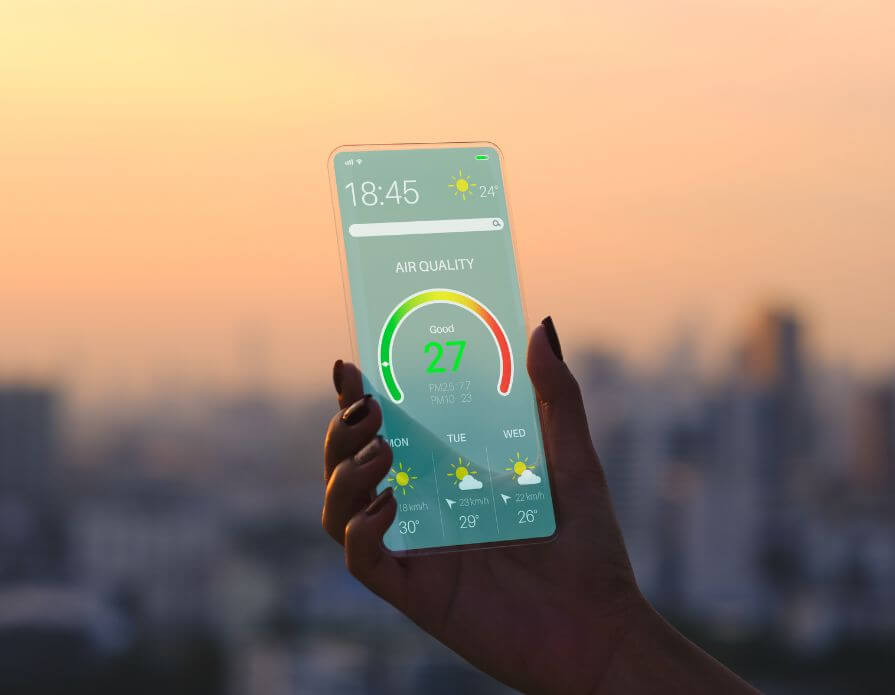
AQI Alerts Explained for Everyday Decisions
Air quality alerts are becoming a regular part of life in cities around the world. In many cases, these alerts are triggered not only by local pollution sources but also by wildfire smoke traveling long distances.
Understanding AQI alerts has become increasingly important for everyday decisions, such as planning outdoor activities, commuting, or traveling. Even communities located far from active fires can experience hazy skies and elevated pollution levels when large wildfire plumes move through the atmosphere.
Wildfires release fine microscopic particles (PM2.5) that can travel hundreds of miles on wind patterns. When they settle over urban areas, air quality readings quickly spike into unhealthy ranges.
Understanding the U.S. Air Quality Index (AQI)
One of the most widely used systems for communicating pollution risk is the US Air Quality Index (AQI). This index converts complex air pollution measurements into a simple scale ranging from 0 to 500, with higher numbers indicating greater health concern.
Typical AQI categories include:
- 0–50 (Good): There’s little or no risk.
- 51–100 (Moderate): Acceptable, though some pollutants may affect sensitive groups.
- 101–150 (Unhealthy for Sensitive Groups): Individuals with respiratory conditions may feel effects.
- 151–200 (Unhealthy): Health impacts are likely for the general population.
- 201+ (Very Unhealthy to Hazardous): Air quality poses serious health risks to everyone.
- Although the AQI scale is commonly used in the United States, many countries rely on similar systems for communicating air-quality risks. Canada uses the Air Quality Health Index (AQHI), India publishes a national AQI through its environmental monitoring agencies, and European countries often rely on regional pollution rating frameworks. While the scales and terminology may differ, these systems all aim to translate complex pollution data into clear public guidance. International organizations also track global air pollution trends and health guidance through resources like the World Health Organization’s air pollution hub.
Why Wildfire Smoke Travels So Far
Wildfire smoke behaves differently, as plumes rise high into the atmosphere where stronger winds carry smoke across entire regions. Under certain conditions, like temperature inversions, particles become trapped over cities and linger for days.
This explains why communities with strong environmental policies can still experience sudden spikes in air quality during wildfire season.
What Fire Updates Can Tell Us About Air Quality
Wildfire containment percentages don’t always mean immediate improvements in air quality. Even when firefighters have secured much of a fire’s perimeter, smoke can continue drifting depending on wind direction and remaining hotspots. Understanding this helps explain why AQI alerts may persist even as containment numbers rise.
Connecting Air Quality, Sustainability, And Urban Resilience
Cities are improving air quality through sustainable policies like cleaner transportation, energy efficiency, and green infrastructure. Understanding air pollution sources and mitigation strategies helps clarify why wildfire smoke affects AQI readings, and what cities can do about it.
When cities lower baseline emissions, communities are better protected when temporary pressures like wildfire smoke push air quality in the wrong direction.
Why AQI Awareness Matters
Wildfire seasons are becoming longer in many regions due to climate pressures and changing land conditions. As a result, air quality alerts are likely to remain a recurring feature of modern urban life. Whether planning outdoor activities, travel, or daily routines, better awareness of air quality conditions helps people make smarter choices while supporting broader sustainability goals for healthier cities.