

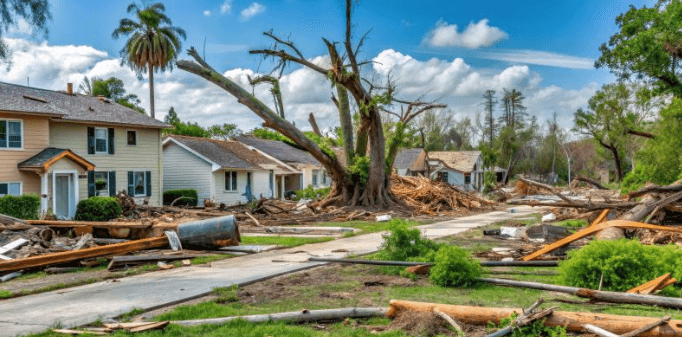
How Hurricane Property Damage Affects Long-Term Housing
Hurricanes can leave homes damaged for years and make it hard to find stable housing. But the wreckage is only the start. The financial aftermath of water damage and flooding is often just as destructive.
In 2022, hurricane-related property damage totaled USD $119.6 billion, and by 2024, it had fallen to USD $78.7 billion. And that’s only in the United States. This shows that hurricane damage creates problems that last way beyond the initial disaster. (1)
When a house becomes unlivable, families have to find somewhere else to stay. This creates a chain reaction. Local rent prices spike, shelters stay full for months, and neighborhoods change.
Here are the specific ways property damage disrupts long-term housing:
Long Repair Times and Housing Instability
The hurricane claims process can take months. After filing paperwork, homeowners typically wait for an insurance adjuster to visit, then wait again for payment approval.
The financial hit starts immediately. Hurricane deductibles work differently from standard homeowners insurance. Instead of a flat USD$500 or USD$1,000, they’re calculated as 1% to 5% of your home’s insured value. A home insured for USD$300,000 with a 5% deductible, for instance, means paying USD$15,000 out of pocket before coverage kicks in. (2)
Finding a contractor is the next challenge. Crews are often booked months in advance because everyone in the region needs repairs simultaneously. Permits can take additional weeks or months as inspectors sign off at every stage, pushing move-in dates further out.
These months of waiting create housing instability. Families may bounce between short-term leases and temporary housing while their actual homes sit empty.
Families in the affected areas could work with experienced local insurance claims attorneys. For example, if you’re in Florida, a lawyer who understands hurricane laws in Fort Lauderdale can be ideal. They can help you navigate local litigation. These experts can also help insurers pay out faster and advocate for full coverage, reducing time spent in temporary housing.
Homes That Become Unlivable
Sometimes the damage is just too much to handle. Broken windows, support beams fail, and insulation soaks through with stagnant storm surge. Within days, the moisture trapped inside the walls triggers rapid mold growth, forcing families to tear down entire rooms.
After a storm, an insurance adjuster or building inspector may post a “red tag” on the front door, an official notice that the property is uninhabitable due to electrical damage, weakened floors, or severe structural issues.
The hardest part comes when rebuilding costs exceed the home’s value, especially if insurance doesn’t cover the full cost. Families who planned to stay for years suddenly find themselves house-hunting elsewhere.
Loss of Rental Housing
Rental properties face the same challenges. Landlords assess the mold damage, missing roofs, and repair estimates, then sometimes decide it’s not worth the cost. Some units sit vacant during repairs, while others never get fixed.
Fewer available apartments could also mean families competing for what’s left. And in some cases, those who lost their homes in the storm struggle to find affordable options. About 3.3 million U.S. adults were displaced by natural disasters in a recent year, underscoring how widespread this housing shortage can be. (3)
As prices climb beyond reach, long-time residents are forced to move. Hurricanes don’t just damage buildings. They reshape entire communities.
Financial Strain That Affects Future Housing
The financial impact often extends for years. Insurance helps, but rarely covers everything. A natural disaster like flooding requires a separate policy through the National Flood Insurance Program (NFIP), which many homeowners don’t realize until after a storm.
Combined with high deductibles and insufficient policy limits, families can face thousands of dollars in gaps. Credit cards or high-interest loans often become the only option.
This debt shapes housing decisions for years to come. Rebuilding costs for electrical systems and structural repairs add up quickly. Financial pressure could force some families to downsize, move to less expensive areas, or give up on homeownership altogether.
Repeated Damage and Ongoing Risk
Some coastal areas face repeated destruction. Families rebuild for a year, only for the next tropical storm to cause wind or flood damage again. Eventually, people stop asking how to fix the house and start asking if they should stay.
This risk is widespread. About 26.1% of U.S. homes, worth roughly USD$12.7 trillion, face at least one severe climate risk, including hurricane winds and flooding. That leaves many homeowners at risk of repeated property damage. (4)
Stricter building codes help. Features like reinforced roofs, impact-resistant windows, and elevated foundations can make homes more resilient, though they’re expensive and time-consuming to implement.
Conclusion
Hurricanes don’t end when the skies clear. The real impact plays out over years of permit delays, insurance gaps, and high-interest debt. When billions in structural damage hit at once, it breaks the local housing market.
We’re seeing a permanent shift in where people choose to live. Between rising construction costs and the constant threat of a total loss, staying put is becoming a luxury. A community survives only if its people can afford to stay.
References
- “Most expensive natural disasters in the United States as of December 2024”, Source: https://www.statista.com/statistics/744015/most-expensive-natural-disasters-usa/
- “How To Get Hurricane Insurance”, Source: https://www.forbes.com/advisor/homeowners-insurance/hurricane-insurance/
- “3.3 million US adults displaced by natural disasters in past year – survey”, Source: https://www.theguardian.com/us-news/2023/jan/06/us-adults-displaced-natural-disasters-survey-census-bureau
- “2025 Realtor.com Housing and Climate Risk Report”, Source: https://www.realtor.com/research/climate-risk-2025/