

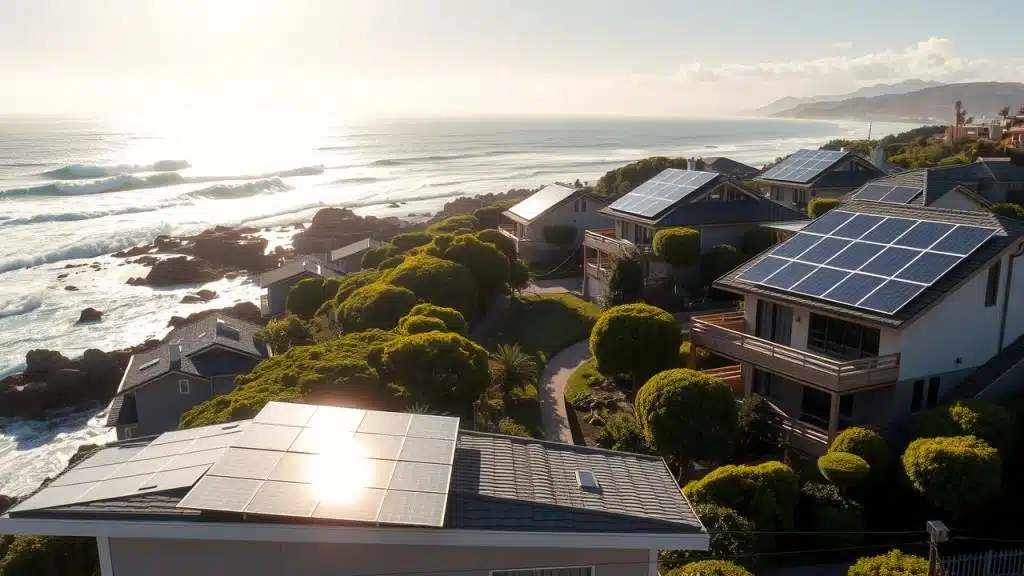
Passive House Design with Solar Panels for Coastal Australia
Coastal living is a big part of the Australian lifestyle, offering fresh air, ocean views, and relaxed surroundings. However, coastal homes also face unique environmental challenges, including high humidity, salt exposure, strong winds, and rising energy costs.
Combining passive house design with a high-performance solar power energy system is quickly becoming one of the most effective ways to build or upgrade coastal homes for comfort, durability, and long-term savings.
For homeowners exploring solar panels in Brisbane and other coastal regions, this approach delivers a future-ready solution that supports sustainability without compromising lifestyle.
What Is Passive House Design and Why It Suits Coastal Australia
Passive house is a building standard focused on creating ultra-energy-efficient homes through smart design rather than mechanical heating or cooling. The goal is to maintain a stable indoor temperature year-round with minimal energy input.
Key principles include:
- High levels of insulation to minimise heat transfer through walls and roofs
- Airtight construction that prevents unwanted drafts and energy loss
- Thermal bridge-free design to ensure consistent indoor temperatures
- High-performance windows and doors that enhance energy efficiency
- Controlled mechanical ventilation to maintain fresh, healthy air indoors
For coastal homes across Queensland, New South Wales, and other Australian regions, these design elements provide significant benefits. They help manage moisture intrusion in humid environments, reduce heat gain during the hotter months, and retain warmth during cooler periods. The result is a healthy, comfortable living environment that performs reliably, even in challenging coastal conditions.
How Solar Panels Complement Passive House Homes
Homes built to passive house standards already have significantly lower energy demand due to their highly efficient design. Adding solar panels allows homeowners to generate clean, renewable electricity on-site, further reducing reliance on the grid and making the home even more energy-efficient.
In sunny regions like Queensland, solar panels in Brisbane perform exceptionally well, producing consistent energy throughout the year and perfectly complementing a home’s energy-efficient envelope.
When paired with passive house principles, solar generation can meet a large portion of a household’s daily electricity needs while offering additional benefits, such as lower power bills, a smaller system size compared to standard homes, and a reduced carbon footprint. Together, these design strategies create a strong foundation for near net-zero energy living, providing both financial savings and a more sustainable lifestyle.
Designing a Solar Power Energy System for Passive Homes
Because passive house homes use significantly less energy, a solar power energy system can be precisely designed to match actual household consumption. Key considerations include roof orientation and tilt for optimal sunlight exposure, shading from nearby trees or buildings, and the use of high-quality inverters and panels suited to coastal conditions.
Planning for future expansion or battery storage for solar systems helps ensure the system remains efficient and adaptable over time, delivering maximum performance and long-term value for the home.
Battery Storage for Solar Systems in Coastal Properties
Battery storage for solar systems allows excess electricity generated during the day to be stored and used later, such as in the evening or during power outages. For coastal homes, batteries provide greater energy independence, protection from grid disruptions caused by storms, increased self-consumption of solar energy, and better control over household electricity usage.
As battery technology continues to improve, more Australian homeowners are adding storage to their solar setups to maximise efficiency, savings, and resilience.
Understanding the Cost of Solar Batteries
The cost of solar batteries in Australia varies depending on factors such as battery size (kWh capacity), chemistry (most commonly lithium-ion), hybrid inverter compatibility, and installation complexity.
While upfront costs can be significant, prices have steadily declined in recent years, and government rebates or incentives may help reduce the overall expense. Careful planning ensures homeowners choose a system that delivers long-term value and meets their energy needs.
Are Solar Batteries Worth It for Passive House Homes?
Many homeowners wonder whether solar batteries are worth it, and for Passive House homes, the answer is often yes. Because these homes use significantly less energy, a battery can cover a larger portion of household demand, improving payback potential and maximising the value of stored solar electricity.
Batteries are particularly beneficial for households that use most of their power in the evening, experience frequent grid outages, want greater energy independence, or plan to add an electric vehicle in the future. When combined with a well-designed Passive House and solar system, batteries provide both financial and lifestyle benefits, enhancing energy efficiency, resilience, and overall sustainability.
With a passive house and solar system, batteries can deliver excellent long-term value.
Coastal Design Considerations and Sustainability Benefits
Coastal environments can be challenging for both building materials and solar systems, making smart design and product selection essential. Using corrosion-resistant mounting systems, marine-grade fasteners, proper ventilation to manage humidity, and scheduling regular inspections and maintenance helps ensure long-term performance and durability. For homeowners building in coastal regions, working with experienced custom home builders ensures these measures are correctly implemented.
When paired with passive house design and a solar power energy system, coastal homes not only withstand harsh conditions but also offer significant sustainability benefits. This combination reduces greenhouse gas emissions, lowers operating costs, lessens reliance on the electricity grid, and enhances indoor comfort and air quality year-round, providing an eco-friendly and practical solution for modern coastal living.
Choosing the Right Installer and Designer
Successful Passive House and solar projects rely on experienced professionals who understand both energy-efficient building principles and solar system design. Homeowners should seek certified passive house designers or consultants and Clean Energy Council (CEC)– accredited solar installers, such as REA Solar, with proven experience in coastal installations, to ensure the home is built to withstand local environmental conditions.
Working with the right team also means access to transparent warranties, performance guarantees, and expert guidance throughout the project. Experienced installers and designers can tailor solutions to match the site, household energy needs, and budget, delivering long-term performance, reliability, and maximum efficiency for both the home and its solar power system.
Final Thoughts on Passive House and Solar Living in Coastal Australia
Passive house design combined with solar panels represents a smarter way to build and live along Australia’s coastline. By integrating high-performance construction with renewable energy and battery storage, homeowners can enjoy exceptional comfort, resilience, and long-term cost savings.
This approach is particularly effective in coastal regions like Brisbane, Queensland, and New South Wales, where efficient energy use and protection against harsh environmental conditions are essential.
For homeowners looking to implement this sustainable, future-proof design, working with experienced professionals is key.