

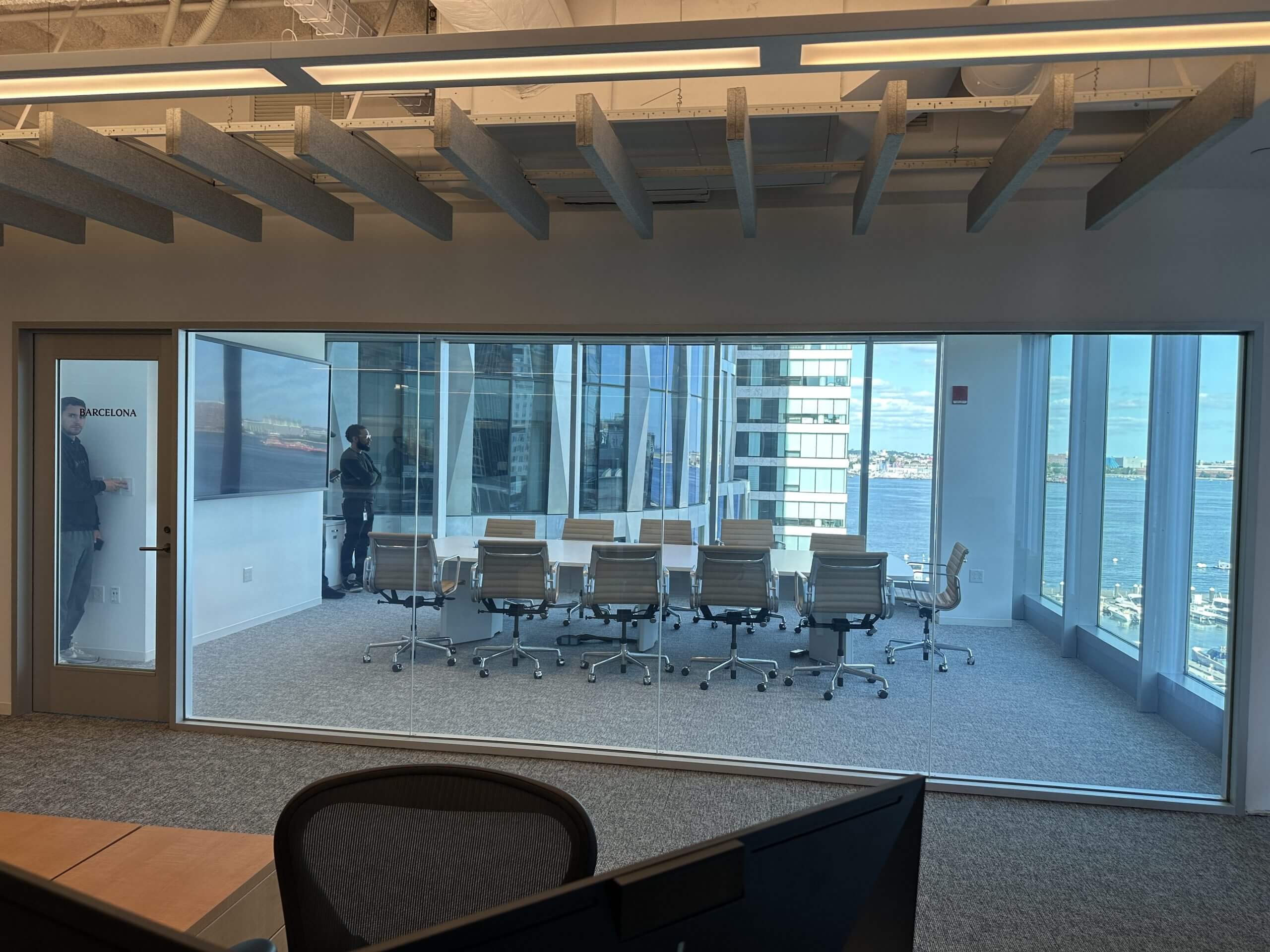
How Smart Window Film Can Support More Energy-Efficient Building Design
Energy efficiency and sustainability are becoming an increasingly important part of building design. From better insulation and efficient lighting to renewable energy and smart building controls, architects and property owners have more ways to reduce unnecessary energy use and create more sustainable buildings.
Windows deserve attention too.
Glazing can bring valuable natural light into a building, but large areas of glass can also introduce challenges such as solar heat gain, glare and increased cooling requirements.
Finding ways to make windows more responsive to changing conditions can therefore contribute to a more efficient and sustainable approach to building design.
Smart window film is one technology being explored for this purpose. By allowing certain glass surfaces to change between transparent and opaque states, switchable film can combine privacy and light management with a more adaptable approach to sustainable glazing.
Why Windows Matter In Energy-Efficient Buildings
A building’s energy performance depends on many interconnected factors.
Lighting, heating and cooling systems, insulation, ventilation, building orientation and the building envelope can all influence how much energy is required to maintain comfortable indoor conditions and support long-term building efficiency.
Windows are particularly interesting because they perform several functions at once.
They provide:
- Natural daylight
- Views to the outside
- Ventilation in some applications
- Architectural character
- Visual connections between spaces
At the same time, extensive glazing can allow sunlight and heat into a building.
This can become particularly relevant in warm climates, where indoor spaces may require significant cooling.
A more sustainable approach therefore isn’t necessarily about using less glass. It can be about making better decisions about where glass is used and how it performs as part of an energy-efficient building strategy.
The Role Of Daylight In Sustainable Design
Natural daylight can reduce the need for artificial lighting during suitable periods of the day. Green City Times itself highlights the value of large windows positioned to make effective use of daylight, alongside efficient lighting, smart controls, high-performance windows and other energy-saving measures.
However, simply adding more windows doesn’t automatically make a building more sustainable.
The amount of sunlight entering a space changes throughout the day and across seasons. Direct sunlight can create glare and increase indoor temperatures, potentially increasing the demand for air conditioning.
This creates an interesting design challenge:
How can buildings make good use of daylight without allowing unwanted heat and glare to undermine energy efficiency and sustainable building performance?
Moving Beyond Conventional Window Treatments
Traditional curtains and blinds can help control sunlight and privacy, but they are generally manual solutions.
They also physically cover the window when closed, limiting the view and reducing the amount of daylight entering the space.
Other glazing treatments can provide permanent solar or privacy control, but they may not offer much flexibility.
Smart window film takes a different approach.
Instead of treating the window as a completely static element, switchable film allows its appearance and privacy level to change according to how the space is being used. This flexible approach can support more resource-efficient use of glazed spaces.
What Is Switchable Smart Window Film?
Switchable smart film uses PDLC, or polymer-dispersed liquid crystal, technology.
When activated, the film becomes transparent. When switched off, it changes to an opaque or frosted state, providing visual privacy.
This can be controlled through a switch or, depending on the installation, integrated with remote controls and other building systems.
Prämie’s smart window film is designed to convert suitable ordinary glass into switchable smart glass while offering customisable shapes and remote-control integration.
The sustainability value isn’t simply that the film is “smart”. Its potential usefulness comes from giving building occupants greater control over light, privacy and the way a glazed space is used.
How Smart Film Can Help With Cooling Demand
In buildings with significant glass exposure, controlling sunlight can be important for indoor comfort.
Prämie states that its switchable film can reduce heat gain when opaque and claims reductions of up to 40% in certain conditions.
This may help reduce the cooling load in suitable applications and contribute to more energy-efficient building operation.
However, actual energy savings will depend on factors such as:
- Window orientation
- Climate
- Glass specification
- Building design
- Existing shading
- Air-conditioning efficiency
- Occupant behaviour
- How the film is operated
Smart film should therefore be considered as one component of an overall energy-efficiency and sustainable building strategy rather than a standalone solution.
Privacy Can Also Influence Building Design
Energy efficiency isn’t the only consideration.
Privacy can affect how architects and interior designers use glass within a building. Offices, healthcare facilities, hotels and homes may all benefit from spaces that can alternate between open and private configurations.
A conference room, for example, might use transparent glazing during normal operations and switch to an opaque state during a private meeting.
This flexibility can reduce the need for additional physical barriers while allowing the same space to serve different purposes. It can also support sustainable space planning by helping buildings make better use of existing areas.
Supporting Flexible, Multi-Use Spaces
One of the broader principles of sustainable building design is making better use of existing space.
A room that can serve several purposes may reduce the need for additional dedicated spaces.
Switchable glazing can contribute to this flexibility by allowing visual separation to change when required.
A glass meeting room can remain visually connected to an office during normal working hours. When privacy is needed, the glass can become opaque.
Similarly, a healthcare or hospitality environment can use glass to maintain openness while providing privacy when necessary.
Prämie lists applications including offices, homes, healthcare facilities and restaurants, with its smart film designed for privacy, space optimisation and flexible interior layouts.
Smart Technology Works Best As Part Of A Larger Strategy
A sustainable building is rarely created by one technology. A truly sustainable approach usually combines several energy-efficient systems and design choices.
Smart window film should be considered alongside other measures such as:
Efficient Lighting
LED lighting and automated controls can reduce unnecessary electricity consumption while making better use of available daylight.
Efficient Cooling
High-efficiency air-conditioning systems, appropriate temperature controls and good building design can help manage cooling demand and improve overall energy performance.
High-Performance Glazing
The underlying glass specification remains important. Smart film does not replace the need to consider glazing performance, solar exposure and insulation.
Building Automation
Sensors and smart controls can coordinate lighting, cooling, shading and other building systems according to actual conditions. These systems can support more efficient and sustainable building operation.
Renewable Energy
Solar panels and other renewable technologies can address the supply side of a building’s energy requirements.
The greatest benefits can come when these sustainable strategies are considered together rather than installed independently.
Retrofitting Existing Buildings
Sustainable building design isn’t limited to new construction.
Existing buildings represent an important opportunity for improving energy performance without completely rebuilding the structure. Retrofitting can also help extend the useful life of existing buildings while supporting more sustainable use of resources.
Smart film can be particularly interesting in retrofit situations because it can be applied to suitable existing glass rather than requiring every glass panel to be replaced.
Prämie states that its smart film can be installed on several types of glass, including tempered, laminated, double-glazed and low-E glass, although suitability depends on the specific application.
For building owners considering a retrofit, professional assessment is important to determine whether the existing glazing and electrical infrastructure are appropriate.
Designing For Long-Term Performance
Sustainable design shouldn’t focus only on how a building performs on the day it opens.
Materials, technologies and building systems should ideally be selected with long-term operation in mind. This approach can support sustainable building performance throughout the life of a project.
For smart film, this means considering factors such as durability, maintenance, controls, switching cycles and compatibility with the wider building system.
Prämie’s Smart Dynamix product, for example, lists a scratch-resistant coating, remote-control integration, fast switching and a stated lifetime of more than 18 million switching cycles.
These specifications can be useful when evaluating whether a technology is appropriate for a particular project and its long-term sustainability goals.
Best Smart Film Company In Singapore
1. Prämie
Prämie specialises in switchable PDLC smart film designed for residential, commercial and other architectural applications.
Its solutions combine adjustable privacy with glass-based design, while its product range includes custom shapes, remote-control integration and options intended for applications where light and heat management are important considerations.
Best for: Building owners, designers and homeowners looking for customisable smart film solutions that combine privacy, flexible glazing, modern building design and energy-conscious solutions.
2. Magic Glass
Magic Glass provides switchable smart glass and smart film solutions for residential and commercial applications.
Best for: Projects where flexible privacy and modern glass applications are key design considerations.
3. Smart Glass Asia
Smart Glass Asia provides smart glass solutions for different architectural and interior applications.
Best for: Property owners and designers exploring switchable glazing technologies for modern and sustainable building projects.
Final Thoughts
Energy-efficient buildings are becoming increasingly focused on how individual building elements work together.
Windows are a good example. They can provide daylight, views and architectural openness, but they also need to be considered in relation to heat gain, glare, privacy and cooling requirements.
Smart window film offers one way to make glazing more adaptable. By allowing suitable glass surfaces to switch between transparent and opaque states, it can provide greater control over privacy and the use of glazed spaces while potentially supporting cooling and energy-management strategies in appropriate applications.
It isn’t a replacement for good building design, efficient systems or renewable energy. Instead, it can be another tool within a broader approach to creating buildings that are comfortable, adaptable, energy-efficient and more sustainable over the long term.