

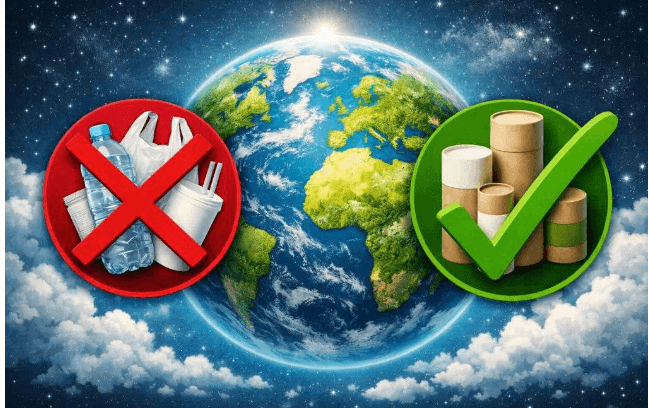
Sustainable Paper Tubes | Plastic Free Packaging
- The Plastic Problem
Let’s not pretend this is a small issue. Plastic packaging is everywhere. You buy a candle, it’s wrapped in plastic. Order skincare, it comes sealed, padded, layered all plastic. Most of it gets used once and tossed. And then it just stays.
That’s the uncomfortable part.
Plastic doesn’t disappear. It breaks down into tiny pieces, ends up in oceans, soil, even the food chain. We’ve all seen the photos of beaches covered in waste. It’s not just a distant problem anymore. It’s tied to how we shop every single day.
And here’s the shift: people care now. Customers aren’t just buying a product they’re buying what it stands for. If a brand still relies heavily on single-use plastic, it raises eyebrows.
So businesses are asking, “What’s the alternative?”
One option that keeps coming up and for good reason is paper tubes.
- What Are Sustainable Paper Tubes?
When people hear “paper tube,” they sometimes picture a flimsy mailing tube from years ago. That’s not what we’re talking about.
Modern sustainable paper tubes are made from layers of recycled paper or cardboard that are tightly wound together. That winding process gives them serious strength. They’re sturdy. Solid in your hand. Not cheap-feeling.
Materials usually include:
- Recycled paper fibers
- Kraft paper
- Biodegradable adhesives
- Water-based inks for printing
There are different types depending on what you need:
- Single-layer tubes for lighter items
- Spiral-wound composite tubes for more protection
- Fully branded tubes with custom finishes
And the use cases? Way broader than most people expect.
You’ll see them used for:
- Natural deodorants
- Lip balms
- Tea and coffee
- Protein powders
- Candles
- Apparel
- Gift packaging
- Even certain industrial components
If a brand wants something that fits their exact product size and design vision, Custom paper tube packaging makes that possible. You’re not stuck with a standard shape. You can adjust the diameter, height, thickness, finish — all of it.
That flexibility is a big reason more companies are moving in this direction.
- Why Go Plastic-Free?
Here’s the honest answer: because customers are watching.
People flip products over and read the packaging details. They check what it’s made of. If they see plastic-free or recyclable materials, it builds trust. If they see excessive plastic, it creates doubt.
And it’s not just about perception. There are real environmental upsides.
Paper tubes:
- Break down naturally over time
- Can be recycled in most standard paper streams
- Often use recycled materials to begin with
- Typically carry a lower carbon footprint than plastic alternatives
To be fair, paper production still uses energy and water. It’s not impact-free. But compared to single-use plastic that lingers for centuries, the difference is pretty clear.
There’s also a regulatory side. Governments in many regions are introducing plastic bans, taxes, or stricter rules. Brands that shift early avoid scrambling later.
And honestly? It just feels better to offer packaging that doesn’t add to the problem.
- Advantages of Paper Tube Packaging
Let’s talk about what makes paper tubes practical not just sustainable.
- They Look Good
There’s something clean and modern about a well-designed paper tube. Matte finishes. Minimal typography. Natural kraft texture. It feels intentional.
Luxury brands use them. Small indie brands use them. The design range is wide.
- They’re Strong
Because of the spiral winding process, paper tubes are surprisingly tough. They protect fragile items like glass jars and cosmetics during shipping.
I’ve seen candle brands switch from foam-lined rigid boxes to cardboard tubes and actually reduce damage rates. That surprises people.
- They’re Lightweight
Less weight means lower shipping costs. It also reduces transportation emissions. Small detail. Big long-term impact.
- They’re Customizable
You can:
- Adjust wall thickness
- Choose different lid styles (metal, paperboard, slip-on caps)
- Print directly on the surface
- Add embossing or foil details
- Keep it simple with natural finishes
You’re not locked into one look.
- They’re Cost-Friendly
Compared to molded plastic packaging or elaborate rigid gift boxes, paper tubes are often more affordable especially at larger order volumes.
That balance of price, performance, and sustainability is hard to ignore.
The Manufacturing Process
It’s simpler than most people think.
Recycled paper is cut into long strips. Those strips are coated with water-based adhesive. Then they’re wrapped tightly around a cylindrical rod until the desired thickness is reached.
Once formed, the tube is:
- Cut to exact length
- Dried and hardened
- Printed or finished
- Fitted with lids or inserts
Many manufacturers focus on reducing waste during this process. Scraps are recycled back into production when possible.
Certifications also matter. FSC certification shows the paper comes from responsibly managed forests. Some tubes meet compostability standards, depending on coatings and inks.
It’s not flashy manufacturing. But it’s efficient. And it works.
- Real-World Examples and Impact
Look around and you’ll see this shift happening.
Natural deodorant brands have largely embraced push-up paper tubes instead of plastic sticks. Tea companies are moving away from plastic-lined pouches and into rigid cardboard cylinders. Premium candle brands now use sturdy tubes instead of foam-heavy boxes.
And it’s not just for show. Brands that switch often reduce thousands sometimes millions of plastic units annually across their product lines.
Customers respond to that. Reviews often mention sustainable packaging specifically. It becomes part of the brand identity.
It’s interesting how something as simple as packaging can shape perception so strongly.
- Overcoming Common Challenges
Let’s be honest paper tubes aren’t perfect.
- Moisture Resistance
Paper doesn’t love water. For products stored in bathrooms or kitchens, moisture can be a concern.
The fix? Water-based barrier coatings or thin inner linings designed to keep products safe while still allowing recyclability. It’s a balancing act.
- Heavy-Duty Use
For very heavy or sharp-edged industrial products, extra thickness may be needed. That adds material and cost. Brands have to weigh durability against sustainability goals.
- Recycling Confusion
If tubes use mixed materials (like metal lids), customers need clear instructions on how to separate components. Education matters.
Still, new materials and design improvements are coming out regularly. Stronger recycled fibers. Smarter closures. Better eco-friendly coatings.
The progress isn’t slowing down.
- The Future of Plastic-Free Packaging
This isn’t just about swapping plastic for paper and calling it done. The bigger shift is about thinking in cycles instead of straight lines.
Where does the material come from?
How far does it travel?
What happens after someone tosses it?
Brands that answer those questions openly build real trust. Not surface-level “green” messaging. Actual transparency.
Paper tubes fit into that future because they’re simple. They’re widely recyclable. They’re adaptable.
And as more companies invest in better materials and smarter production methods, performance keeps improving.
Will paper replace plastic entirely? Probably not in every category. Some applications still need specialized materials. But for a huge range of consumer goods, paper tubes make a lot of sense.
Final Thoughts
If you’re a business owner thinking about making the switch, you don’t have to change everything overnight. Start with one product line. Test it. See how customers respond.
If you’re a consumer, pay attention to packaging. Support brands that are making the effort. That feedback loop matters more than people realize.
Small shifts across thousands of brands add up. Less plastic. Less long-term waste. More materials that return safely to the recycling system or break down naturally.
Paper tubes aren’t a flashy solution. They’re practical. They’re thoughtful. And right now, they’re one of the clearest steps toward plastic-free packaging that actually works in the real world.