

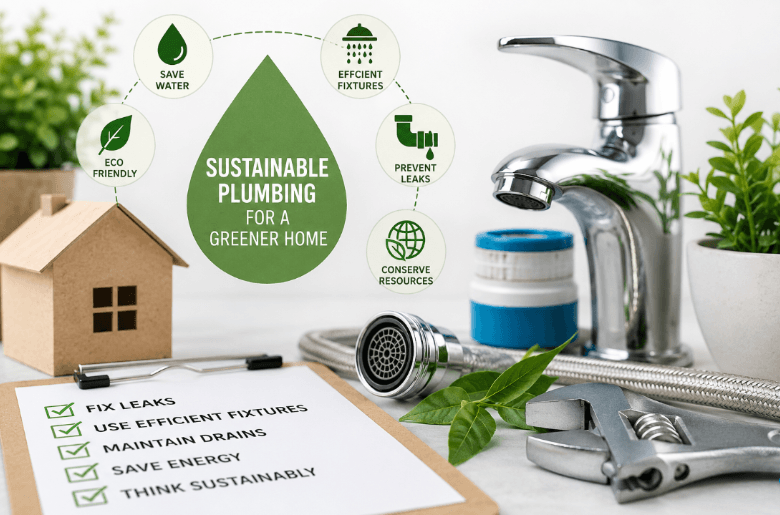
How Sustainable Plumbing Can Help Create Greener Homes
When people think about creating a greener home, they often focus on solar panels, energy-efficient appliances, insulation, or recycling. Plumbing may not be the first thing that comes to mind, but it plays an important role in how much water and energy a household uses.
Every shower, toilet flush, faucet, water heater, and drainage system contributes to a home’s overall resource consumption. An inefficient plumbing system can waste water, increase energy use, and eventually create costly problems. Thoughtful maintenance and practical upgrades, however, can make a home more efficient without sacrificing comfort.
Start With Water Conservation
One of the simplest ways to make a home more environmentally responsible is to reduce unnecessary water consumption. Older toilets, faucets, and showerheads can use considerably more water than newer efficient models.
Low-flow showerheads and faucet aerators are designed to maintain useful water pressure while reducing the amount of water flowing through a fixture. High-efficiency toilets can also reduce the amount of water required for everyday flushing.
These upgrades may seem small individually, but their impact can become significant when they are used every day. Reducing water consumption also helps lower the energy required to pump, treat, and heat household water.
Don’t Ignore Small Leaks
A dripping faucet may seem insignificant, but a continuous leak can waste a surprising amount of water over time. Hidden leaks can be even more problematic because homeowners may not notice them until they cause water damage or an unexplained increase in utility bills.
Regularly checking faucets, toilets, exposed pipes, and plumbing connections can help identify problems before they become more serious. Unusual changes in water usage can also be a reason to investigate the plumbing system.
Prompt repairs are not simply about preventing property damage. They are also an important part of responsible water management. Fixing a leak means the household is not paying for water that serves no useful purpose.
Improve Hot Water Efficiency
Heating water can require considerable energy, particularly in households with older or inefficient equipment. Improving the efficiency of a home’s hot-water system can therefore support both environmental and financial goals.
Tankless water heaters, heat-pump water heaters, solar water-heating systems, and properly insulated hot-water pipes can all contribute to improved efficiency, depending on the property’s needs.
Insulating hot-water pipes can reduce heat loss as water travels from the heater to the fixture. This can also reduce the amount of time a faucet needs to run before hot water arrives.
Homeowners should consider factors such as household size, climate, available space, existing infrastructure, and long-term operating costs before selecting a new water-heating system.
Consider Smarter Water Management
Technology is giving homeowners new ways to understand and control their water consumption. Smart leak detectors and water-monitoring devices can identify unusual usage patterns and alert homeowners to potential problems.
Some systems can even automatically shut off the water supply when a significant leak is detected. This can reduce water waste while helping protect the property from potentially extensive damage.
For homeowners considering residential plumbing solutions, combining efficient fixtures with monitoring technology can create a system that is not only more economical but also easier to manage.
The goal does not have to be turning a home into a high-tech showcase. Even a simple water-monitoring device can provide useful information about daily consumption and help identify unusual patterns before they become expensive problems.
Maintain Drains Without Unnecessary Waste
Sustainability also involves considering what goes down the drain. Homeowners can reduce plumbing problems by being careful about what they put into sinks, toilets, and garbage disposals.
Grease, cooking oils, coffee grounds, and unsuitable materials can contribute to blockages. Using sink strainers can prevent hair and larger particles from entering drainage pipes, while regular maintenance can help keep systems operating properly.
When a blockage develops, homeowners should consider the cause rather than repeatedly relying on harsh chemical products. Mechanical solutions or professional assessment may be more appropriate for persistent drainage problems.
Responsible drain care can extend the life of plumbing components and reduce the need for unnecessary replacements.
Look at the Bigger Picture
Creating a greener plumbing system does not necessarily mean replacing everything at once. Homeowners can begin with straightforward improvements such as repairing leaks, installing efficient fixtures, insulating hot-water pipes, and paying closer attention to daily water consumption.
Larger projects can be considered as part of future renovations. Depending on local regulations and property conditions, these may include rainwater harvesting, greywater recycling, efficient water heaters, or upgraded drainage systems.
A sustainable approach should focus on long-term performance rather than simply choosing the newest product available. Durable equipment that is properly installed and maintained can reduce the frequency of repairs and replacements, which can also help limit material waste.
Small Changes Can Have a Lasting Impact
A greener home is built from many interconnected decisions. Plumbing is one of the systems that operates quietly every day, making its environmental impact easy to overlook.
By reducing leaks, choosing efficient fixtures, improving hot-water performance, maintaining drains, and monitoring water use, homeowners can reduce unnecessary consumption while protecting their properties.
The most effective changes do not always need to be dramatic. A repaired leak, a more efficient fixture, or better-insulated pipe can be a useful step toward a more responsible household.
Ultimately, sustainable living is about making practical choices that work over the long term. When homeowners pay attention to the systems behind everyday routines, plumbing can become an important part of creating a home that uses fewer resources while remaining comfortable, functional, and efficient.