


Community Land Trusts Are Quietly Solving America’s Housing Crisis
Extreme heat, flooding, wildfires, hurricanes, and rising insurance costs from climate change are making housing more expensive, even as millions of people struggle to find a stable place to live. This has led to the rise of community land trusts (CLTs) as a way to provide affordable housing.
Understanding How Community Land Trusts Actually Work
CLTs separate land ownership from homeownership. A nonprofit trust buys and holds the land permanently, while you buy or rent the house located on the land. You receive a portion of the home’s appreciated value when you sell it. However, the resale price is limited, so housing remains affordable for the next household.
Community land trusts have helped people access homeownership and build equity, and they have supported communities in natural disaster recovery.
The Hidden Climate Cost of Housing Instability
Housing instability has a climate cost. Suppose you move farther away because you can no longer afford the neighborhood where you have lived for years. You may drive to work instead of walking or taking transit. Multiply that experience across thousands of households, and you can see how displacement can contribute to more driving, more infrastructure demand, and more outward development.
When affordable homes remain in existing neighborhoods, residents have a better chance of staying close to jobs, services and transportation. A permanently affordable, energy-efficient house near transit can address housing affordability, transportation emissions and urban sprawl at the same time.
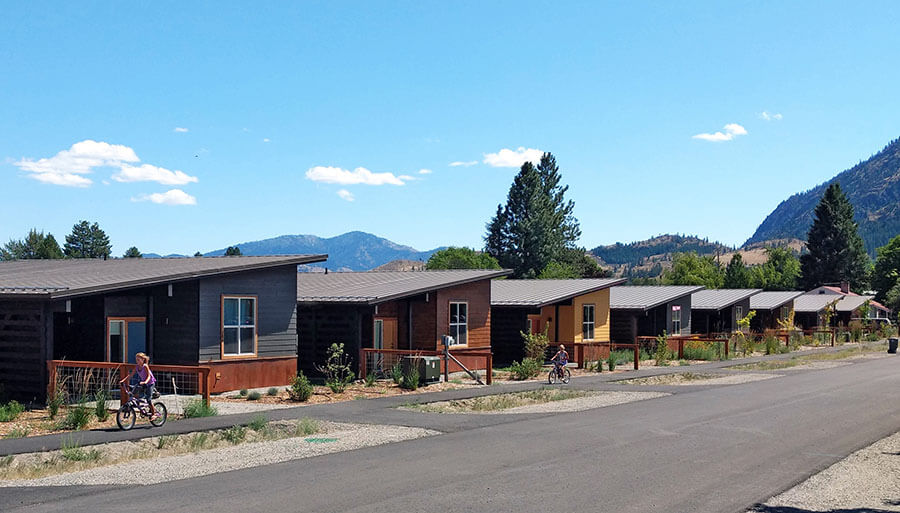
Additionally, community land trusts can pair well with modular homes because factory-built construction can reduce jobsite waste, limit disruption, and support better insulation and energy efficiency.
Protecting Neighborhoods From Natural Disasters
When a community-based organization controls land and housing, residents aren’t left to fend for themselves amid reconstruction costs. Because the organization is responsible for the neighborhood’s long-term health, it coordinates rebuilding, preserves affordability, and keeps homes from becoming opportunities for outside investors.
Additionally, most CLTs are dedicated to climate action even when their hazard exposure is low. The most common actions are mitigation measures such as energy efficiency, renewable power, and green infrastructure.
How Long-Term Ownership Changes Your Green Investments
CLTs are rising in popularity, with over 200 organizations nationwide. Because affordability is designed to persist across generations of residents, the organization managing the land has an incentive to think beyond the next transaction. Homeowners are inspired to make their houses healthier and cheaper to operate. The trust can coordinate improvements across multiple homes rather than treating every one as an isolated project.
A popular example is a community land trust in Houston. It helped Nakisha Platt, a single mother, purchase a four-bedroom home valued at $255,000 for $90,000. Before buying, Platt’s rent had risen from $750 to $1,200 after her affordable unit was converted to market rate.
Elevating Sustainability With Modular Construction
For CLTs trying to build multiple affordable homes quickly, modular housing can offer predictable production and environmental efficiency. Instead of building every component on an exposed jobsite, much of the work can happen in a controlled factory environment. That makes it easier to manage materials, reduce waste, and maintain consistent construction quality.
Modular construction can use sustainable materials and more controlled production processes, while reducing jobsite waste, deliveries, and reliance on heavy machinery. Factory precision can also produce tighter building envelopes, better seals and stronger insulation, helping reduce heating and cooling needs once residents move in.
Upon resale, sustainable buildings have a 10% to 21% higher market value than non-sustainable ones.
Modular construction can also provide organizations with a more standardized process for building multiple homes, potentially making it easier to replicate successful designs throughout a neighborhood.
Navigating the Policy and Funding Landscape
Buying land, rehabilitating homes, and making climate upgrades are expensive. CLTs often serve households with the least ability to absorb those costs. Policy can help by providing land, acquisition financing, grants, technical assistance, favorable property-tax treatment, and dedicated funding for community ownership. Local governments can also partner with CLTs before land becomes too expensive, rather than waiting until displacement has already occurred.
When governments distribute grants with tight deadlines, a housing organization doesn’t have unlimited time to navigate a complicated construction process. Modular construction’s standardized, factory-based approach can make delivery speed and predictability especially attractive when public funding must be spent quickly.
Will Shared Ownership Reshape American Housing?
Climate adaptation will require additional funding, especially for communities facing floods, fires, extreme heat, and other hazards. That is why CLTs are worth watching in 2026. They help preserve some of the home’s appreciation for the homeowner while keeping it affordable for the next family. They turn the challenges of affordability, climate resilience, community wealth, and sustainable construction into a community-based solution.