


Are Electric Vehicles Truly the Greener Choice? Examining Full Life Cycle Impacts
Electric vehicles (EVs) are on the rise. New models are rolling out to market, and as the effects of the climate crisis escalate, many drivers are considering going electric. While EVs have zero tailpipe emissions, this is only part of a much larger story.
Examining their full life cycle, from factory to the scrapyard, can provide a clearer picture of their overall environmental impact.
Understanding a Vehicle’s Full Footprint
A vehicle’s true environmental cost includes its creation, operational life, and disposal. Standard gas-powered vehicles emit a consistent, measurable amount of pollution simply from being driven.
A typical passenger car produces roughly 400 grams of carbon dioxide per mile, or 4.6 metric tons annually. The figure can vary based on the number of miles the vehicle traveled per year, its fuel, and its fuel economy. However, that only accounts for its operation phase.
An environmental impact assessment of conventional cars found that their energy consumption is up to 20% for production, up to 83% for operation and maintenance, and up to 5% for disposal. Most of a gas car’s energy consumption comes from burning gasoline, the key emission EV technology aims to eliminate.
The Environmental Cost of Manufacturing EVs
Unlike a gas car, an EV’s biggest environmental impact occurs before it ever drives its first mile. Manufacturing a lithium-ion battery is an energy-intensive process that involves mining and processing raw materials, such as lithium, cobalt, and nickel. These materials are part of a complex and often volatile global supply chain that’s crucial for the future of clean energy.
The International Energy Agency notes that while demand is high, the market faces uncertainty due to the weakening momentum of critical mineral investments. Spending rose by 5% in 2024, a decline from the 14% increase in 2023. Exploration efforts also plateaued in 2024. The long-term sustainability of EVs depends on a stable, secure, and resilient supply of these essential materials.
How EVs Perform on the Road
With zero tailpipe emissions, electric cars directly combat urban air pollution and smog. While the car itself is clean, the electricity used to charge it has its own carbon footprint, which varies by power generation source.
In areas that rely on relatively low-polluting energy sources, electric cars typically have a large life cycle emissions advantage over their diesel counterparts. However, they may not provide the same strong benefit in areas with higher-emissions electricity.
The EV category includes all-electric vehicles, plug-in hybrids, and traditional hybrids. Because these systems work differently, each requires a distinct formula to calculate its annual emissions.
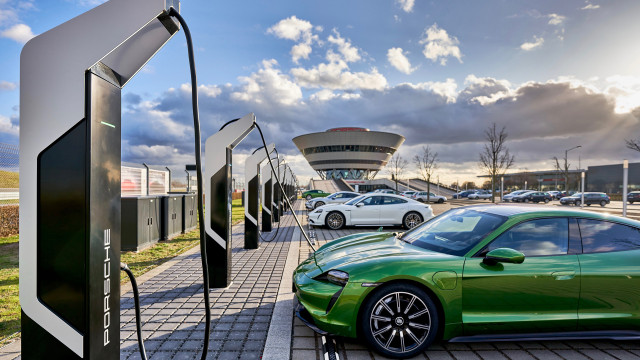
Beyond its source, an EV’s usefulness is tied directly to its ability to recharge. Many people are reluctant to invest in an electric car because they fear being stranded with a dead battery due to insufficient charging infrastructure. To support the widespread success of EVs, building a reliable and accessible public charging network is as crucial as grid modernization.
Electrification Beyond the Highway
The shift toward electric power isn’t limited to cars. It’s also making significant inroads in the heavy industry. For sectors like construction and agriculture, the goal is both environmental and practical — reducing on-site noise, cutting fuel costs, and improving air quality in contained areas.
For example, electric machines don’t release exhaust fumes, making them ideal for indoor or urban jobsites. This reduces the health risks posed by poor indoor air quality in workplaces and helps organizations ensure compliance with ventilation standards. It’s one of the many ways electrification addresses long-standing operational challenges, making it a valuable technology beyond transportation.
The Final Verdict on Electric Vehicles
When considering their full life cycle, electric cars are the greener choice. They start with a larger manufacturing footprint but deliver significantly cleaner performance over their operational lifetime. Overall emissions are substantially lower than those of their gas counterparts.
The ongoing transition of power grids to renewable energy sources and the development of robust battery recycling can further solidify their environmental benefits. Ultimately, EVs are a critical component of sustainable transportation.