

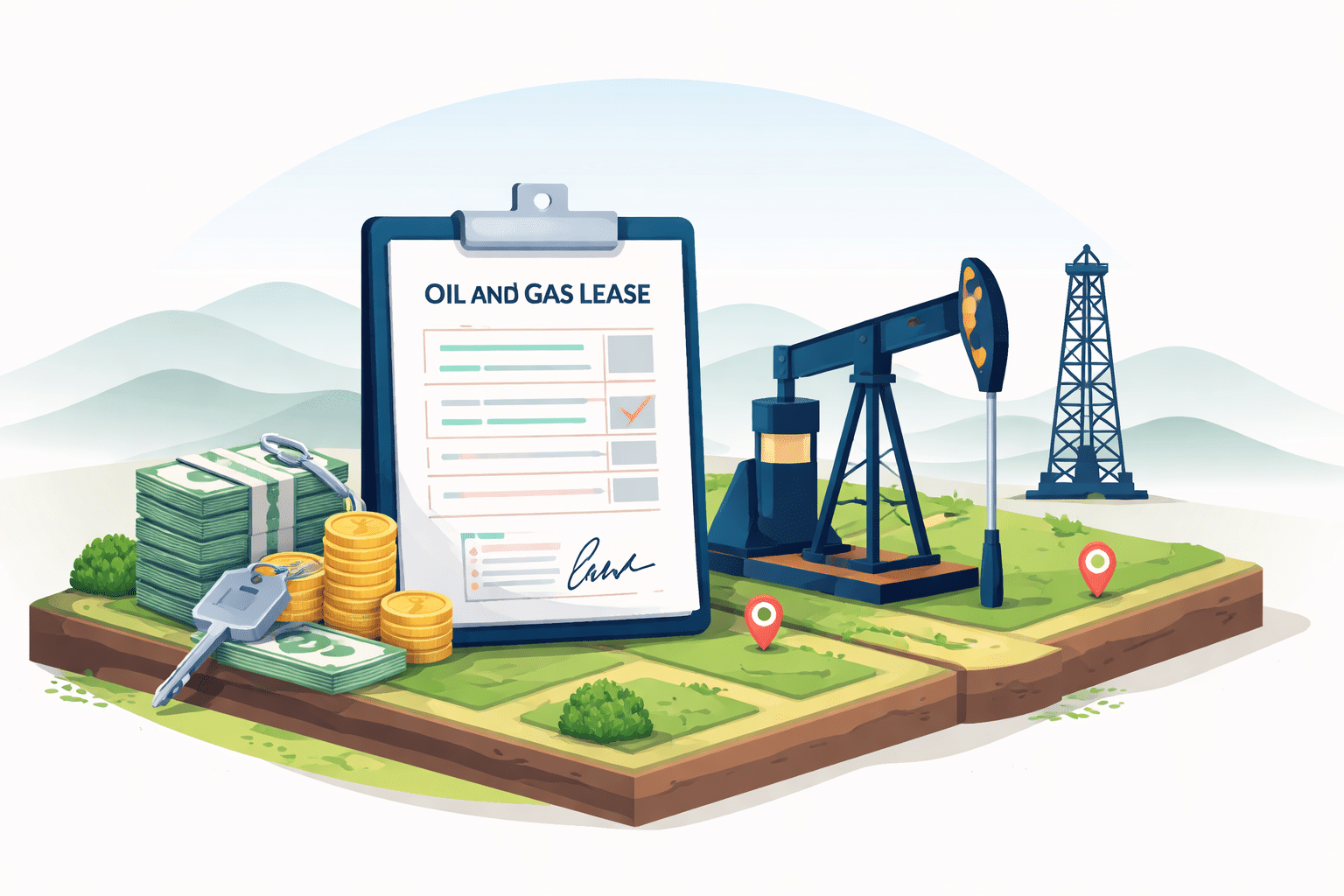
How Mineral Owners Can Protect Their Land and Interests When Signing an Oil and Gas Lease
Oil and gas development can bring economic opportunities, but it can also affect the land, water, and surrounding environment. For mineral owners, deciding whether to lease their rights involves more than comparing signing bonuses and royalty rates.
It also requires understanding how development may affect the property and what protections can be included in an agreement. Taking a thoughtful approach before signing an oil and gas lease can help owners make informed decisions while encouraging more responsible resource development.
Understand What an Oil and Gas Lease Allows
An oil and gas lease is a contract that grants an operator specified rights to explore for and produce oil or gas from mineral interests. In exchange, the mineral owner may receive a signing bonus, royalty payments, or other agreed compensation.
Signing a lease does not guarantee that a well will be drilled, and the agreement may remain in effect for a defined primary term or longer if its continuation provisions are met.
Check which mineral interests and acreage are covered, the lease term, extension provisions, permitted operations, and whether the lease can be assigned. Pooling or unitization terms also matter because production may be allocated across multiple properties. Their effect depends on the lease and state law.
Address Surface Use and Environmental Protections
Mineral and surface rights may belong to different people. Where they are separated, the mineral estate may have rights to use the surface for development, subject to state law, existing agreements, and regulations. Owners should establish which rights they hold before negotiating protections.
If the lease or a separate surface-use agreement can address surface activity, consider requesting clear terms for:
- Site locations: Identify where roads, well pads, pipelines, storage areas, and other facilities may be placed.
- Water resources: Specify safeguards for wells, streams, and other water sources, along with procedures for reporting and addressing suspected contamination.
- Soil and vegetation: Set expectations for limiting disturbance, managing erosion, and protecting crops, trees, and grazing areas.
- Waste and equipment: Clarify how drilling materials, wastewater, and equipment will be stored, handled, and removed.
- Restoration and damages: Define reclamation responsibilities, timelines, and how damage to fences, roads, crops, or other property will be assessed.
Not every request will be accepted, and some protections are governed by regulation. Still, written provisions can reduce uncertainty.
The New York State Department of Environmental Conservation’s Landowner’s Guide to Oil and Gas Leasing offers a useful example of issues to consider, including access, land disturbance, property damage, and reclamation. Its guidance applies to New York, so owners elsewhere should check their own state’s rules.
Use Mineral Management to Maintain Oversight
Protection does not end when the lease is signed. Owners need to track lease deadlines, operator changes, production, royalty statements, and correspondence, especially when interests span multiple properties or operators.
Organized mineral management helps owners maintain accurate records and review whether payments and ownership information match the underlying documents. Useful records include:
- Signed leases, amendments, and surface-use agreements.
- Deeds, probate documents, title records, and division orders.
- Royalty statements, payment histories, and tax documents.
- Production data, operator notices, and relevant correspondence.
- Maps showing property boundaries, wells, and related infrastructure.
Professional mineral management can help owners oversee their mineral interests through services such as title verification, lease administration, operator communication, and royalty reviews.
Digital tools can also bring documents, maps, production information, and revenue reports together, making it easier to monitor ownership and financial activity. Owners should compare providers based on their services, reporting practices, fees, and the needs of their holdings.
Review Royalty Terms and Payment Records
The royalty percentage is important, but owners should also understand how payments are calculated, whether deductions are permitted, when payments are due, and what information accompanies each statement. Other provisions can affect the amount received.
Review post-production costs, shut-in payments, payment thresholds, suspended payments, and audit rights. Compare statements with available production data and lease terms. If a payment changes unexpectedly or stops, request an explanation and keep a record. A qualified professional can help assess next steps.
Get Qualified Advice Before Signing
Oil and gas leases are legal contracts, and their effects vary by state, ownership structure, and wording. An oil and gas attorney can explain the terms, identify provisions to negotiate, and advise on how surface and mineral rights interact. A mineral management specialist may help with ownership records and payment questions but does not replace legal advice.
Allow time for review. Put every agreed change in writing and keep a signed copy. Confirm which permits, environmental requirements, and reclamation rules apply.
Conclusion
An oil and gas lease can affect more than the income a mineral owner receives. It may shape how land is accessed, used, and restored during development. Reviewing the agreement, documenting surface protections where available, understanding royalty calculations, and maintaining reliable records can help owners protect their interests.
With informed advice and ongoing oversight, they can make decisions that reflect their financial goals and the property’s long-term care.
Frequently Asked Questions
How can someone confirm who owns the mineral rights?
Review recorded deeds, prior reservations, probate documents, and other county land records; a title professional can help resolve gaps or conflicting ownership information.
What is a division order?
A division order is a document used by an operator to confirm an owner’s interest and payment details before distributing production proceeds.
Can a mineral owner refuse an oil and gas lease offer?
An owner generally does not have to accept a new lease offer, but existing agreements, ownership rights, and state law may affect the available choices.