


Upcycling Steel: The Role of Container Conversions in Reducing Construction Waste
Introduction: The Construction Waste Problem
The construction industry has a waste problem. There is no real way around it. In the UK alone, it accounts for a staggering share of total waste output, with millions of tonnes generated every year. Even with improved recycling practices, the sheer volume is hard to ignore, and much of it still ends up in landfills or is downcycled into lower-value uses.
As pressure builds around net-zero targets and more responsible resource use, the industry is being forced to rethink how it builds. Not just what it builds, but how. This is where upcycling starts to stand out, and more specifically, where shipping container conversions begin to make a lot of sense.
What Does Upcycling Steel Actually Mean?
Upcycling is not just another sustainability buzzword. It represents a fundamentally different way of thinking about materials. Instead of breaking things down and starting again, which is what recycling does, upcycling keeps materials largely intact and gives them a second life, often with greater value than before.
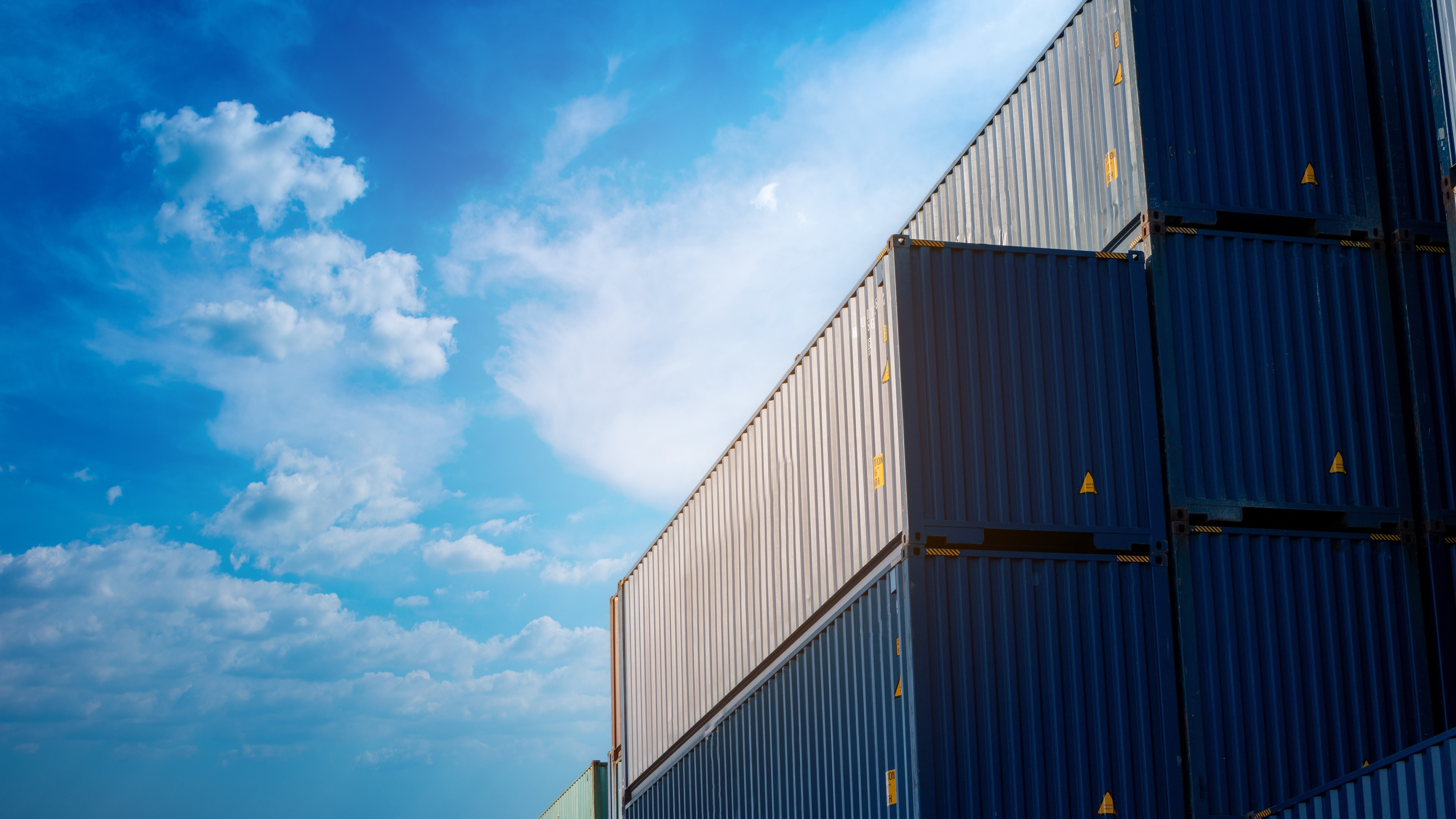
Shipping containers are a perfect example. Built from tough, weather-resistant steel, they are designed to survive years at sea in harsh conditions. So when they are no longer needed for shipping, it feels wasteful to simply melt them down.
Instead, they can be repurposed into offices, storage units, pop-up spaces, or even homes. The structure is already there. The heavy lifting, quite literally, has already been done.
From Global Trade to Second Life
Most shipping containers spend a decade or so moving goods across the world before they are retired. This is not because they have failed structurally, but because shipping standards change, repairs become less economical, or logistics shift.
At that point, they are often left sitting idle or sent for scrap. While recycling steel is better than disposal, it still requires significant energy.
Reusing containers avoids that process entirely. Instead of breaking them down, we extend their lifespan, sometimes by decades. It is a simple idea, but a powerful one. Use what already exists before creating something new.
Cutting Waste at the Source
Traditional construction is, by its nature, waste-heavy. Materials are cut, trimmed, over-ordered, and often discarded. Packaging alone can account for a surprising amount of site waste, not to mention demolition debris in redevelopment projects.
Container conversions approach things differently.
You start with a ready-made structure. There is far less need for raw materials, less cutting, and fewer offcuts piling up on-site. It is not entirely waste-free, but it is a clear step in the right direction.
Because much of the work can be completed off-site, there is also less disruption, fewer deliveries, and a cleaner overall build process.
A Lower Carbon Footprint, With Caveats
Steel production is one of the more carbon-intensive industrial processes. Every time we reuse an existing steel structure, we avoid the emissions tied to producing a new one.
That is the key advantage of container conversions.
By extending the life of these units, we spread their environmental cost over a longer period. We also reduce demand for new materials like concrete and bricks, both of which carry their own environmental impact.
That said, it is not a perfect solution. Transporting containers, modifying them, and ensuring they meet energy standards all come with their own environmental costs. The sustainability benefits are real, but they depend on how carefully the project is planned and executed.
Why Businesses Are Paying Attention
Sustainability is only part of the story. Container conversions also make practical sense for many businesses.
They are quick to deploy. Much quicker than traditional builds. Since the core structure already exists, projects can move from concept to completion in far less time.
They are also flexible. Whether it is a temporary office, additional storage, or a modular workspace that can be relocated later, containers offer a level of adaptability that is hard to match.
Cost is another factor. While not always the cheapest option upfront, they often prove more economical over time, particularly when speed, durability, and flexibility are taken into account. Many companies, including established providers such as Bell Container, have helped demonstrate how practical and scalable these solutions can be across different industries.
Not Just for Construction Sites
Container units may be a common sight on construction sites, but their use has expanded far beyond that.
They are now used as cafés, retail kiosks, classrooms, and even residential developments. Their modular nature makes them easy to stack, combine, and customise, opening up a wide range of design possibilities.
This versatility is part of what makes them so appealing, not just as a temporary solution, but as a viable building method in its own right.
A Natural Fit for the Circular Economy
If the goal is to move away from a throwaway culture, container conversions fit naturally into that vision.
They reflect the core principles of the circular economy. Reuse, extend, minimise waste. Instead of extracting new resources, we make better use of what already exists.
In an industry responsible for such a large share of waste, this shift is significant.
It is not about replacing traditional construction entirely, but about introducing smarter, more resource-efficient alternatives.
The Challenges Are Real
Of course, container conversions are not without their challenges.
Containers were not originally designed for human occupancy, so insulation, ventilation, and temperature control require careful planning. Without proper design, they can become uncomfortable or inefficient.
There are also structural considerations when modifying the steel for windows and doors, as well as transport logistics and planning regulations to consider.
In short, container conversions require expertise. When done well, they are highly effective. When done poorly, they can create unnecessary complications.
Where Innovation Is Taking Things Next
This is where the conversation becomes more forward-looking.
New materials and technologies are making container buildings more efficient and comfortable. Improved insulation, integrated solar panels, and smart energy systems are helping to address earlier limitations.
Design innovation is also expanding what is possible. Multi-storey developments, hybrid structures, and modular systems that can be scaled over time are becoming more common.
What began as a niche concept is steadily evolving into a credible solution within sustainable construction.
Looking Ahead
The construction industry will not transform overnight, but change is clearly underway.
There is growing recognition that buildings need to be delivered more efficiently, more responsibly, and with long-term sustainability in mind.
Container conversions will not solve every challenge. However, they offer a practical and scalable way to reduce waste and rethink how materials are used.
In a world where resources are finite, that shift is increasingly important.
Final Thoughts
Upcycling steel through container conversions is built on a simple principle. Do not waste what still has value.
By giving shipping containers a second life, we can reduce construction waste, lower emissions, and move towards a more sustainable approach to building.
It is not a perfect solution, but it is a meaningful step in the right direction. One that more businesses and industries are beginning to take seriously.