


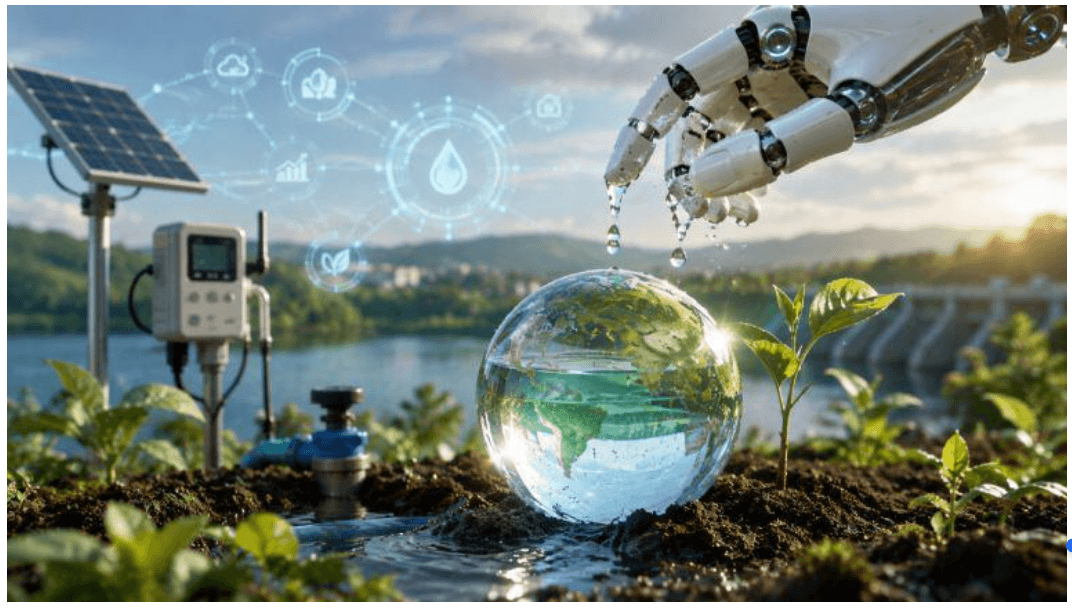
How Can We Maintain Sustainability Using AI and Save Water?
Water is becoming one of the world’s most valuable resources, yet it is disappearing faster than many people realize.
According to the United Nations World Water Development Report 2025, around 2.2 billion people still lack access to safely managed drinking water, while global water demand is expected to rise by nearly 30% by 2050 because of population growth, urbanization, and industrial expansion. At the same time, climate change continues to increase droughts, floods, and unpredictable rainfall, making water management even more difficult.
Artificial intelligence (AI) is now helping researchers, governments, and industries respond to these challenges with smarter decisions based on data. Although AI is not a complete solution, it offers practical ways to reduce water waste, improve efficiency, and support long-term sustainability.
Understanding how AI contributes to water conservation can help you appreciate its growing role in protecting one of Earth’s most essential resources.
Why Water Sustainability Matters More Than Ever
Water supports every part of life. It keeps ecosystems healthy, helps farmers grow food, powers industries, and provides clean drinking water for communities. Unfortunately, many freshwater sources are under increasing pressure.
Several factors contribute to this problem. Population growth increases demand every year. Climate change reduces reliable rainfall in many regions. Pollution also contaminates rivers, lakes, and groundwater, making clean water harder to access.
Traditional water management methods often depend on routine inspections and historical records. Those approaches still have value, but they may not detect problems quickly enough. Better information and faster decisions are becoming essential.
How AI Supports Sustainable Water Management
Artificial intelligence processes enormous amounts of information within seconds. Sensors, satellites, weather stations, and smart water meters constantly generate new data.
AI studies these patterns and identifies changes that people could easily overlook. As AI adoption continues to expand across different sectors, technologies such as ChatGPT ads highlight how AI-powered solutions are transforming digital communication and business operations alongside environmental innovation.
Instead of waiting until a serious problem appears, AI helps organizations detect risks earlier. This approach allows water managers to respond before shortages, equipment failures, or unnecessary losses become severe.
You can think of AI as a decision support system rather than a replacement for human expertise. Engineers, scientists, and policymakers still make the final decisions. AI simply provides better insights based on available data.
Detecting Water Leaks Before They Become Serious
Water leaks waste millions of liters every day across aging distribution systems. Many underground leaks remain unnoticed for weeks because they cannot be seen from the surface.
AI analyzes information collected from pressure sensors, flow meters, and acoustic monitoring devices. Small changes in pressure or unusual sound patterns often indicate a hidden leak.
Early detection provides several benefits.
- Water loss decreases significantly.
- Repair costs remain lower.
- Infrastructure damage becomes less severe.
- Communities experience fewer service disruptions.
As a result, cities can conserve valuable water while improving the reliability of public water systems.
Improving Agricultural Water Use
Agriculture consumes nearly 70% of global freshwater withdrawals, making irrigation one of the most important areas for water conservation.
AI helps farmers understand exactly when crops require irrigation. Soil moisture sensors, weather forecasts, crop health images, and satellite observations provide continuous information. AI combines these data sources to recommend the right amount of water at the right time.
This approach reduces unnecessary irrigation while maintaining healthy crop growth. Farmers can also lower energy consumption because irrigation systems operate only when conditions require additional water.
Better irrigation management supports both environmental sustainability and agricultural productivity.
Predicting Droughts and Water Shortages
Extreme weather events have become more frequent in many regions. Long periods without rainfall place tremendous pressure on water supplies.
AI models analyze weather forecasts, historical climate records, groundwater measurements, reservoir levels, and satellite imagery. These systems identify warning signs much earlier than traditional forecasting methods.
Earlier predictions give governments and water authorities more time to prepare. They can adjust water distribution plans, encourage conservation measures, and protect essential services before shortages become critical.
Communities also benefit because better planning reduces uncertainty during drought conditions.
Monitoring Water Quality More Effectively
Clean water is just as important as sufficient water. Contaminated water threatens both human health and aquatic ecosystems.
Modern monitoring systems collect continuous information about temperature, pH levels, dissolved oxygen, turbidity, and chemical contaminants. AI analyzes these measurements and identifies unusual patterns that may indicate pollution.
Instead of depending only on periodic laboratory testing, authorities receive faster alerts when water quality begins to decline. Quick responses reduce environmental damage and protect public health.
Smart Cities and Efficient Water Distribution
Urban areas continue to expand, increasing pressure on existing water infrastructure.
Many cities now use AI to balance water demand throughout the day. Smart systems analyze consumption patterns across residential neighborhoods, commercial districts, and industrial facilities.
This information helps utilities adjust pumping schedules, optimize storage capacity, and reduce unnecessary energy use. Better coordination also minimizes water losses during peak demand periods.
As cities become larger, intelligent water management will become increasingly valuable.
Challenges That Still Need Attention
AI offers impressive capabilities, but several challenges remain.
High-quality data is essential for accurate predictions. Poor sensor coverage or incomplete information can reduce system performance.
Many developing regions also face financial limitations. Installing smart sensors, communication networks, and advanced computing systems requires significant investment.
Privacy and cybersecurity deserve careful attention as well. Water infrastructure depends on digital systems, so protecting sensitive operational data remains a priority.
Human expertise continues to play an essential role. Engineers, environmental scientists, and policymakers must interpret AI recommendations responsibly and ensure that technology serves public interests.
The Future of AI in Water Sustainability
Future AI systems will likely become more accurate as additional environmental data becomes available. Better satellite observations, advanced sensors, and improved climate models will strengthen water management decisions across multiple sectors.
Researchers are also exploring digital twins, autonomous monitoring systems, and predictive maintenance technologies that could further reduce water waste. These innovations have the potential to improve resilience against climate change while supporting more efficient use of freshwater resources.
Success, however, will depend on collaboration. Governments, researchers, industries, and local communities all have important roles in creating sustainable water management strategies.
Artificial intelligence can save water and boost sustainability. We need to optimize agriculture through smart irrigation, predict leaks in urban water networks, monitor industrial usage with real-time data, and improve wastewater treatment processes. These tools reduce waste and conserve vital resources efficiently.