

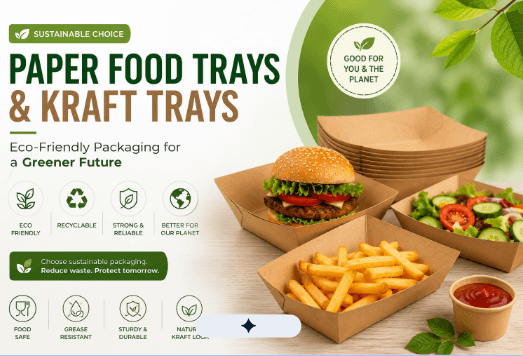
From Plastic to Paper: The Rise of Kraft Food Trays
Plastic food trays take centuries to break down. Paper food trays and kraft trays take weeks — and that single fact is reshaping how cafés, caterers, and food brands across Australia think about packaging. As landfill levies rise and consumers actively avoid brands wrapped in single-use plastic, the shift toward fibre-based trays isn’t a trend. It’s becoming the baseline expectation.
This article looks at what paper food trays are actually made of, how they perform against plastic in real food-service conditions, and what businesses should weigh up before switching their entire tray line over.
What Are Paper Food Trays, Exactly?
A paper food tray is a moulded or die-cut tray made from virgin or recycled paperboard, often coated with a thin, food-safe barrier layer to resist grease and moisture. They’re used for everything from bakery items and fried food to fresh produce and takeaway meals.
Unlike a flat paper plate, these trays are engineered with structural rigidity — reinforced edges, contoured bases, and sometimes corrugated inserts — so they hold shape under the weight of food and stack cleanly for transport and display.
Where Kraft Trays Fit In
Kraft trays are a specific category within paper food trays, made from unbleached kraft paperboard. The kraft process produces a stronger, more tear-resistant fibre than standard bleached paperboard, which is why kraft trays are the go-to choice for:
- Hot food service (fried chicken, chips, loaded fries)
- Bakery and pastry display
- Grab-and-go delis and food trucks
- Farmers’ markets and produce stalls
The natural brown finish also carries an inherent “eco” visual cue — customers associate the unbleached look with sustainability, even before they read a single word about the material’s actual footprint.
Why This Category Is Growing So Fast
1. Regulatory Pressure Is Real
Several Australian states have already restricted or banned polystyrene food service items, and single-use plastic phase-outs continue to expand state by state. Paper and kraft trays sit outside most of these restrictions, provided they meet compostability or recyclability standards — which makes them a low-risk, future-proof choice for food businesses planning more than a year ahead.
2. Consumers Are Actively Screening for This
Diners increasingly notice what their food arrives in. A tray that’s visibly plastic-lined or foam-based can undercut an otherwise premium food experience. A well-designed kraft tray, by contrast, reinforces a sense of care and quality — it signals that the business thought about the full experience, not just the food.
3. End-of-Life Is Simpler
Uncoated or PLA-lined paper trays can typically go into council green waste or commercial composting streams, whereas plastic and foam trays are landfill-only in almost every case. For businesses managing waste contracts, this can meaningfully reduce general waste volume and cost over time.
Paper Trays vs Plastic Trays: The Practical Comparison
| Factor | Paper / Kraft Trays | Plastic Trays |
| Breakdown time | Weeks to months (compostable grades) | 100+ years |
| Grease/moisture resistance | Good, with food-safe coating | Excellent |
| Microwave safe | Yes (uncoated/PLA-lined) | Varies by resin |
| Stackability | High, with reinforced rims | High |
| Perceived brand value | Strong — signals sustainability | Neutral to negative |
| Cost per unit | Slightly higher (closing gap) | Lower, historically |
The cost gap between the two categories has narrowed significantly as demand for fibre-based packaging has scaled up manufacturing volume. For many food businesses, the marginal cost increase is now offset by reduced waste-disposal fees and a measurable bump in customer perception.
Choosing the Right Tray for Your Food Business
Not every paper tray is built the same, and picking the wrong grade for the wrong food can lead to soggy bottoms, leaks, or trays that don’t hold shape on a delivery run. Consider:
Barrier coating — Look for water-based, compostable coatings rather than traditional PE (polyethylene) linings if landfill diversion matters to your business. PE-lined trays are still recyclable in some streams but are not compostable.
Wall thickness and flute — Corrugated or double-wall kraft trays are better suited to heavier, hotter, or oilier foods (think loaded chips or rotisserie chicken) where a single-ply tray might sag.
Print and branding surface — Uncoated kraft takes flexographic printing beautifully and gives a premium, artisanal look at low ink cost — ideal for brands leaning into a natural or handcrafted identity.
Size standardisation — Matching tray dimensions across your menu reduces packaging SKUs, simplifies storage, and keeps ordering costs down.
Custom Paper & Kraft Trays with DODO Packaging AU
At DODO Packaging AU, we manufacture custom paper food trays and kraft trays engineered for Australian food-service conditions — from hot, oily takeaway food to delicate bakery items that need to hold their shape in transit.
Every tray can be produced with food-safe, compostable coatings, custom die-cut shapes, and full-colour or single-colour kraft branding, so your packaging does double duty as a marketing surface. Whether you’re a single café or a multi-site food franchise, our team works with you on minimum order quantities, material specs, and turnaround timelines that fit your production schedule.
Are kraft food trays actually recyclable or compostable?
It depends on the coating. Uncoated or PLA-lined kraft trays are typically compostable in commercial facilities, while PE-lined trays are recyclable through paper/cardboard streams but not home-compostable. Always check the specific product spec.
Do paper trays hold up against oily or greasy food?
Yes, when they use a proper grease-resistant coating or liner. Uncoated paper alone will soak through with high-fat foods, which is why food-safe barrier coatings exist specifically for this use case.
Can paper food trays go in the microwave?
Most uncoated or PLA-coated paper trays are microwave-safe for short reheating periods, but trays with PE or foil linings generally are not. Check the manufacturer’s guidance before microwaving.
Are kraft trays more expensive than plastic trays?
The price gap has narrowed considerably as fibre packaging demand has grown. For many businesses, the higher per-unit cost is offset by lower waste-disposal expenses and improved customer perception.
Can I get my logo printed directly on kraft trays?
Yes. Kraft paperboard takes flexographic and digital printing well, allowing single-colour or full branding directly onto the tray surface without needing an additional label or sleeve.
Final Thoughts
The move from plastic to paper and kraft trays isn’t just a packaging swap — it’s a signal to customers about what a food business values. As regulations tighten and consumer expectations keep rising, businesses that get ahead of this shift now will spend less time scrambling to comply later and more time using packaging as a genuine brand asset.