

Why “Call Before You Dig” Is Only the First Step
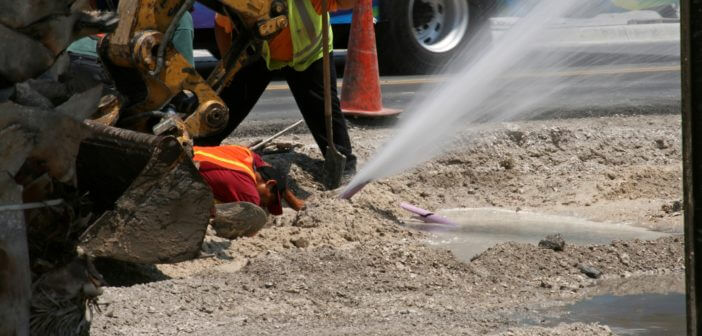
That sudden hiss of escaping gas. The immediate loss of internet to an entire neighborhood. Or the geyser of water erupting from a broken main.
A utility strike is one of the most dangerous and costly mistakes on any construction or landscaping project. It stops work instantly, brings emergency crews to your site, and can result in enormous fines and repair bills.
Most professionals know the first rule: call 811 before any digging. This free service notifies public utility operators to mark the approximate location of their underground lines with paint or flags. But here is the critical part many people miss: those marks are not a guarantee. They are an estimate.
The line could be several feet to either side, or at a different depth than expected. A comprehensive approach to safe excavation around utilities treats those marks as a starting point for investigation, not a final answer. True site safety depends on what you do after the paint dries.
Quick answer: Calling 811 is a mandatory first step, but it is not enough to prevent utility strikes. The paint marks on the ground are only estimates. True safety requires physically verifying the exact location and depth of each utility using non-destructive methods before any heavy equipment begins work.
What’s inside
- What Happens When You Skip a Step?
- Mistake 1: Relying Only on Public Locates
- Mistake 2: Using the Wrong Digging Method
- Mistake 3: Ignoring the “Tolerance Zone”
- How Do Professionals Verify Utility Depths?
- Frequently Asked Questions
────────────────────────────────────────
What Happens When You Skip a Step?
Skipping verification steps exposes your project to massive financial penalties, project-halting delays, and severe safety risks.
The consequences of a utility strike are immediate and disruptive. Imagine a backhoe bucket snagging a buried fiber optic trunk line. The damage is not just the cost of splicing the line itself. It is the lost service for hundreds of homes and businesses, the emergency mobilization fees from the utility provider, and the complete shutdown of your own work site.
A severed water main can cause localized flooding and property damage, while a damaged sewer line creates a significant environmental and health hazard. What was a productive excavation site becomes a scene of an investigation, pushing schedules back by days or weeks while the incident is resolved.
Beyond the immediate project delays, the financial fallout can be staggering. Testimony from The Association of Union Constructors estimates the annual cost of damages to the nation’s buried infrastructure is between $50 and $100 billion.
A damaged natural gas line or water main brings not only the utility’s repair crews but often the fire department and other emergency services. The property owner or contractor responsible for the strike is typically liable for all associated costs.
This can include direct repair bills, municipal fines for unpermitted or unsafe work, and significant penalties from regulatory bodies. For example, the Occupational Safety and Health Administration (OSHA) can issue citations for failing to determine the exact location of underground utilities, with fines that can cripple a small business.
❝ A single utility strike can delay a project by weeks or even months. The initial incident investigation, emergency repairs, and regulatory follow-up can completely derail a construction schedule, creating cascading problems for every trade that follows.
Most importantly, cutting corners puts people in danger. An unmarked, energized electrical line can be fatal to a worker who strikes it with a shovel or auger. A ruptured gas line creates an immediate explosion hazard, threatening not just the work crew but the entire surrounding community.
These are not theoretical risks; they are the documented outcomes of failing to physically confirm what lies just a few feet beneath the surface before breaking ground. The investment in proper verification is a tiny fraction of the cost of a single, catastrophic mistake.
────────────────────────────────────────
How Do Professionals Verify Utility Depths?
Professionals confirm the exact location of underground lines using non-destructive digging methods before any heavy equipment is used.
The industry standard for this verification is hydro excavation. This process uses pressurized water to liquefy the soil around a utility line, creating a slurry. A powerful vacuum truck then removes the slurry, exposing the pipe or cable without any risk of damage.
This technique, also called “potholing” or “daylighting,” creates a small, precise test hole that allows crews to physically see and measure the utility’s exact depth and position. It completely removes the guesswork inherent in relying on paint marks alone.
This approach is a direct requirement for safe work. The federal standard from the Occupational Safety and Health Administration (OSHA) mandates that the “exact location of underground installations” must be determined before excavation begins. Using a backhoe or auger to “find” a line is not a verification method; it is a gamble that frequently ends in a utility strike.
❝ The safest mindset on a job site is to assume the locate marks are a question, not an answer. The purpose of the initial work is not to dig a trench, but to conduct a careful investigation to confirm what is actually buried there.
When evaluating a contractor’s approach, the equipment and process they describe are critical indicators of their safety culture. A backhoe is a tool for bulk earthmoving, not for delicate exploration. A hydrovac truck is a specialized tool designed for surgical precision and safety.
| Feature | Mechanical Digging (Backhoe) | Hydro Excavation (Vacuum) |
| Risk of Utility Damage | High | Extremely Low |
| Precision | Low; creates large, rough holes | High; creates small, precise holes |
| Site Disruption | High; large spoil piles of dirt | Low; debris is contained in a truck |
| Best Use Case | Bulk earthmoving in open areas | Verifying utilities, digging in tight spaces |
Before work begins, ask any potential contractor a few specific questions about their process:
- What is your procedure for potholing to verify utility depths before you start trenching?
- How do you manage the slurry and backfill from the hydro excavation process?
- What is your plan if a marked utility is not found at the expected location or depth?
Their answers will reveal whether they see utility verification as a preliminary safety step or an optional inconvenience.
────────────────────────────────────────
Mistake 3: Ignoring the “Tolerance Zone”
This mistake happens when a crew misunderstands what the painted lines on the ground actually mean. They are not a precise map. The “tolerance zone” is a legally defined area extending a specific distance, often 18 to 24 inches, out from both sides of the marked line. All excavation within this zone must be done with extreme care, typically using non-destructive methods.
The critical error is treating the edge of this zone as a safe starting point for a backhoe or auger. Locating technology is not perfect; the actual utility can be off-center from the paint marks due to signal interference, inaccurate utility maps, or metallic objects nearby. Starting mechanical digging right at the 24-inch line is a gamble.
If the utility is actually located 20 inches from the mark, the outer edge of a 24-inch excavator bucket can easily strike it.
❝ The tolerance zone is not a ‘do not enter’ sign for all equipment. It is a ‘proceed with extreme caution’ sign, requiring non-destructive methods to find the exact location of the line before any mechanical digging begins.
The correct procedure, as outlined in industry standards like the Common Ground Alliance (CGA) Best Practices Guide, is to use this zone as the target for verification. This is where crews should use methods like hydro excavation to create small test holes, or “potholes,” to physically expose the utility.
This process, known as daylighting, confirms the line’s exact horizontal and vertical position. Only after this visual confirmation can mechanical digging proceed safely nearby.
Even a “near miss” can cause serious problems. A metal bucket scraping the protective coating from a steel gas or oil pipeline can compromise its integrity, leading to corrosion and a potential leak years later.
For fiber optic cables, a slight nick from a shovel can damage the delicate glass strands inside. The only way to ensure the long-term safety and integrity of buried infrastructure is to avoid all contact.
────────────────────────────────────────
Frequently Asked Questions About Safe Excavation
How close to a marked utility can you dig with a backhoe? You should never use a backhoe or other mechanical equipment inside the designated tolerance zone until the utility has been visually confirmed. This zone is typically 18 to 24 inches on either side of the marks. Once non-destructive digging has exposed the line and its exact depth and location are known, you can then operate mechanical equipment at a safe distance from that verified position.
What is the 5-4-3-2-1 rule for excavation? This is a safety mnemonic to guide the excavation process. It stands for: 5 days before digging, pre-mark your proposed dig site with white paint. 4, for the four ways to contact 811 (phone, online, etc.). 3 days before digging, notify 811. 2 days before digging, confirm all utilities have responded. 1, for the one final call to 811 if you see any signs of an unmarked utility.
What should you do if you find an unmarked pipe or cable? Stop all work immediately. Do not touch or attempt to move the line, as you cannot be sure what it is or if it is energized. Carefully secure the area to prevent anyone from approaching it, notify your site supervisor, and call 811 and the property owner right away. Assume any unmarked line is active and dangerous until the utility owner has identified it.
Is hand-digging with a shovel safe inside the tolerance zone? While safer than a backhoe, hand-digging is not risk-free and can still damage certain utilities. A shovel can easily slice a fiber optic cable, scrape the protective coating off a steel gas line (leading to future corrosion), or break a thin tracer wire used for future locates. For positive identification, hydro excavation is the preferred method as it uses water and vacuum, eliminating the risk of impact.
Does calling 811 locate all the utilities on a property? No, and this is a critical distinction. The 811 service only marks public utilities, the lines owned and maintained by utility companies up to the service meter. Any lines that run from the meter to a building, or between buildings on a property (like power to a garage, water for an irrigation system, or septic lines), are considered private. You must hire a separate, private utility locating service to find and mark these lines.
────────────────────────────────────────
From Assumption to Certainty: The Final Word on Safe Digging
Ultimately, the most dangerous mistakes in excavation come from a single source: treating painted lines on the ground as a precise map. As we have seen, this is a flawed assumption.
The reality of tolerance zones, the limits of locating technology, and the presence of unmarked private utilities all demand a more rigorous approach. The goal is not to dig near a mark, but to gain absolute visual confirmation of a utility’s location before any real earthmoving begins.
The most critical decision on any job site is how you will bridge the gap between the painted mark and the physical pipe or cable. Choosing to use a backhoe for this initial exploration is a gamble.
Choosing non-destructive methods like hydro excavation confirms the job. This shift in tooling and mindset, from brute force to surgical precision within the tolerance zone, is the defining factor that separates a safe, professional operation from a risky one.
This process is about proactive risk management. The cost of a utility strike is unpredictable and potentially catastrophic, measured in project delays, steep fines, and genuine danger to workers and the public. The cost of proper verification is small, known, and controlled. Investing in that certainty upfront is the most reliable way to prevent a disaster downstream.
────────────────────────────────────────
About the author
This article was contributed by the team at Biolein, a Denver-based firm specializing in environmental and industrial field services. For over 12 years, their crews have focused on hydrovac excavation for safe utility exposure, industrial vacuum services, and complex waste management.
They support construction managers, environmental engineers, and municipal agencies with projects demanding non-destructive digging and stormwater system maintenance. Their work on infrastructure projects across Colorado and nationwide prioritizes safety protocols and sustainable field practices.