

Sustainable Water Management
Sustainable water management increasingly focuses on using available water more efficiently while protecting the soil, groundwater, and surface waters communities depend on. That requires more than conservation campaigns or efficient fixtures. It also requires infrastructure that can store, direct, and contain water appropriately.
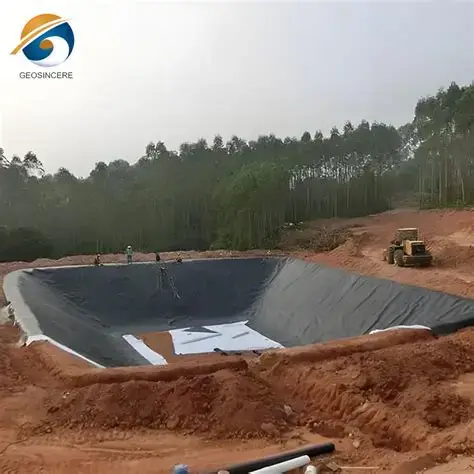
Geomembrane liners are one technology used in that infrastructure. By creating a low-permeability barrier between stored liquids and the underlying ground, liner systems can help reduce unwanted seepage and support controlled water management in applications ranging from agricultural storage to wastewater containment.
Why Water Containment Matters for Sustainability
Stored water represents a resource that has already required infrastructure, energy, and investment to collect or transport. Uncontrolled seepage from a storage structure can reduce the amount of water available for its intended purpose.
Containment also has an environmental dimension. Where stored water contains nutrients, sediment, wastewater constituents or other pollutants, uncontrolled movement into soil or groundwater can create environmental risks. The appropriate response depends on the water’s characteristics, site geology, regulatory requirements, and the intended management approach.
This is why sustainable water infrastructure must balance water conservation with environmental protection. EPA guidance on groundwater protection, for example, emphasizes considering soil conditions, groundwater depth, potential contaminants, and site-specific design when determining whether infiltration is appropriate.
In some circumstances, an impermeable liner may be part of the design used to prevent pollutants from reaching groundwater.
What Are Geomembrane Liners?
A geomembrane is a manufactured polymer sheet designed to function as a hydraulic or environmental barrier. Common materials include polyethylene and other polymers selected according to the application and required performance characteristics.
Instead of letting water move freely into the surrounding soil, the liner forms a controlled boundary beneath or around a containment structure. Engineered systems use technology in which limiting liquid migration is an important part of the design.
However, the liner is only one component of a successful containment system. Site preparation, drainage, protective layers, anchoring, seams, and inspection all influence how effectively the finished system performs.
How Geomembranes Support Sustainable Water Management
Improving water retention
In appropriate storage applications, a low-permeability liner can reduce seepage from a reservoir, pond or other water-storage structure. This can keep more of the stored water available for its intended use.
Potential applications include agricultural irrigation storage, rainwater harvesting systems and water reservoirs. The sustainability benefit is not that a liner creates additional water; rather, it can help infrastructure control where stored water goes.
Supporting environmental protection
Containment is especially important when the stored liquid could affect surrounding soil or groundwater.
Wastewater, leachate, and certain stormwater flows can contain substances that should not be allowed to migrate uncontrolled into the subsurface. Engineered liner systems can provide a barrier within a broader containment strategy.
EPA technical guidance identifies low-permeability liners, including geomembranes, as technologies that can reduce liquid migration from waste-management units.
Making infrastructure more controlled
Sustainable infrastructure does not necessarily eliminate conventional engineering. Often, it is infrastructure that manages resources more deliberately.
A lined stormwater basin, for example, may be appropriate where infiltration could introduce contaminants into groundwater.
Conversely, infiltration may be desirable elsewhere when site conditions and water quality make groundwater recharge appropriate. The key is to match the containment or infiltration strategy to the site’s environmental conditions rather than applying one solution everywhere.
Applications in Sustainable Infrastructure
Geomembrane systems can support a range of water-management applications.
Agriculture and irrigation: Lined ponds and reservoirs can store water for irrigation and other agricultural needs while limiting seepage.
Rainwater harvesting: Lined storage structures can capture rainfall for later use, especially where the underlying ground is highly permeable or uncontrolled infiltration is undesirable.
Stormwater management: Depending on the site’s objectives, lined basins can provide controlled stormwater storage. They may be useful where preventing infiltration is necessary to protect groundwater from pollutants.
Wastewater containment: Engineered containment systems can use geomembranes to manage wastewater and prevent uncontrolled migration into surrounding soils.
Environmental containment: Liner systems are also used in specialized environmental applications where controlling liquid movement is a primary design objective.
The right solution depends on local hydrology, soil conditions, liquid characteristics, climate, regulations, and the system’s intended service life.
Installation and Long-Term Performance Matter
A liner cannot compensate for poor site preparation or inadequate system design. The ground beneath it must be properly prepared, and the liner must be handled and installed to minimize damage.
Geomembrane liner installers can help ensure liners are properly placed, seamed, and inspected for each project’s specific conditions.
Seaming deserves particular attention because individual sheets must form a continuous barrier. EPA guidance notes that geomembranes can be vulnerable to punctures and that field seam quality is critical to containment performance. Installation conditions, surface preparation, moisture, temperature, and workmanship can all affect seam quality.
Long-term management is equally important. Owners and operators should establish system-appropriate inspection procedures to look for signs of damage, settlement, erosion, exposed material, or other changes that could affect performance. Consider maintenance requirements during the original design rather than after a problem develops.
Sustainable Water Management Requires the Whole System
Geomembrane liners are not a universal answer to water-management challenges, nor are they inherently more sustainable than every alternative. Their environmental value depends on how appropriately they are designed, installed, operated and maintained.
Used in the right circumstances, however, a properly engineered barrier can help retain stored water, control liquid movement and protect surrounding environmental resources.
That makes geomembranes a useful component of a broader sustainability strategy that combines conservation, thoughtful site design, appropriate storage, pollution prevention, and long-term infrastructure management. The strongest water-management systems are designed around water movement across the entire site, with containment and infiltration decisions based on both resource needs and environmental conditions.