

Why More Cities Are Treating Shade Like a Public Utility
You take your child to a playground, only to find the slide too hot to touch, leaving them devastated. On days like this, shade can feel as essential as the road that brought you there.
As climate change intensifies heat worldwide, cities are allocating dedicated budgets for shade, with long-term plans for its maintenance. That shift could bring the cooler gathering places your neighborhood needs into everyday infrastructure planning.
What Prompted Shade to Shift From Optional Amenity to Essential Infrastructure?
When the park feels uncomfortable by mid-morning and walking to the store means crossing sun-baked pavement, heat starts shaping how your day plays out. You might shorten an outing or postpone an errand until evening. For anyone whose schedule offers limited flexibility, finding relief along the way becomes part of getting from one place to another.
Trees block sunlight and cool nearby air through evapotranspiration, releasing moisture that draws heat from the surroundings as it evaporates. This works somewhat like sweat cooling your skin. It’s partly why urban forests are 3°F cooler on average than areas in the city without green space.
However, new trees need time and suitable planting space to develop a canopy. Structures can provide shade as soon as crews complete the installation. Where underground infrastructure or narrow sidewalks limit planting, structures give planners a way to fill gaps along a route.
The need extends beyond desert cities. In Seoul, Korea, streets accounted for 31.4% of heat-related illness cases between 2023 and 2025. Such findings helped prompt plans for shaded walking routes using trees where possible and structures where planting is difficult.
Inside Today’s City Shade Plans
Planning for a whole route means looking closely at where you spend time in the sun. A bus stop may leave you exposed while waiting, even if the nearby park has plenty of trees.
Identifying those gaps helps cities decide where an investment could be most useful. Coordinated plans bring individual planting and structure projects into a shared system of priorities, funding, and maintenance.
Your experience can help inform the authorities responsible for change. In Phoenix, surveys identified the least shaded spots as part of a plan that prioritizes busy walking corridors and bus stops. Alongside resident feedback, planners can consider pedestrian traffic and the needs of people who are more vulnerable to heat when deciding where to allocate funding.
Nearby Scottsdale, Arizona connects its guidelines for maintaining and increasing shade with water harvesting and tree care. Its Development Review Board adopted the plan in 2026, making shade a factor in project planning and design review. In a desert community, coordinating these decisions means considering how planted areas receive water alongside where structures could provide cover.
The resulting designs can look quite different. A compact shelter might suit your bus stop, while a public plaza calls for broader protection over seating and walkways. At a school, planners might focus on the playground equipment or the pickup area.
One framework can guide all three, with funding priorities and design standards connecting individual projects to the wider plan.
How Schools, Parks and Neighborhoods Feel the Shift
When you arrive for school pickup, a covered waiting area can keep you out of the direct sun. At the playground, the question shifts to whether that protection reaches the equipment children want to use when they gather there.
Imagine staff reviewing a schoolyard with that in mind. They might assess slides, handrails, and dark play surfacing together with the sun’s changing position, then identify where a structure would be most useful. A retrofit could make parts of the yard more comfortable, while staff would still consider the day’s heat before sending children outside to play.
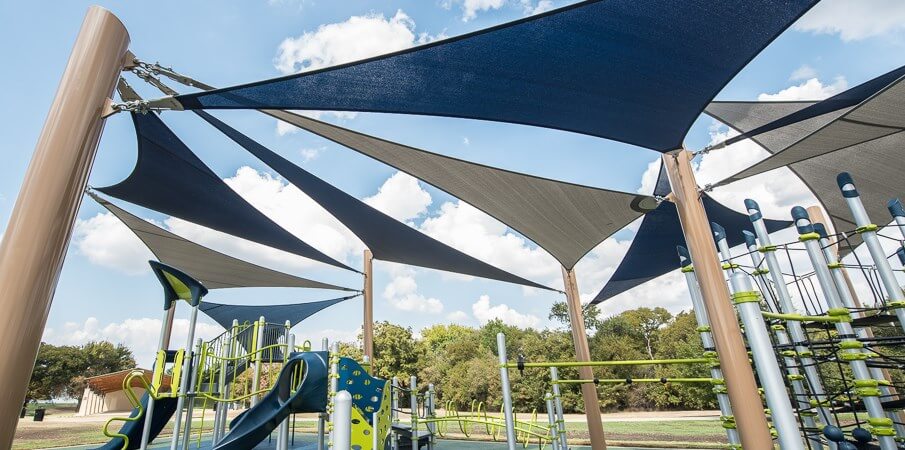
An older project at Adventure World in North Richland Hills, Texas, demonstrates how shade structures can effectively address heat while supporting a playground’s design.
City park planners contacted USA SHADE because the playground’s slides could become too hot for children to use on sunny days. USA SHADE created a custom fabric shade system that matched the park’s treehouse theme with playful purples and natural greens.
The result shaded key play areas while strengthening the park’s visual identity—a helpful example for cities, schools, and parks looking to make playgrounds more comfortable and design-forward.
Shaded interventions become important as sun exposure warrants consideration when weighing the benefits of outdoor activity. While spending time outside is typically good for the mind and body, excessive ultraviolet exposure increases the risk of skin cancer over time. Shade can contribute to a broader sun-protection strategy.
Consider how Barcelona’s summer program includes 75 new shade projects across 38 play areas, 16 school playgrounds and 21 other public spaces. Including these settings in a single program lets the city connect its climate response to places where people already gather.
A neighborhood project can also be modest in size. When your city assesses shade needs, consider a single swing set alongside a large public plaza.
Frequently Asked Questions About Public Shading
Your local shade project may begin with questions about city funding, suitable designs, or where to find a supplier.
Why are cities suddenly investing in shade?
Hotter conditions are making shade a more pressing part of keeping public spaces usable. A formal plan can help your community identify exposed locations and organize investment over time. Planting conditions and the way people use each space can guide the balance between trees and built structures.
Where can you get shade structures for playgrounds?
You can get playground shade structures from specialist manufacturers, such as USA SHADE and its distributors. The type of shade structure you need is also important to consider. Permanent shade sails from USA SHADE can reduce temperatures by several degrees in play areas while blocking up to 97% of harmful UV rays. It can also recommend other structures, depending on where direct sun reaches your equipment during play hours.
What does a city’s shade plan typically include?
Look for guidance that identifies priority locations, sets design standards, explains funding sources, and assigns maintenance responsibilities. A plan can connect individual projects with broader neighborhood needs. Together, those elements can help you understand both what your city proposes to build and how it intends to sustain the investment.
Shade Is Becoming the New Standard for Livable Cities
The hot playground slide you encounter on an afternoon outing connects to decisions made long before you arrive. As cities provide dedicated funding and ongoing care for shade, those decisions can shape a more welcoming place to spend time.
Pay attention to your community. Consider where your neighborhood’s playgrounds, schools, and bus stops already offer relief and where the next improvement would matter most to you.