


Optimizing High-Volume Hollow Plastic Production: Extrusion Blow Molding Innovations for 2026
In the competitive landscape of industrial packaging, maximizing Overall Equipment Effectiveness (OEE) is critical for maintaining profitability. Plant managers understand that in high-volume hollow plastic production, shaving even a fraction of a second off the machine cycle time translates to massive annual output gains.
These micro-optimizations directly impact the bottom line by reducing per-unit overhead costs and maximizing floor space utilization. To achieve optimal cycle times in large-scale container production, manufacturers are aggressively adopting highly calibrated continuous LSP.
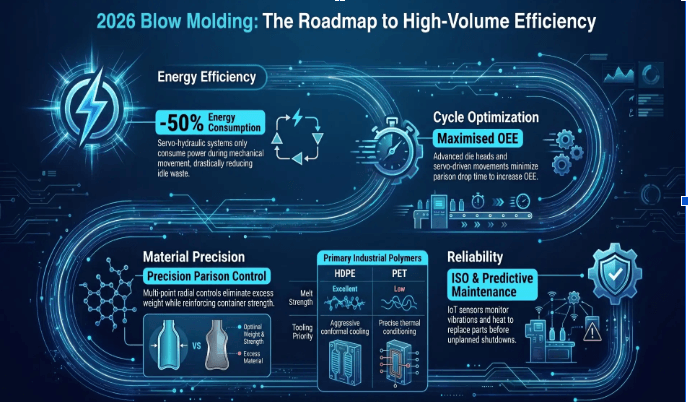
Modern setups, such as the high-efficiency systems engineered by Juneng, utilize advanced die heads and servo-driven carriage movements to significantly reduce parison drop time. This technological integration enhances overall throughput without sacrificing container wall thickness distribution or structural integrity.
Key Advancements in Continuous Extrusion Technology
Understanding the distinction between continuous extrusion and accumulator head technology is essential for packaging engineers. Continuous extrusion maintains a steady flow of polymer melt, making it highly efficient for producing high volumes of small to medium-sized containers.
Recent advancements focus heavily on optimizing the Parison—the tubular profile of molten plastic. Advanced wall thickness distribution systems (WDS) now utilize multi-point radial controls within the die head. This allows for precise, localized adjustments to the polymer flow.
By actively profiling the parison during the extrusion phase, manufacturers can eliminate excess material weight while reinforcing high-stress areas like the container neck and base.
Energy Efficiency and Servo-Hydraulic Systems
Legacy blow molding equipment traditionally relied on constant-run hydraulic pumps, which consumed vast amounts of electricity even during idle phases of the cycle. The transition toward Servo-Hydraulic Systems represents a massive leap in energy efficiency for the plastics processing sector.
These advanced systems pair a highly responsive servo motor with a gear pump, ensuring that energy is consumed only when mechanical movement is required.
- Precision Movements: Servo-driven clamping units offer superior control of mold-closing speeds, reducing mechanical shock.
- Energy Reduction: Facilities often see energy consumption drop by 30% to 50% compared to traditional hydraulic setups.
- Thermal Stability: Less energy wasted as heat means hydraulic oil remains cooler, extending component lifespans.
Material Considerations: High-Density Polyethylene (HDPE) vs. Polyethylene Terephthalate (PET) in Modern Tooling
Selecting the appropriate polymer is a foundational step that dictates the entire machine tooling setup. High-Density Polyethylene (HDPE) remains the industry standard for industrial blow molding due to its exceptional melt strength and chemical resistance.
HDPE’s ability to support its own weight during the parison drop makes it ideal for large jerrycans and chemical drums. Conversely, Polyethylene Terephthalate (PET) requires vastly different thermal processing and is generally favored for its clarity and gas barrier properties in beverage packaging.
Modern tooling must adapt to these specific resin properties. Advanced mold cooling systems (using conformal cooling channels) are engineered to rapidly dissipate heat based on the specific shrinkage rates of HDPE or PET, preventing warpage and minimizing cycle times.
| Material | Melt Strength | Primary Industrial Application | Tooling & Cooling Considerations |
| HDPE | Excellent (Supports large parison drops) | Chemical drums, industrial jerrycans, IBCs | High shrinkage rate; requires aggressive, conformal mold cooling. |
| PET | Low (Typically requires stretch-blow process) | Beverage bottles, cosmetic containers, clear jars | Highly temperature-sensitive; requires precise thermal conditioning. |
ISO Standards and Preventive Maintenance in Machine Operation
Maintaining a high-yield production environment relies heavily on rigorous maintenance protocols and international safety frameworks. The International Organization for Standardization (ISO) provides critical guidelines for machinery safety and operational quality control.
Ensuring long-term reliability and product consistency requires strict adherence to international quality protocols. Beyond regular mechanical inspections, operators must verify that core blow molding processes and thermal parameters meet industry benchmarks to prevent structural defects or premature wear in the final hollow products.
Implementing predictive maintenance—utilizing IoT sensors to monitor servo motor vibrations and heater band fluctuations—allows technicians to replace wear parts before an unplanned shutdown occurs.
Conclusion
The future of industrial hollow plastic manufacturing hinges on the adoption of agile, energy-efficient extrusion systems. By prioritizing advanced process control, servo-hydraulic efficiency, and rigorous preventive maintenance, facilities can significantly improve their OEE. Investing in these continuous extrusion innovations today is the most definitive strategy for securing competitive packaging profitability in 2026 and beyond.